U.S. Sports League Revenue Breakdown
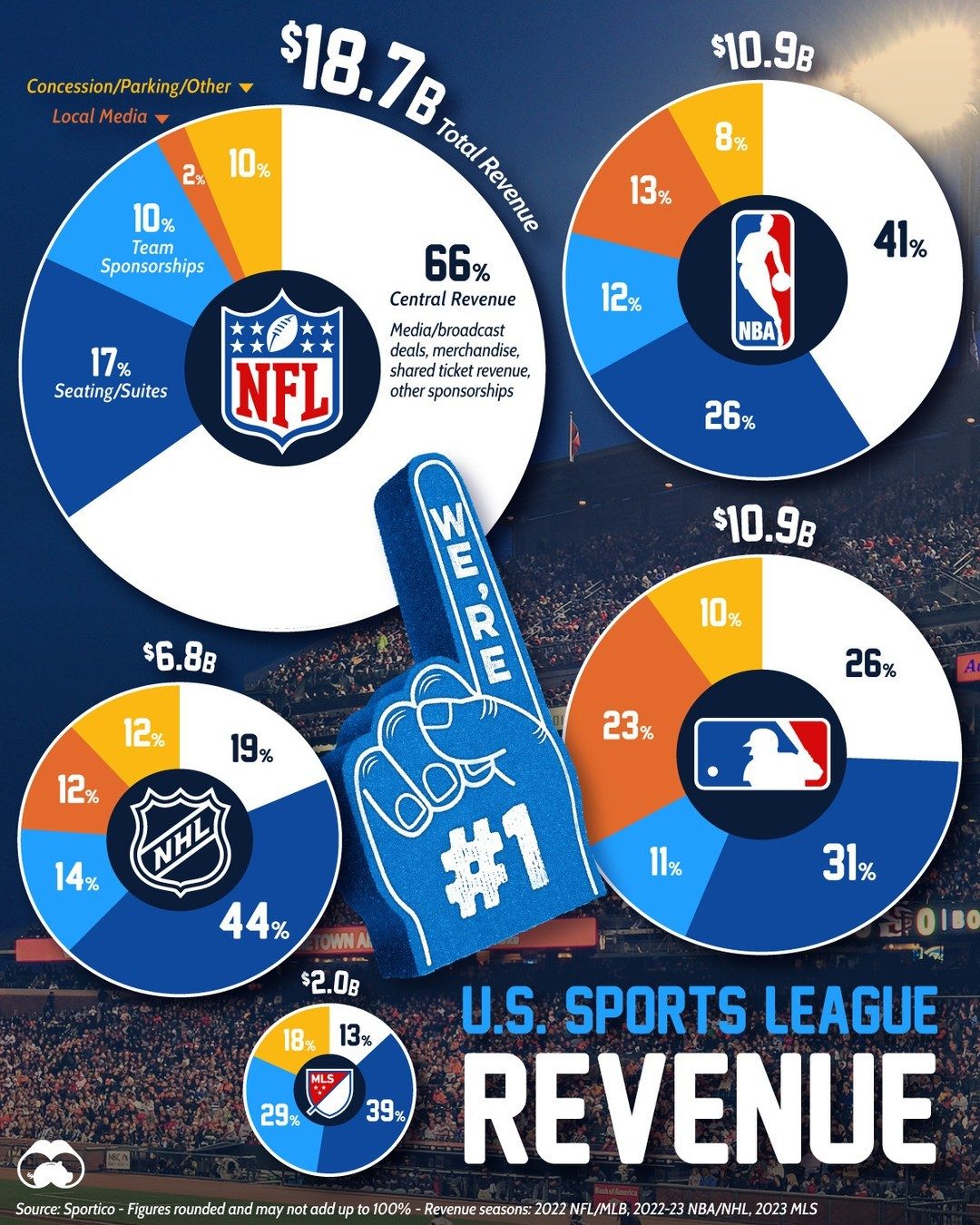
The NFL stands at the pinnacle of U.S. sports leagues, generating a staggering $18.7 billion in revenue, primarily from media deals and sponsorships. In contrast, the NHL earns 44% of its revenue from seating and suite sales, highlighting the varying revenue models across different sports leagues. Let's delve into the financial dynamics of major U.S. sports leagues, including the NFL, NBA, MLB, NHL, and MLS, and understand how each league generates its revenue.
Context / Why this matters
Understanding the revenue streams of major U.S. sports leagues provides insight into the financial health and economic impact of these organizations. Each league has a unique breakdown of revenue sources, influenced by factors such as media contracts, sponsorship deals, and ticket sales.
Main discussion
The NFL's Dominance
The NFL's revenue model is heavily reliant on media and broadcast deals, which account for a significant portion of its $18.7 billion in annual earnings. These deals include massive television contracts with networks like CBS, FOX, and NBC, which pay billions for the rights to broadcast NFL games. Merchandise sales, shared ticket revenue, and other sponsorships also contribute to the NFL's central revenue, which makes up 66% of its total earnings. The remaining 10% comes from team-specific revenue, including local sponsorships and non-shared ticket sales.
The NBA: A Balanced Approach
The NBA, with a revenue of $10.9 billion, has a more balanced revenue model. Central revenue, which includes media deals, merchandise, and shared ticket revenue, contributes 66% to the NBA's total earnings. Sponsorships account for 18% of the revenue, while seating and suites bring in 13%. Team-specific revenue, including local sponsorships and non-shared ticket sales, makes up 8% of the NBA's earnings. The NBA's revenue model reflects a blend of national and local revenue sources, ensuring a stable financial foundation.
MLB: The Power of Broadcast Deals
The MLB's revenue model is also heavily influenced by media and broadcast deals, contributing 59% of its $6.8 billion total revenue. The league's central revenue, which includes media deals, merchandise, and shared ticket revenue, makes up 66% of its total earnings. Ticket sales, including seating and suites, account for 13% of the revenue, while sponsorships make up 26%. Central revenue accounts for 71% of the MLB's earnings, highlighting the league's reliance on national media deals.
NHL: Seating and Suites Lead the Way
Unlike the NFL, NBA, and MLB, the NHL generates 44% of its revenue from seating and suite sales. This is due in part to less lucrative TV contracts compared to the other leagues. Seating and suites are a significant revenue source for the NHL. Media and broadcast deals, merchandise, and shared ticket revenue account for 66% of the league's total revenue. Sponsorships contribute 12% to the NHL's earnings, while team-specific revenue, including local sponsorships and non-shared ticket sales, makes up 10% of the total.
MLS: Growing Through Local Revenue
The MLS, with a revenue of $261 million, has a unique revenue model focused on local revenue sources. Central revenue, which includes media deals, merchandise, and shared ticket revenue, accounts for 39% of the league's total revenue. Team-specific revenue, including local sponsorships and non-shared ticket sales, makes up 31% of the MLS's earnings. Sponsorships and seating/suites each contribute 13% to the MLS revenue, reflecting the league's growing focus on local revenue sources as a means to drive financial stability and growth.
Practical tips
For those interested in the business side of sports, keeping an eye on the revenue trends and financial strategies of these leagues can provide valuable insights. Whether you're a fan, an investor, or someone looking to break into the sports industry, understanding how these leagues generate their revenue can offer a unique perspective on the financial dynamics of professional sports.
Investing in Sports
Investing in sports can be lucrative, but it requires a deep understanding of the industry's financial landscape. Knowing the revenue streams of different leagues can help investors identify potential opportunities and make informed decisions. For instance, investing in the NFL or NBA might be more appealing due to their larger revenue streams, while the MLS could offer growth potential as it continues to expand.
Sponsorship Opportunities
For businesses looking to sponsor sports teams or leagues, understanding the revenue models of different leagues can help in negotiating deals. Leagues like the NFL and NBA have significant sponsorship revenue, indicating a strong return on investment for sponsors. In contrast, the NHL and MLS might offer more niche opportunities for local and regional sponsors.
Fan Engagement
For fans, understanding the revenue models of their favorite leagues can enhance their appreciation of the game. Knowing how these leagues generate their income can provide a deeper understanding of the financial challenges and opportunities they face. This knowledge can also inform fan advocacy efforts, such as supporting initiatives to improve stadium experiences or push for better TV deals.
Important takeaways
- NFL Leads in Revenue: The NFL's revenue model is heavily reliant on media and broadcast deals, making it the top-earning U.S. sports league.
- Diverse Revenue Streams: Each league has a unique revenue breakdown, with varying contributions from central revenue, seating/suites, sponsorships, and team-specific earnings.
- The NHL's Seating Focus: The NHL earns a significant portion of its revenue from seating and suite sales, reflecting its reliance on in-stadium revenue.
- MLS's Local Focus: The MLS is focused on local revenue sources, making it a growing opportunity for investors and sponsors.
Conclusion
The revenue models of major U.S. sports leagues offer a fascinating look into the financial dynamics of the sports industry. From the NFL's media-driven earnings to the NHL's focus on seating revenue, each league has a distinct approach to generating income. Whether you're an investor, a sponsor, or a fan, understanding these revenue streams can provide valuable insights into the world of professional sports.
Watch the Reel
Questions readers ask
How much of the NFL's revenue is generated from media deals?
The NFL earns a significant portion of its revenue from media deals. In 2022, the NFL generated $18.7 billion, with a substantial amount coming from media rights and contracts.
What is the primary revenue source for the NHL?
The NHL's primary revenue source is ticket sales, with 44% of its revenue coming from seating and suite sales, unlike the NFL, NBA, and MLB.
How do media deals impact the revenue of U.S. sports leagues?
Media deals significantly impact the revenue of U.S. sports leagues. They are a major source of income, with the NFL and other leagues benefiting from lucrative broadcasting and streaming contracts.
What are the key revenue streams for the NBA?
The NBA generates revenue through multiple streams, including media deals, sponsorships, and merchandise sales. The NBA's sponsorship deals are particularly lucrative, contributing a significant portion of the overall revenue.
How does the MLB generate its revenue?
The MLB generates revenue through various sources, including ticket sales, media rights, sponsorships, and licensing agreements. The league's revenue model is diverse, with media deals and ticket sales contributing significantly to the overall revenue.
How does the MLS generate its revenue and how does it compare to other leagues?
The MLS generates its revenue through ticket sales, sponsorships, and TV deals. Compared to the NFL, NBA, and MLB, the MLS generates less revenue overall, but it is growing rapidly. The league's revenue is heavily influenced by local market conditions and team performance.
Which U.S. sports league is the most financially successful in 2022?
In 2022, the NFL is the most financially successful U.S. sports league, with a total revenue of $18.7 billion, largely driven by media deals and sponsorships. This places the NFL at the top in terms of overall revenue generation and financial success.
Related deep dives
Similar reads based on topic and creator.


Recent articles
Fresh deep dives from the latest Reels we unpacked.




Comments
Be the first to comment.