U.S. Electricity Sources
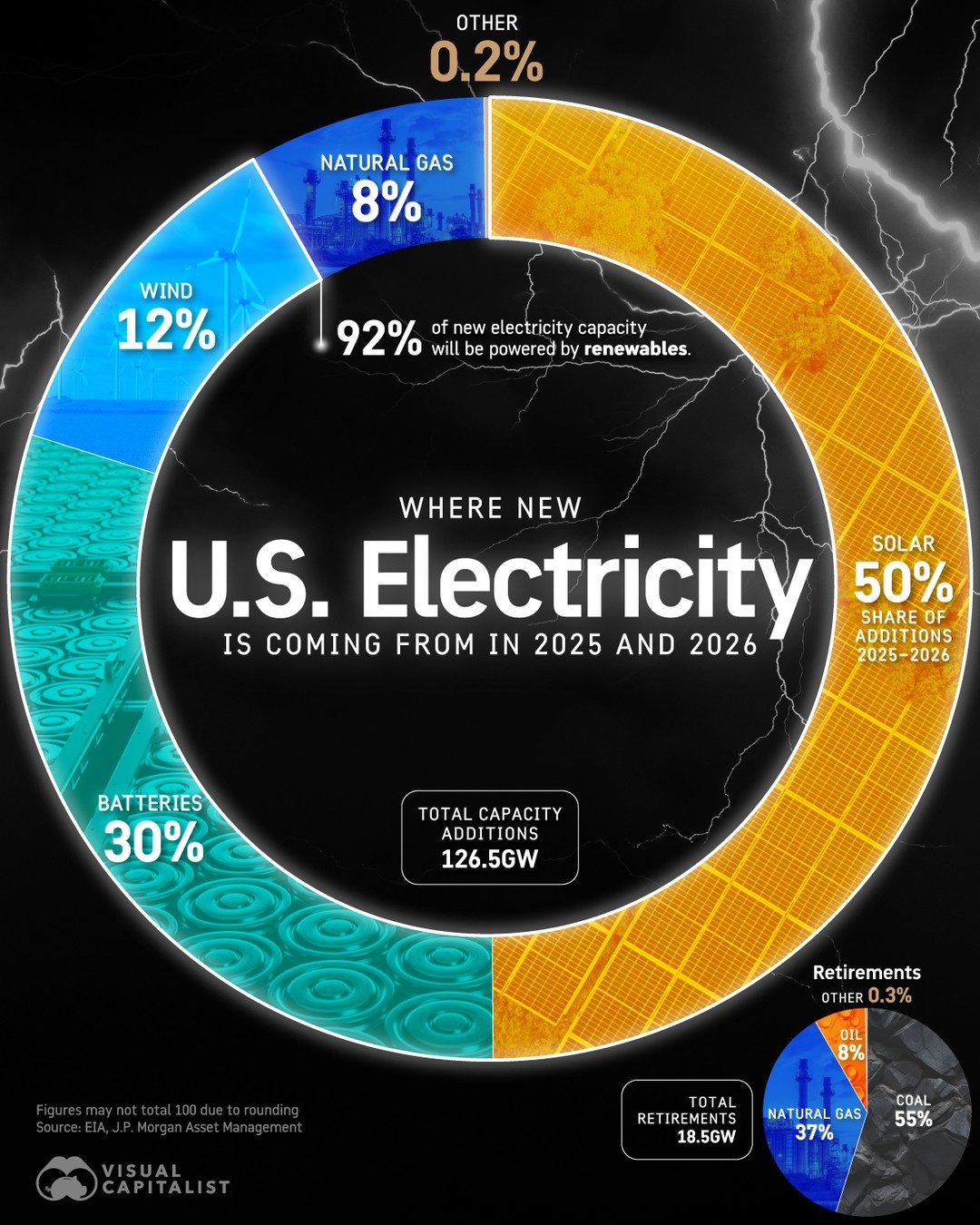
Renewable energy is set to dominate the new electricity capacity in the U.S. Over the next two years, 92% of the additions will come from renewable sources. This shift marks a significant turning point in the nation's energy landscape, driven by increasing investments in clean energy technologies.
Context
Why this matters
The electricity sector is undergoing a profound transformation. The projected rise in renewable energy capacity highlights a broader trend toward sustainability and energy independence. Understanding the sources of new electricity capacity is crucial for investors, policymakers, and consumers alike. It provides insights into the future of energy production, potential job creation, and environmental impact.
Trends in New Electricity Capacity
Solar Dominance
Solar power is poised to lead the charge in the new electricity capacity. Accounting for 50% of the additions, solar installations will see substantial growth. This surge is driven by technological advancements, falling costs, and supportive policies that encourage solar adoption. The rise of solar not only reduces reliance on fossil fuels but also creates new opportunities in the renewable energy job market.
Wind Energy and Natural Gas
Wind energy will also play a significant role, contributing 12% of the new capacity. Wind farms continue to expand, benefiting from economies of scale and improved turbine efficiency. Additionally, natural gas, which currently makes up 8% of new additions, remains a critical component of the energy mix. Its versatility and relatively lower emissions compared to coal make it a transitional fuel as the country shifts toward renewable sources.
Coal and Battery Storage
Despite the rapid growth of renewables, coal remains a significant part of the existing capacity, accounting for 55%. However, the retirement of coal plants is on the horizon, with 55% of capacity expected to be phased out by 2026. This shift underscores the ongoing decline of coal in the energy sector. Battery storage, on the other hand, is emerging as a vital technology. Batteries are expected to contribute 30% of the new capacity, helping to balance the intermittency of renewable energy sources and ensuring a stable power supply.
Additions and Retirements
Projected Capacity Additions
The total capacity additions are projected to reach 126.5 gigawatts (GW) by 2026. This substantial increase reflects the nation's commitment to expanding its energy infrastructure to meet growing demand while prioritizing renewable sources. The breakdown of these additions underscores the dominance of renewable energy, with solar and wind leading the way.
Capacity Retirements
Simultaneously, the electricity sector will see retirements totaling 18.5 GW by 2026. A significant portion of these retirements will come from coal and natural gas plants, as aging infrastructure is decommissioned and replaced with cleaner, more efficient technologies. This transition is essential for reducing carbon emissions and improving air quality. Oil, which currently represents 0.3%, is expected to play a minimal role in future capacity.
Important Players and Sources
The data on electricity sources and projections come from reliable sources, including the Energy Information Administration (EIA) and J.P. Morgan Asset Management. The EIA provides comprehensive data on energy production, consumption, and trends, offering valuable insights into the sector's future. J.P. Morgan Asset Management, known for its financial acumen, adds a layer of economic analysis to the energy landscape.
Practical Tips
For those interested in the future of electricity and renewable energy, staying informed about these trends is essential. Here are a few practical tips to navigate this rapidly changing landscape:
- Invest Wisely: Consider investing in renewable energy sectors, particularly solar and wind, which are projected to see significant growth.
- Stay Updated: Follow reliable sources like the EIA and J.P. Morgan Asset Management for the latest data and analysis on energy trends.
- Engage with Policies: Advocate for policies that support renewable energy adoption and phase out of fossil fuels. This can include supporting local initiatives, participating in public consultations, and lobbying for legislation that promotes a greener energy future.
Key Takeaways
- Renewable Dominance: By 2026, 92% of new electricity capacity will be powered by renewables, primarily solar and wind.
- Technological Advancements: Technological improvements and falling costs are driving the growth of solar and wind energy.
- Balancing the Grid: Battery storage is becoming increasingly important in balancing the intermittency of renewable energy sources.
- Economic Potential: The shift toward renewable energy is creating new economic opportunities and jobs in the clean energy sector.
Conclusion
The future of U.S. electricity is bright, with renewable sources leading the way. The projected growth in solar, wind, and battery storage underscores a commitment to sustainability and innovation. As the nation continues to transition away from fossil fuels, staying informed about these trends will be essential for both individual and collective success in the energy sector.
Watch the Reel
Questions readers ask
What are the primary renewable energy sources contributing to the new electricity capacity in the U.S.?
The primary renewable energy sources driving the new electricity capacity in the U.S. are solar and wind power. Solar power is expected to dominate, with significant contributions also coming from wind energy. These sources are supported by substantial investments in clean energy technologies.
Why is there a shift towards renewable energy in the U.S. electricity sector?
The shift towards renewable energy is driven by increased investments in clean energy technologies and a growing emphasis on sustainability. This trend is also motivated by the desire for energy independence and the environmental benefits of reducing reliance on fossil fuels.
How will the rise in renewable energy impact job creation in the U.S.?
The rise in renewable energy is expected to create numerous job opportunities in the installation, maintenance, and production of renewable energy systems. This includes jobs in solar panel manufacturing, wind turbine construction, and related services, contributing to economic growth and diversification.
What role do investments play in the growth of renewable energy capacity?
Investments are crucial for the growth of renewable energy capacity. They fund the development and deployment of new technologies, infrastructure, and projects. Increased investments in clean energy technologies have led to cost reductions and improved efficiency, making renewable energy more competitive with traditional sources.
How does the projected rise in renewable energy capacity compare to natural gas?
The projected rise in renewable energy capacity is significant, with 92% of new electricity capacity coming from renewable sources. In comparison, natural gas and other non-renewable sources are expected to make up a much smaller share of the new electricity additions, highlighting a notable shift in the energy landscape.
What are the environmental benefits of increasing renewable electricity capacity?
Increasing renewable electricity capacity reduces dependence on fossil fuels, which are major contributors to greenhouse gas emissions. This shift helps lower carbon emissions, mitigates air pollution, and supports the conservation of natural resources. These benefits are crucial for addressing climate change and promoting environmental sustainability.
What can consumers and businesses expect from this shift to renewable energy?
Consumers and businesses can expect a cleaner energy supply, potentially lower energy costs over time, and increased energy independence. They may also benefit from new services and products in the renewable energy sector, including home solar systems and electric vehicle charging infrastructure.
Related deep dives
Similar reads based on topic and creator.


Recent articles
Fresh deep dives from the latest Reels we unpacked.




Comments
Be the first to comment.