Religious Demographics in the U.S.
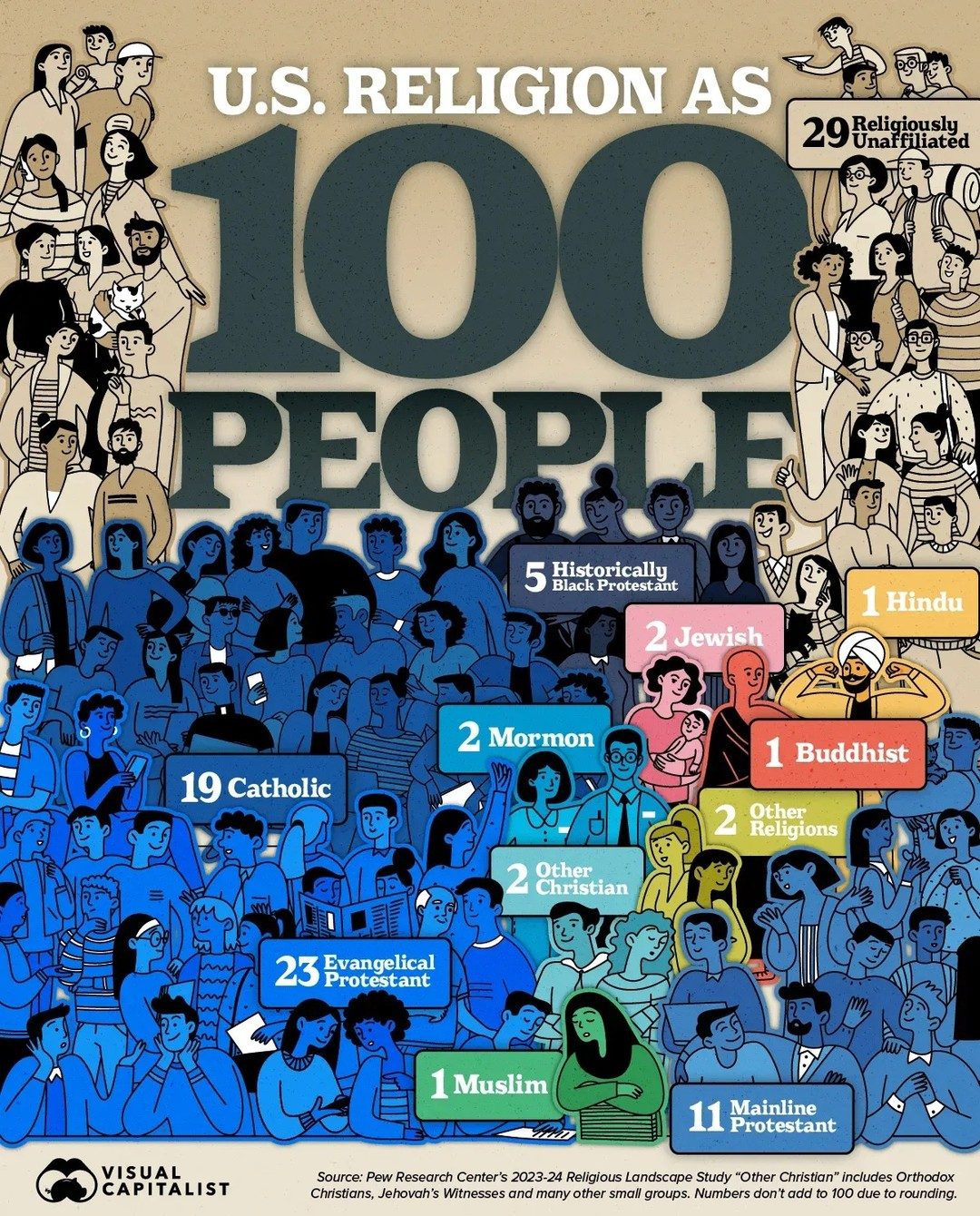
Christianity remains the dominant religious affiliation in the United States, with approximately 162 million adults identifying as Christian. Simultaneously, about 76 million adults in the U.S. report having no religious affiliation, signaling a notable shift in the country’s religious landscape. To understand this dynamic, it’s helpful to visualize the religious demographics as a group of 100 people, using data from the Pew Research Center’s 2023–24 Religious Landscape Study. This approach offers a clear picture of the diverse religious affiliations and the growing segment of the population that identifies as unaffiliated.
Context / Why this matters
Understanding the religious demographics of the U.S. is crucial for grasping the evolving social and cultural fabric of the country. By breaking down the population into a representative group of 100 people, we can better appreciate the diversity of beliefs and the implications of religious affiliation on societal dynamics. This visualization helps illustrate the broader trends and changes in religious identification.
Main discussion
Christianity in the U.S.
Christianity continues to be the largest religious group in the U.S., with about 68% of the population identifying as Christian. This includes various denominations such as Evangelical Protestant, Catholic, and other Christian groups. For instance, Evangelical Protestants make up 23% of the population, while Catholics represent 19%. This high percentage reflects the historical influence of Christianity in American society and its enduring presence in the daily lives of many Americans.
Other Religious Groups
Beyond Christianity, the U.S. is home to a diverse array of religious groups. Muslims, for example, represent 1% of the population, while Jews and Hindus each account for 2% and 1%, respectively. Other religious groups, including Buddhists, Sikhs, and those identifying with non-Christian traditions, make up a smaller but significant portion of the population. Each of these groups contributes to the rich tapestry of religious diversity in the U.S.
The Growing Unaffiliated Population
One of the most striking trends in recent years is the rise in the number of Americans who report having no religious affiliation. This group, often referred to as the "nones," now constitutes 30% of the population. This shift reflects a growing secularization and a move away from traditional religious institutions. Factors contributing to this trend include changing social attitudes, increased access to information, and a desire for more personalized spiritual journeys.
Smaller Faiths and Beliefs
In addition to the major religious groups, the U.S. population includes a variety of smaller faiths and beliefs. These groups, while smaller in number, play an important role in the religious diversity of the country. They include groups such as Bahá'í, Jain, Shinto, and Taoist, among others. Each of these faiths contributes to the cultural and spiritual mosaic of the nation.
Regional Variations
Religious affiliations in the U.S. also vary significantly by region. For instance, the Southern and Midwestern regions tend to have higher concentrations of Evangelical Protestants, while the Northeast and West Coast are known for greater religious diversity and a higher percentage of unaffiliated individuals. Understanding these regional differences can provide deeper insights into local communities and cultural norms.
Practical tips
When interpreting religious demographics, it’s essential to consider the nuanced beliefs and practices within each group. Recognizing that religious identity is often multifaceted and influenced by a variety of factors—including family background, personal experiences, and societal trends—can help foster greater understanding and respect for different beliefs.
For those interested in engaging with diverse religious communities, consider attending local interfaith events or participating in community dialogues. These opportunities can provide valuable insights into different beliefs and contribute to a more inclusive and respectful society.
Important takeaways
Understanding the religious demographics of the U.S. provides a comprehensive view of the country’s cultural landscape. Key takeaways include:
- Christianity remains the largest religious group, with a significant presence of Evangelical Protestants and Catholics.
- The unaffiliated population, or "nones," is growing, reflecting broader changes in societal attitudes.
- Smaller religious groups, while fewer in number, contribute to the rich diversity of American religion.
- Regional variations in religious affiliation highlight the unique cultural characteristics of different parts of the country.
With this visual framework, anyone can gain a clearer picture of the U.S. religious landscape.
Conclusion
The religious landscape of the United States is a complex and evolving mosaic, characterized by a diverse array of beliefs and affiliations. By visualizing the demographics as a group of 100 people, we can better understand the composition of the population and the trends shaping religious identity in the country. This perspective underscores the importance of recognizing and respecting the diversity of beliefs that enrich American society.
Watch the Reel
Questions readers ask
How many Christians are there in the United States?
As of the latest data, there are approximately 162 million adults in the United States who identify as Christian. This makes Christianity the largest religious group in the country.
What is the size of the unaffiliated population in the U.S.?
About 76 million adults in the United States report having no religious affiliation. This group is the fastest-growing segment of the religious landscape.
What are the major religious demographic shifts in the U.S.?
The most significant shifts include the steady growth of the unaffiliated population and the slight decline in the percentage of Americans identifying as Christian. These trends reflect broader changes in societal attitudes towards religion.
Who conducted the Religious Landscape Study and what is its significance?
The Pew Research Center conducted the 2023–24 Religious Landscape Study. It provides a comprehensive snapshot of the religious affiliations in the U.S., helping to understand the diversity and changes in the nation’s religious composition.
How can understanding U.S. religious demographics help in comprehending social and cultural dynamics?
Analyzing U.S. religious demographics offers insights into the evolving social and cultural landscape. For example, the rise in unaffiliated adults can influence policy decisions, community initiatives, and public discourse on various issues.
What are the implications of the growing non-affiliation trend in the U.S.?
The increasing number of unaffiliated adults can lead to changes in how public services are provided, such as the need for more secular and inclusive approaches in healthcare, social support, and community programs. It also reflects a broader shift in how people approach spirituality and personal beliefs.
How does the current religious landscape in the U.S. compare to previous years?
The most recent data from 2023-2024 shows a continued trend of growth in the unaffiliated population and a slight decrease in the Christian population compared to previous years. This indicates a gradual but steady shift in the religious composition of the United States.
Related deep dives
Similar reads based on topic and creator.




Recent articles
Fresh deep dives from the latest Reels we unpacked.




Comments
Be the first to comment.