U.S. GDP Growth by Region
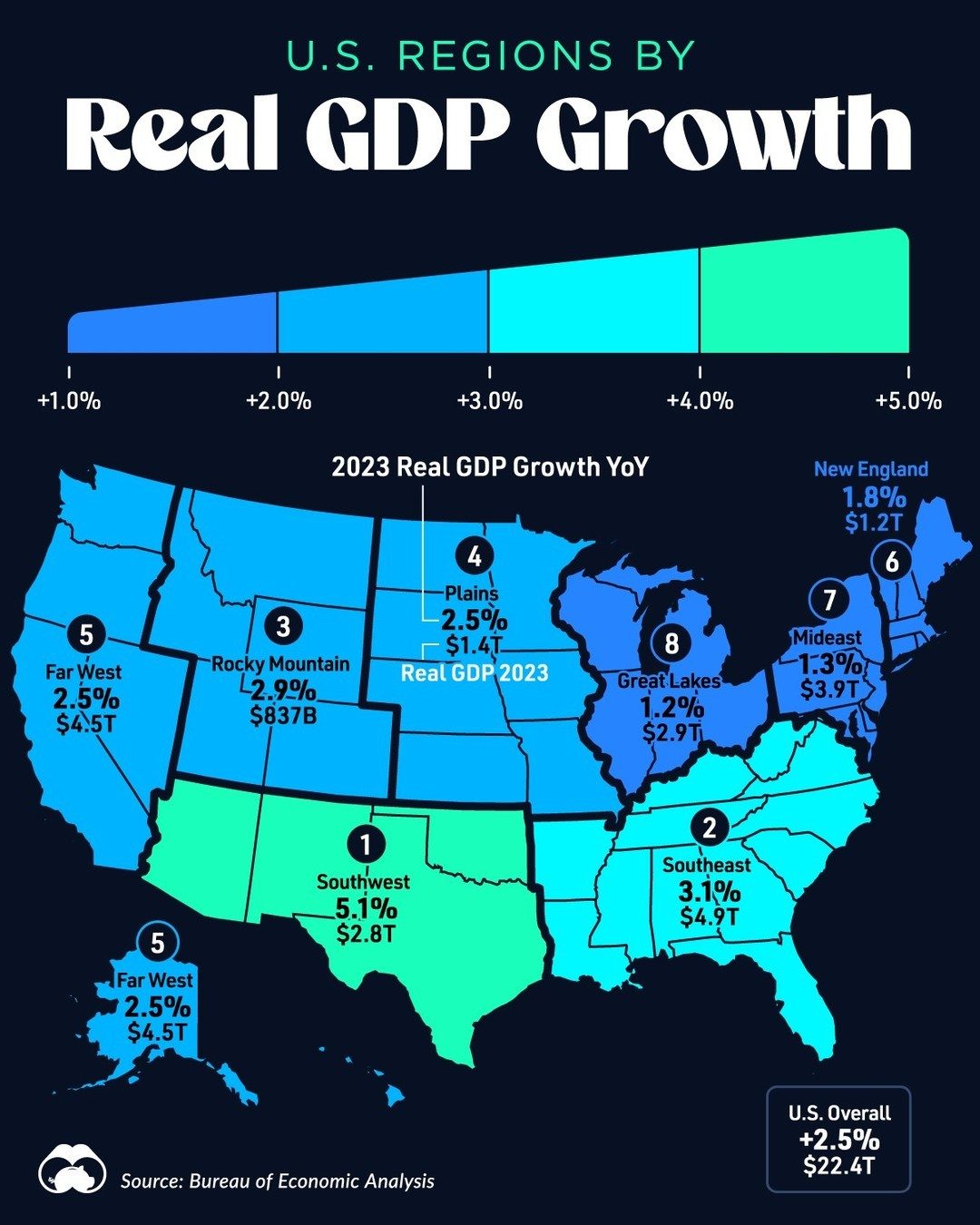
The economic landscape of the United States in 2023 showcases a varied growth trajectory across different regions, with the Southern regions, particularly the Southwest and Southeast, leading the charge. This surge is largely attributed to increased oil production, coupled with the establishment of electric vehicle factories and battery plants.
Context: Why This Matters
Understanding the GDP growth by region provides a nuanced view of the U.S. economy. It highlights the strengths and weaknesses of different areas, helping policymakers, investors, and businesses make informed decisions. The data from the Bureau of Economic Analysis (BEA) offers a detailed snapshot of where the economy is thriving and where it may need attention.
Main Discussion
Regional Performance Highlights
The data from the BEA reveals a diverse economic performance across the U.S. regions. The Southwest and Southeast are standout performers, with growth rates exceeding the national average of 2.5%. The Southwest region, in particular, saw a significant boost in oil production, which is a key driver of its economic growth. This region is also notable for its growing electric vehicle (EV) and battery manufacturing sectors.
The Far West and New England regions also show robust growth, both at 2.5%, aligning with the national average. These regions benefit from diverse industries, including technology, finance, and tourism, which have helped maintain steady economic growth.
On the other hand, the Rocky Mountain region experienced a decline, with a GDP growth rate of -2.9%. This region is heavily reliant on sectors like mining and tourism, which may have faced challenges in 2023.
Key Drivers of Growth
The economic boom in the Southern regions is primarily driven by the energy sector and the burgeoning EV industry. The surge in oil production has been a significant contributor to economic growth. The discovery of new oil reserves and technological advancements in extraction methods have made this sector more profitable and sustainable. Additionally, investments in electric vehicle factories and battery plants have created numerous job opportunities and attracted substantial investments, further bolstering regional economies.
Incentives for sustainable energy have also played a significant role in driving growth in these regions. Federal and state-level initiatives aimed at promoting green energy and reducing carbon emissions have encouraged the establishment of new facilities and the expansion of existing ones.
The Role of Oil and Energy
The oil and energy sectors continue to be pivotal in the economic landscape of the Southwest. The region's strategic location and extensive oil reserves make it a hub for energy production. The recent surge in oil prices and increased global demand have further propelled the region's economic growth. This boom has led to job creation, infrastructure development, and increased revenue for the state.
The Impact of Electric Vehicle and Battery Manufacturing
The establishment of electric vehicle factories and battery plants has transformed the economic landscape of the Southern regions. These industries are not only creating jobs but also attracting investments from major corporations. The demand for EVs and their associated technologies is expected to rise, providing a long-term boost to the regional economy.
Practical Tips
For investors and businesses looking to capitalize on these trends, here are some practical tips:
- Monitor Regional Trends: Keep a close eye on the economic indicators of different regions. This will help identify emerging opportunities and potential risks.
- Invest in Green Energy: The focus on sustainable energy presents a lucrative investment opportunity. Industries related to electric vehicles, solar, and wind energy are set to grow.
- Consider Job Market Trends: The job market in the Southwest and Southeast is booming, especially in the energy and manufacturing sectors. These regions offer a skilled workforce and a favorable business environment.
- Explore Incentives: Take advantage of federal and state incentives for setting up green energy and manufacturing facilities. These incentives can significantly reduce operational costs and enhance profitability.
Important Takeaways
-
Southern Regions Lead: The Southern regions, driven by the oil industry and electric vehicle manufacturing, have outperformed other regions in 2023.
-
Energy and EV Industries: The surge in oil production and the establishment of EV factories and battery plants are critical drivers of economic growth in the Southwest and Southeast.
-
Diverse Regional Performance: While some regions like the Southwest and New England are thriving, others like the Rocky Mountain region are facing economic challenges.
-
Investment Opportunities: The current trends in the energy and EV sectors present promising investment opportunities. Businesses and investors should explore these sectors for long-term gains.
Conclusion
The economic performance of the U.S. in 2023 is a mixed bag, with some regions surging ahead while others face significant challenges. The Southwest and Southeast regions, driven by the energy sector and the EV industry, are leading the way. Understanding these regional dynamics is crucial for making informed decisions, whether as a policymaker, investor, or business owner. By focusing on sustainable energy and leveraging the strengths of different regions, the U.S. can continue to foster economic growth and innovation.
Watch the Reel
Questions readers ask
Which U.S. regions experienced the most significant GDP growth in 2023?
The Southwest and Southeast regions of the U.S. saw the most substantial GDP growth in 2023. These areas benefited from a surge in oil production and the expansion of electric vehicle manufacturing, including the establishment of new factories and battery plants.
What factors contributed to the economic growth in the Southwest and Southeast regions?
The primary factors driving economic growth in the Southwest and Southeast regions were increased oil production and the rise of electric vehicle manufacturing. The establishment of new factories and battery plants significantly boosted local economies.
How did the Far West and New England regions perform economically in 2023?
The Far West and New England regions maintained steady economic growth in 2023. These areas benefited from economical diversification across multiple industries, ensuring consistent performance and stability.
Why is the Rocky Mountain region facing economic decline in 2023?
The Rocky Mountain region's economic decline in 2023 can be attributed to various factors, including shifts in key industries. Industries such as mining or tourism might have faced challenges, impacting overall GDP growth.
Where can I find detailed data on U.S. regional GDP growth for 2023?
The Bureau of Economic Analysis (BEA) is a key source of detailed data on U.S. regional GDP growth for 2023. It provides comprehensive information on the economic performance of each region, highlighting areas of strength and potential concern.
What does the varied regional economic performance in 2023 indicate about the overall U.S. economy?
The varied regional economic performance in 2023 indicates that the U.S. economy is experiencing a mix of growth and decline across different areas. This varied growth trajectory can help policymakers, investors and businesses better understand and adapt to regional economic conditions
How does the growth in electric vehicle manufacturing impact U.S. regional economies?
The growth in electric vehicle manufacturing has a significant positive impact on U.S. regional economies, particularly in the Southwest and Southeast. This sector creates jobs, attracts investments, and stimulates local supply chains, contributing to overall GDP growth.
Recent articles
Fresh deep dives from the latest Reels we unpacked.




Comments
Be the first to comment.