Prisoner Cost Analysis
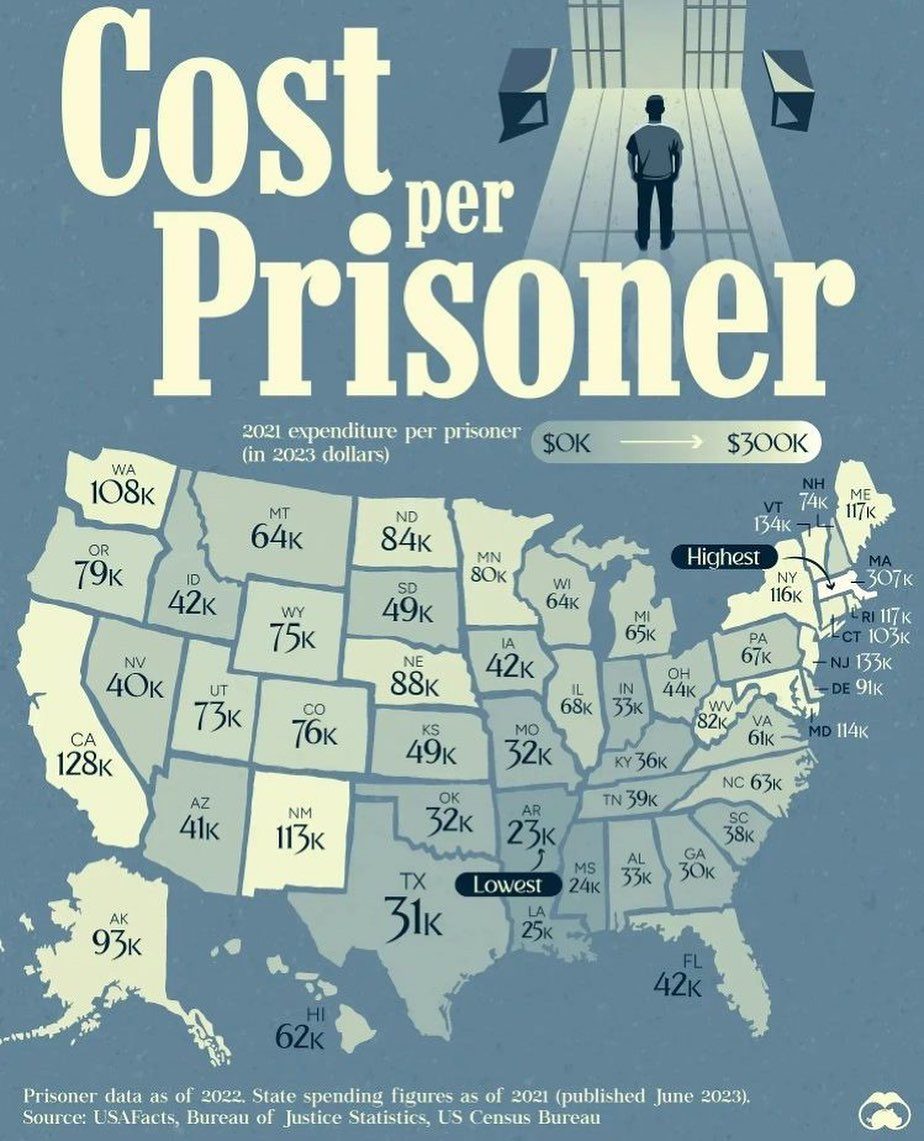
The annual cost of maintaining prisons in the United States is substantial, with over $80 billion spent each year. The yearly cost per prisoner varies widely across states, from just under $23,000 in Arkansas to a staggering $307,468 in Massachusetts. This significant disparity raises important questions about how different states allocate their resources towards incarceration.
Context
Understanding the cost of imprisonment is crucial for several reasons. It provides insight into how states prioritize public spending, highlights the economic burden of the criminal justice system, and underscores the need for efficient and effective correctional policies. By examining the data, we can better understand the financial implications of incarceration and consider potential reforms that could lead to more cost-effective and humane practices.
Main discussion
The Range of Costs
The cost per prisoner varies significantly across the United States, reflecting different approaches to correctional spending. Arkansas, at the lower end, spends just under $23,000 per prisoner annually. In contrast, Massachusetts spends nearly $307,468 per prisoner, showcasing an enormous gap in expenditures. This variation can be attributed to several factors, including differences in state policies, labor costs, and the types of facilities and programs offered.
Factors Influencing Costs
Several factors contribute to the high cost of imprisonment. One of the primary drivers is the cost of labor, including salaries for correctional officers and other staff. Additionally, the cost of healthcare, both physical and mental, is a significant expense. Prisons often need to provide comprehensive medical services to inmates, which can be costly. Furthermore, the construction and maintenance of facilities, as well as the provision of educational and vocational programs, contribute to the overall cost.
State-by-State Breakdown
| State | Annual Cost per Prisoner (in 2023 dollars) |
|---|---|
| Arkansas | $24,000 |
| Louisiana | $42,000 |
| Texas | $42,000 |
| Kentucky | $75,000 |
| Alabama | $64,000 |
| Mississippi | $62,000 |
| Florida | $32,000 |
| Oregon | $41,000 |
| New York | $113,000 |
| California | $128,000 |
| Tennessee | $31,000 |
| Oklahoma | $25,000 |
| South Carolina | $42,000 |
| Missouri | $38,000 |
| Missouri | $33,000 |
| Arizona | $32,000 |
| Virginia | $30,000 |
| Iowa | $24,000 |
| Massachusetts | $307,468 |
| Utah | $49,000 |
| Georgia | $49,000 |
| Connecticut | $82,000 |
| Illinois | $61,000 |
| Wyoming | $30,000 |
This table provides a snapshot of the statewide costs. It highlights the range of costs, from the lowest in Arkansas to the highest in Massachusetts, and shows how costs vary widely across different regions.
Practical Tips for Cost Management
Policy Reforms
One area for potential cost savings is policy reform. Many states are exploring alternative sentencing and diversion programs that can reduce the number of people incarcerated, thereby lowering overall costs. For example, investing in community-based programs and rehabilitation initiatives can help reduce recidivism rates and the need for long-term imprisonment.
Efficient Use of Technology
Technology can play a significant role in reducing prison costs. Implementing advanced surveillance systems, electronic monitoring, and other technological solutions can enhance security while reducing labor costs. Additionally, using digital platforms for educational and vocational training can make these programs more accessible and cost-effective.
Healthcare Management
Healthcare is a major expense in prison systems. States can explore cost-effective healthcare solutions, such as telemedicine, to provide necessary medical services at a lower cost. Collaborating with local healthcare providers and leveraging technology can help manage healthcare expenses more efficiently.
Facilities and Infrastructure
The construction and maintenance of prison facilities are another significant cost. Some states are exploring the use of modular and prefabricated structures, which can be more cost-effective and quicker to build. Additionally, regular maintenance and upgrades can help prevent costly repairs and ensure facilities remain functional and safe.
Work Programs
Implementing work programs within prisons can provide inmates with valuable skills and contribute to the prison’s operational costs. These programs can include activities such as farming, manufacturing, and custodial services, which not only reduce costs but also prepare inmates for reintegration into society.
Important Takeaways
The cost of imprisonment in the United States is substantial and varies widely across states. Understanding the factors that influence these costs is essential for developing effective and cost-efficient correctional policies. By exploring policy reforms, leveraging technology, managing healthcare expenses, maintaining facilities, and implementing work programs, states can work towards reducing the economic burden of imprisonment.
Conclusion
The annual cost per prisoner in the United States ranges from just under $23,000 in Arkansas to over $307,000 in Massachusetts. This wide disparity highlights the need for a deeper understanding of the factors that contribute to these costs. By examining the data and identifying areas for potential savings, states can work towards more efficient and effective correctional practices. This analysis underscores the importance of considering alternative sentencing, leveraging technology, and implementing cost-effective programs to manage the financial burden of the criminal justice system.
Watch the Reel
Questions readers ask
Why does the cost of maintaining prisons vary so much between states?
The cost of maintaining prisons varies greatly between states due to differences in labor costs, healthcare expenses, and facility maintenance. Additionally, each state has its own approach to correctional spending, which can lead to significant disparities in how much is spent per prisoner annually.
Which state has the highest annual cost per prisoner?
As of the data provided, Massachusetts has the highest annual cost per prisoner, with an expenditure of nearly $307,500. This high cost reflects the state's approach to correctional spending and the associated expenses of maintaining its prison system.
What is the average annual cost per prisoner in the US?
The average annual cost per prisoner in the US cannot be determined from the given data. However, the article notes that the cost ranges from under $23,000 to nearly $307,500, indicating a wide disparity in spending across different states.
How much does the US spend annually on maintaining prisons?
The United States spends over $80 billion each year on maintaining its prison system. This substantial expenditure highlights the significant financial burden of the criminal justice system and the need for effective correctional policies.
What factors contribute to the high cost of prison maintenance?
Several factors contribute to the high cost of prison maintenance, including labor costs, healthcare expenses for inmates, and the upkeep of prison facilities. Additionally, each state's approach to correctional spending can influence the overall cost of maintaining its prison system.
What is the most cost effective way for states to manage prison expenditures?
In order to manage prison expenditures more effectively, states could consider implementing cost-saving measures such as investing in rehabilitation and recidivism-reduction programs, which can lead to lower long-term costs. Additionally, states could focus on improving prison staffing efficiency and negotiating better healthcare contracts to reduce overall expenses.
How does the cost of prison maintenance in the US compare to other countries?
The article does not provide direct comparisons to other countries. However, the high annual expenditure per prisoner in the US, ranging from under $23,000 to nearly $307,500, suggests that the US may have higher prison maintenance costs compared to many other nations. This is a topic that would require further research to confirm.
Recent articles
Fresh deep dives from the latest Reels we unpacked.




Comments
Be the first to comment.