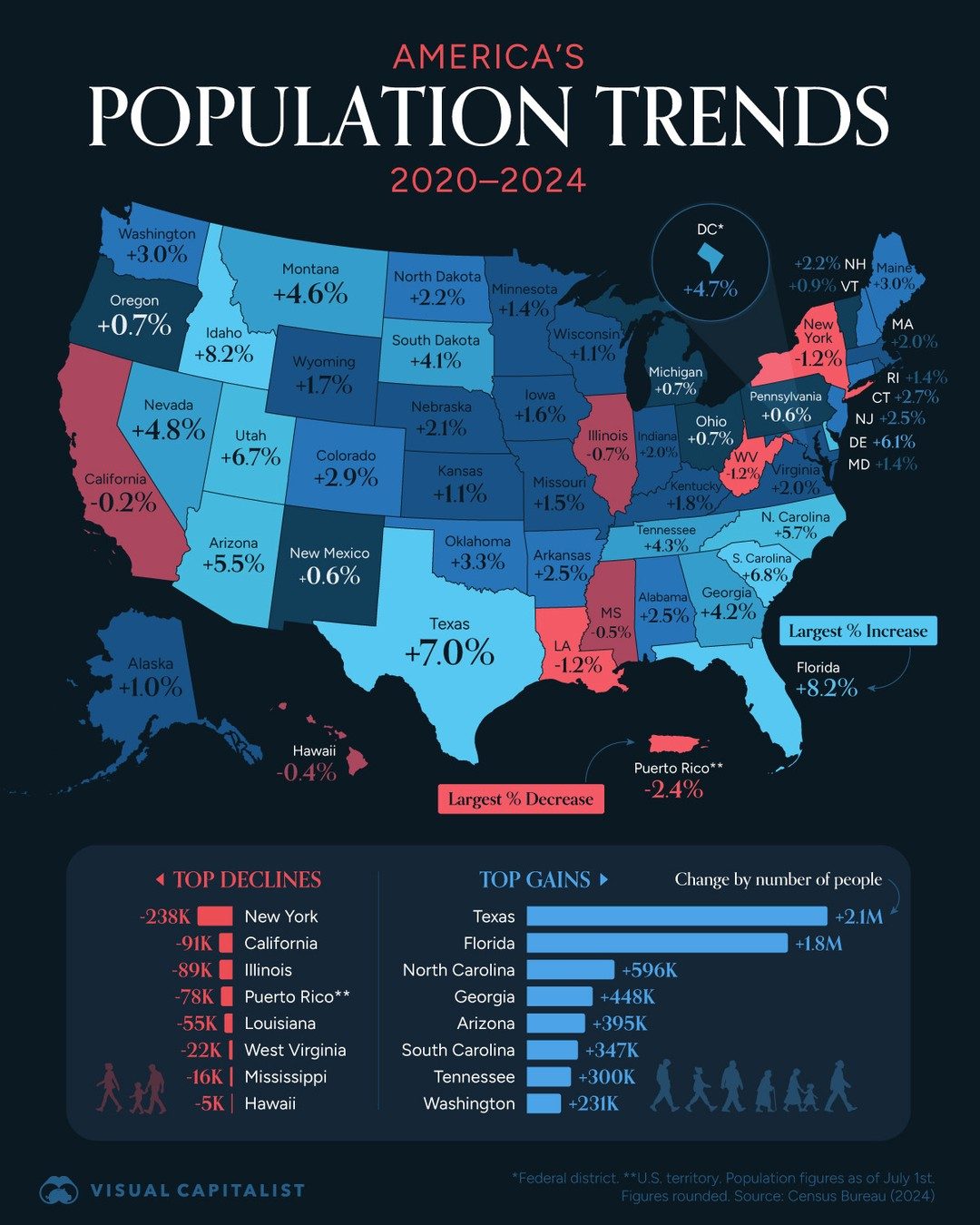
US Population Trends 2020-2024
Since 2020, the United States has seen significant shifts in population, with some states experiencing substantial growth while others face declines. Texas and Florida have been noteworthy for their rapid population increases, but these changes are part of a broader pattern that reveals much about the nation’s demographic trends.
Why This Matters
Understanding population trends is crucial for policymakers, urban planners, and businesses. These trends impact everything from infrastructure development to resource allocation, and they can also influence political representation and economic growth. By examining the changes from 2020 to 2024, we can gain insights into which areas are thriving and which are facing challenges.
Main Discussion
The Rise of Texas
Texas has been a standout in recent years, gaining over two million new residents since 2020. This is the largest numerical increase of any U.S. state during this period. Several factors contribute to Texas’s appeal, including a robust job market, relatively low cost of living, and a business-friendly environment. Major cities like Houston, Dallas, and Austin have seen particularly strong growth, driven by sectors such as technology, healthcare, and energy.
Florida’s Percentage Growth
While Texas led in numerical gains, Florida experienced the largest percentage increase, growing by 8.2%. This translates to an addition of 1.7 million people. Florida’s allure is often attributed to its warm climate, lack of state income tax, and a growing economy. Areas like the Tampa Bay and Orlando regions, as well as South Florida, have been especially popular, attracting a mix of retirees and young professionals.
Regional Trends
Western States
The Western U.S. has seen mixed results. Idaho led the region with an 8.2% increase, driven by its scenic beauty, outdoor recreation opportunities, and relatively affordable housing compared to other Western states. Nevada and Arizona also saw significant growth, with Nevada increasing by 4.8% and Arizona by 5.5%. These states benefit from strong tourism industries and economic diversification.
Northeastern States
The Northeast presents a different picture. New York and California, two of the most populous states, saw population declines. New York lost 238,000 residents, while California lost 91,000. Factors contributing to these declines include high living costs, strict regulations, and the impact of the COVID-19 pandemic, which accelerated the trend of people moving out of densely populated urban areas.
Southern and Midwestern States
The Southern and Midwestern regions show a mix of trends. States like Georgia and North Carolina saw substantial growth, with Georgia increasing by 6.8% and North Carolina by 4.2%. These states benefit from a combination of economic opportunities, a lower cost of living, and a milder climate. Meanwhile, states like Mississippi and Puerto Rico experienced population declines, reflecting broader economic and social challenges.
Top Gains and Declines
The top population gains include states like Texas and Florida, which have seen significant influxes due to economic opportunities and lifestyle attractions. These states are often seen as hubs for job growth and business development. On the other hand, New York, California, and Puerto Rico have faced notable declines, reflecting issues such as high living costs, economic stagnation, and social factors.
Practical Tips
For individuals and businesses looking to relocate or expand, understanding these trends can be invaluable. Here are some practical tips:
- Research Job Markets: States with growing economies, like Texas and Florida, often offer more job opportunities and a better chance for career advancement.
- Consider Cost of Living: States with a lower cost of living, such as Idaho and Nevada, can be more affordable for families and individuals looking to save money.
- Evaluate Quality of Life: Factors like climate, outdoor recreation, and community amenities can significantly impact quality of life. States with strong natural attractions and vibrant cultures, like Florida and North Carolina, tend to be popular.
- Look for Economic Diversity: States with diverse economies, such as Arizona and Georgia, are often more resilient to economic downturns and offer a variety of job opportunities.
Important Takeaways
The population trends from 2020 to 2024 highlight several key points:
- Economic Opportunities: States with strong job markets and business environments, such as Texas and Florida, have seen significant population growth.
- Cost of Living: Lower living costs in states like Idaho and Nevada make them attractive options for many.
- Quality of Life: States with desirable climates, outdoor recreation, and cultural amenities, such as Florida and North Carolina, continue to draw residents.
- Economic Diversity: States with diverse economies, like Arizona and Georgia, are better positioned to weather economic changes.
Conclusion
The population trends from 2020 to 2024 reveal a dynamic landscape of growth and decline across the United States. Understanding these trends can help individuals and businesses make informed decisions about where to live, work, and invest. By considering factors like economic opportunities, cost of living, and quality of life, people can better navigate the changing demographic landscape and position themselves for success.
Watch the Reel
Questions readers ask
Which states saw the most significant population growth from 2020 to 2024?
Texas and Florida led the nation in population growth during this period. Texas gained over two million residents, while Florida experienced an 8.2% growth rate. Virginia also saw notable growth.
What are the key factors driving population shifts in the US?
Several factors influence population shifts, including job opportunities, cost of living, climate, and state policies. Many people move to states with strong economic prospects and a lower cost of living.
How do population trends impact state infrastructure?
Population growth can strain infrastructure, leading to increased demand for housing, transportation, and public services. Conversely, population decline can result in underutilized resources and reduced tax revenues.
Which states experienced population declines from 2020 to 2024?
While many states saw growth, some, like North Dakota, experienced population declines. Understanding why people leave certain areas can help address economic, environmental, or social challenges.
Why is tracking population shifts important for businesses?
For businesses, understanding population trends is crucial for strategic planning. It helps in identifying new markets, relocating offices, and predicting consumer behavior to make informed decisions.
How can I visualize the population shifts across the US from 2020 to 2024?
To visualize these shifts, you can refer to a US population map for 2024, which highlights areas of growth and decline. This map provides a clear picture of where people are moving and why.
What is the significance of the population growth rate in Texas and Florida?
The high growth rates in Texas and Florida indicate strong economic opportunities and desirable living conditions in these states. This growth can also influence political representation, as states with larger populations gain more seats in the U.S. House of Representatives.
Related deep dives
Similar reads based on topic and creator.

Recent articles
Fresh deep dives from the latest Reels we unpacked.




Comments
Be the first to comment.