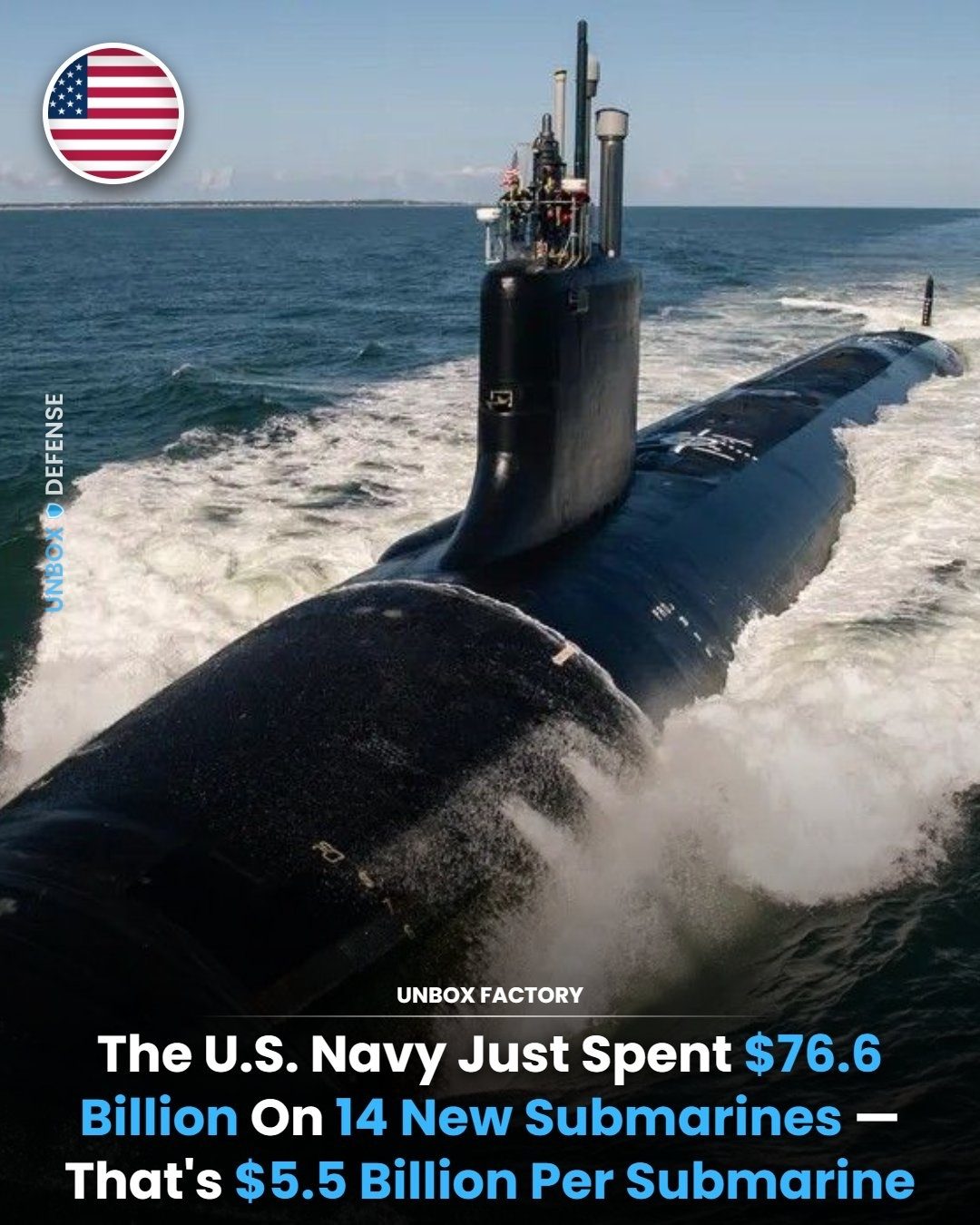
The U.S. Navy's Massive Submarine Investment
The U.S. Navy has recently committed a staggering $76.6 billion to the construction of 14 next-generation submarines. This substantial investment includes both Columbia-class ballistic missile submarines and Virginia-class attack submarines. The move is part of a broader strategy to bolster America's undersea fleet amid growing strategic competition, particularly in the Indo-Pacific region. This investment underscores the critical role that modern nuclear submarines play in global military operations.
Why This Matters
Understanding the significance of this investment requires delving into the capabilities and strategic importance of nuclear submarines. These vessels are not just tools of war; they are key components of a nation's defense and deterrence strategy. Modern nuclear submarines can remain submerged for months, travel vast distances using nuclear propulsion, and carry an array of advanced weaponry, including cruise missiles, torpedoes, and strategic nuclear weapons. The U.S. Navy's fleet of nuclear submarines is one of the largest in the world, making it a cornerstone of America's global deterrence strategy.
The New Class of Submarines
Columbia-Class Ballistic Missile Submarines
The Columbia-class submarines represent the most advanced class of ballistic missile submarines ever built. These vessels are designed to carry the country's strategic nuclear deterrent, providing a reliable and survivable platform for launching intercontinental ballistic missiles (ICBMs). The Columbia-class submarines are expected to replace the aging Ohio-class submarines, which have been in service since the 1980s. The new class incorporates cutting-edge technology and advanced stealth capabilities, ensuring that they remain undetected by adversaries.
Virginia-Class Attack Submarines
The Virginia-class submarines are versatile attack submarines designed for a variety of missions, including strike warfare, special operations, intelligence gathering, and anti-submarine warfare. These submarines are equipped with advanced sonar systems, torpedoes, and Tomahawk cruise missiles, making them highly effective in both conventional and nuclear conflicts. The Virginia-class submarines are known for their flexibility and can operate in a wide range of environments, from shallow coastal waters to deep ocean trenches.
Strengthening the Undersea Fleet
The strategic importance of the Indo-Pacific region cannot be overstated. This region is home to several major powers, including China, Japan, and India, and is a critical hub for global trade. The U.S. Navy's investment in new submarines is a direct response to the growing strategic competition in this area. By strengthening its undersea fleet, the U.S. Navy aims to maintain its strategic advantage and ensure the safety of its allies.
Enhanced Capabilities
The new submarines bring a host of advanced capabilities to the U.S. Navy. Modern nuclear propulsion systems allow these submarines to operate for extended periods without refueling, enhancing their endurance and operational flexibility. Advanced sonar and communication systems enable better detection and communication underwater, making the submarines more effective in their missions. Additionally, the integration of advanced weaponry ensures that these submarines can deliver a potent punch when needed.
Global Deterrence Strategy
The U.S. Navy's nuclear submarine fleet is a critical component of America's global deterrence strategy. These submarines provide a reliable, survivable, and effective nuclear strike capability, serving as a formidable deterrent against potential adversaries. The ability to remain undetected and operate in any environment makes them an invaluable asset in maintaining global peace and stability.
Economic and Strategic Implications
The $76.6 billion investment not only strengthens the U.S. Navy's capabilities but also has significant economic implications. The construction of these submarines creates thousands of jobs, stimulates the defense industry, and supports research and development in advanced technologies. Moreover, the investment ensures that the U.S. remains at the forefront of submarine technology, maintaining its technological edge over potential adversaries. The cost per submarine, approximately $5.5 billion, reflects the high level of sophistication and capability incorporated into these vessels.
Challenges and Considerations
While the investment in new submarines is a significant step forward, it also comes with its share of challenges. The high cost of these submarines raises questions about budget prioritization and the potential diversion of resources from other critical defense areas. Additionally, the construction and deployment of these submarines require a skilled workforce, which can be a limiting factor. Ensuring that the U.S. Navy has the necessary personnel and training to operate these advanced vessels is crucial for maximizing their effectiveness.
Practical Tips for Understanding Military Spending
For those interested in understanding military spending and its implications, here are some practical tips:
Stay Informed
Keep up-to-date with the latest developments in military technology and defense spending. Reliable sources such as the U.S. Navy, Congressional Budget Office, and defense industry reports can provide valuable insights into how military budgets are allocated and how new technologies are being integrated.
Understand the Strategic Context
Familiarize yourself with the strategic context in which military investments are made. Geographic considerations, such as the importance of the Indo-Pacific region, and geopolitical dynamics play a crucial role in shaping defense spending priorities.
Follow Industry Trends
Stay abreast of trends in the defense industry, including advancements in submarine technology, nuclear propulsion, and underwater warfare. Understanding these trends can help you appreciate the significance of major investments like the $76.6 billion commitment to new submarines.
Engage in Public Discussions
Participate in public discussions and debates about military spending. Engaging with policymakers, defense experts, and other stakeholders can help shape a more informed and nuanced understanding of defense priorities and their broader implications.
Analyze Cost-Benefit
Evaluate the cost-benefit of major defense investments. Consider factors like technological advancements, strategic advantages, and long-term economic impacts. Balancing these considerations can provide a comprehensive view of the value and necessity of such investments.
Important Takeaways
- The U.S. Navy's $76.6 billion investment in 14 next-generation submarines is a significant move to strengthen its undersea fleet.
- The new submarines, including the Columbia-class and Virginia-class, bring advanced capabilities that enhance the Navy's operational flexibility and strategic advantage.
- The investment underscores the critical role of nuclear submarines in global deterrence and maintaining peace and stability.
- The strategic importance of the Indo-Pacific region drives the need for a robust undersea fleet.
- Understanding military spending requires staying informed, analyzing strategic contexts, following industry trends, engaging in public discussions, and evaluating cost-benefit considerations.
Conclusion
The U.S. Navy's substantial investment in next-generation submarines is a clear indication of the strategic importance of modern nuclear submarines in global defense. These vessels, with their advanced capabilities and strategic significance, play a crucial role in maintaining America's deterrence strategy. By staying informed and understanding the broader context of military spending, one can appreciate the complexities and implications of such significant defense investments. As the U.S. Navy continues to evolve its fleet, the importance of these investments will only grow, ensuring that the nation remains prepared to face the challenges of an ever-changing global landscape.
Watch the Reel
Questions readers ask
How many submarines is the U.S. Navy planning to build with the $76.6 billion investment?
The U.S. Navy plans to build 14 next-generation submarines as part of this investment, which includes both Columbia-class ballistic missile submarines and Virginia-class attack submarines.
What is the primary goal of the U.S. Navy's submarine investment?
The primary goal is to enhance America's underwater military capabilities and strengthen its strategic presence, particularly in the Indo-Pacific region, amidst growing global tensions.
Why are nuclear submarines crucial for defense strategies?
Nuclear submarines play a pivotal role in defense strategies due to their stealth, endurance, and ability to carry out a variety of missions, including deterrence, intelligence gathering, and strike operations.
What specific classes of submarines are included in the $76.6 billion investment?
The investment covers the construction of Columbia-class ballistic missile submarines and Virginia-class attack submarines, both of which are designed to meet modern defense requirements.
How does this investment align with the U.S. Navy's broader defense strategy?
This investment supports the U.S. Navy's broader strategy to bolster its undersea fleet and maintain a competitive edge in global military operations, particularly in areas of strategic importance like the Indo-Pacific region.
What role do these submarines play in the U.S. Navy's defense budget for 2023?
The $76.6 billion allocated for submarine construction represents a significant portion of the 2023 defense budget, reflecting the U.S. Navy's commitment to modernizing its fleet and ensuring its underwater superiority.
What advantages do Columbia-class and Virginia-class submarines offer over older models?
Both Columbia-class and Virginia-class submarines offer advanced technology, improved stealth capabilities, and enhanced weapons systems, making them more effective in modern defense operations compared to older submarine models.
Related deep dives
Similar reads based on topic and creator.




Recent articles
Fresh deep dives from the latest Reels we unpacked.




Comments
Be the first to comment.