U.S. Natural Gas Production: Regional Trends and Future Outlook
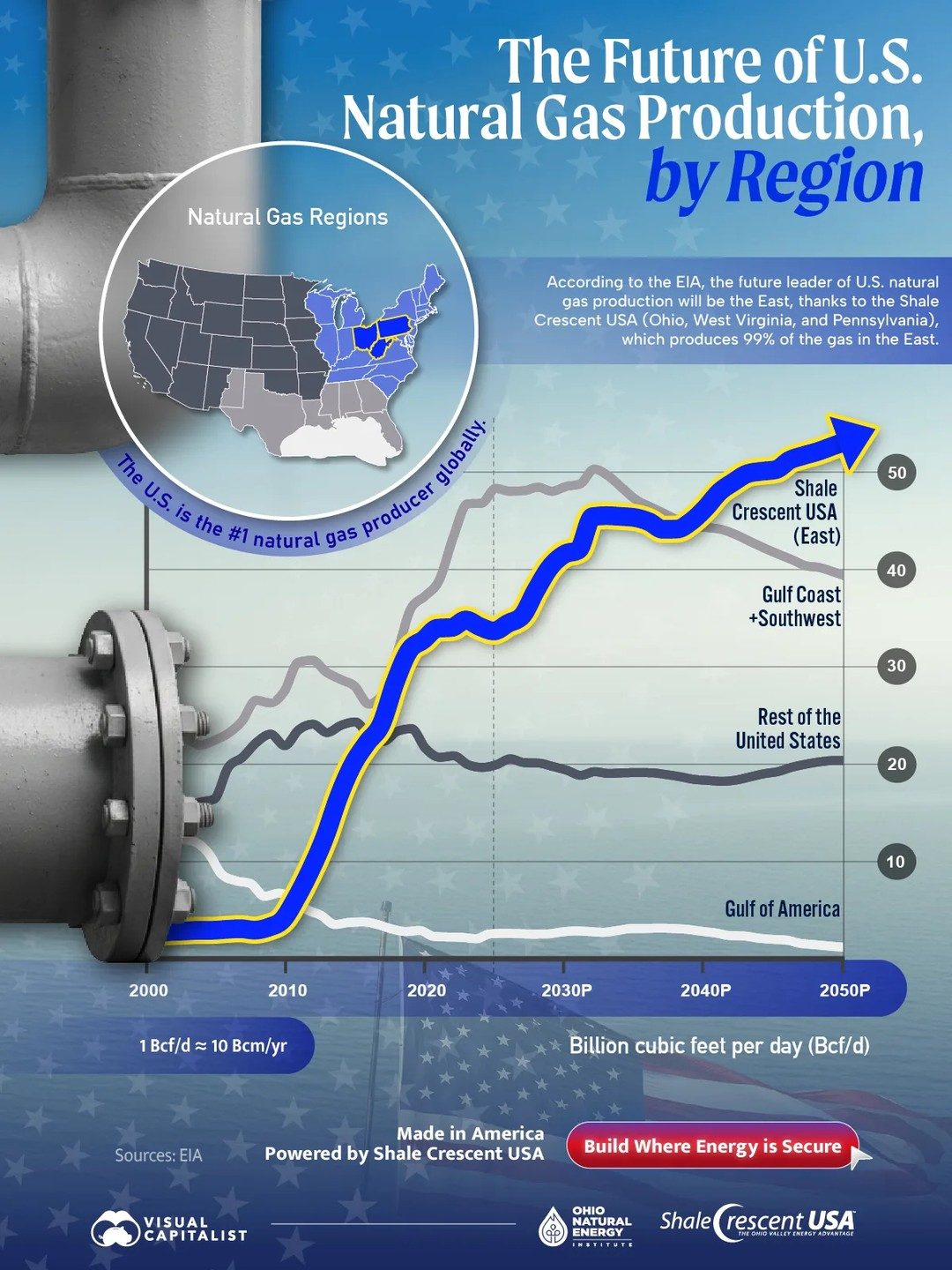
The U.S. is the world’s leading natural gas producer, with significant growth projected over the next few decades. This growth is particularly pronounced in regions like the Shale Crescent USA, which encompasses Ohio, West Virginia, and Pennsylvania. These states are poised to offer manufacturers durable cost and logistics advantages, making them key players in the U.S. energy landscape.
Context: The Importance of U.S. Natural Gas Production
Understanding the regional dynamics of natural gas production in the U.S. is crucial for several reasons. It impacts energy prices, manufacturing costs, and the overall economic stability of regions dependent on natural gas. The rise of natural gas production in the East, particularly in the Shale Crescent USA, is a testament to the region's potential to lead the nation’s energy growth.
Natural gas is a versatile and widely used energy source. It is essential for heating homes, generating electricity, and powering industries. The U.S. Energy Information Administration (EIA) provides comprehensive data on natural gas production, consumption, and reserves, making it a valuable resource for understanding the industry's future.
Regional Insights into U.S. Natural Gas Production
The Shale Crescent USA: A Rising Star
The Shale Crescent USA, which includes Ohio, West Virginia, and Pennsylvania, is projected to be a significant leader in natural gas production. This region benefits from abundant natural gas reserves and a strategic location that offers logistical advantages for manufacturers. The region's natural gas production is expected to surge, driven by advancements in drilling technologies and increasing demand.
Gulf Coast and Southwest: Established Leaders
The Gulf Coast and Southwest regions have long been at the forefront of U.S. natural gas production. These regions boast established infrastructure and a long history of oil and gas extraction. While the East is gaining momentum, the Gulf Coast and Southwest will continue to be major contributors to the nation’s natural gas supply.
The Rest of the United States
Beyond the Shale Crescent USA, the Gulf Coast, and the Southwest, other regions in the U.S. also play a role in natural gas production. Although not as prominent as the leading regions, these areas contribute to the overall energy security and diversification of the U.S.
Projections and Trends in Natural Gas Production
Historical Data and Future Projections
From 2000 to 2020, the U.S. has seen a steady increase in natural gas production. This trend is expected to continue, with significant growth projected by 2050. The EIA's data provides a clear picture of this growth, highlighting the rising contribution of the Shale Crescent USA.
Key Facts and Figures
Natural gas production is measured in billion cubic feet per day (Bcf/d). This unit provides a standardized way to compare production levels across different regions and time periods. The U.S. is currently the world’s leading natural gas producer, a position it is expected to maintain and potentially strengthen in the coming decades.
Practical Tips for Navigating the Natural Gas Market
For businesses and consumers alike, staying informed about natural gas trends and regional production dynamics is essential. Here are some practical tips:
Stay Updated with EIA Reports
The EIA provides comprehensive and reliable data on natural gas production, consumption, and prices. Regularly checking EIA reports can help businesses make informed decisions about energy sourcing and logistics.
Explore Partnerships with Regional Initiatives
Initiatives like the Shale Crescent USA and the Ohio Valley Energy Initiative offer valuable resources and partnerships for businesses looking to leverage the region's energy advantages. Engaging with these initiatives can provide cost and logistical benefits.
Important Takeaways
The future of U.S. natural gas production is bright, with significant growth expected in regions like the Shale Crescent USA. Understanding the regional dynamics and future projections can help businesses and consumers make informed decisions. The EIA's data and regional initiatives offer valuable resources to navigate the natural gas market effectively.
Conclusion
The U.S. natural gas production landscape is evolving, with the Shale Crescent USA emerging as a significant player. Regions like the Gulf Coast and Southwest continue to be key contributors, while the rest of the U.S. provides a supportive backdrop. By staying informed and leveraging regional initiatives, businesses and consumers can take full advantage of the opportunities presented by the growing natural gas market.
Watch the Reel
Questions readers ask
What is the Shale Crescent USA and why is it important for natural gas production?
The Shale Crescent USA is a region comprising Ohio, West Virginia, and Pennsylvania. It is important for natural gas production because it is expected to see significant growth, offering manufacturers advantages in cost and logistics. This makes it a pivotal area in the U.S. energy landscape, particularly for future production trends.
Which region is expected to lead the nation’s energy growth in the U.S.?
The East Coast, particularly the Shale Crescent USA region, is expected to lead the nation’s energy growth. This is due to the substantial natural gas production and the benefits it offers to manufacturers in terms of cost and logistics.
How does natural gas production in the U.S. affect manufacturing costs?
Natural gas production in the U.S. significantly impacts manufacturing costs by providing a reliable and cost-effective energy source. Regions with high natural gas production, like the Shale Crescent USA, offer manufacturers lower energy costs, which can enhance competitiveness and economic stability.
What are the future projections for U.S. natural gas production?
The future projections for U.S. natural gas production are optimistic, with significant growth expected over the next few decades. This growth is particularly notable in regions like the Shale Crescent USA, which is set to play a crucial role in the nation's energy landscape by 2050.
What role does the EIA play in natural gas production?
The Energy Information Administration (EIA) provides valuable data and analysis on natural gas production in the U.S. By tracking regional trends, the EIA helps stakeholders understand the dynamics of natural gas production and its potential impact on energy prices and manufacturing costs.
What benefits do manufacturers gain from the Shale Crescent USA’s natural gas production?
Manufacturers in the Shale Crescent USA benefit from lower energy costs and improved logistics due to the region’s abundant natural gas production. This advantage enhances their competitiveness and contributes to the overall economic stability of the region and the nation.
Recent articles
Fresh deep dives from the latest Reels we unpacked.




Comments
Be the first to comment.