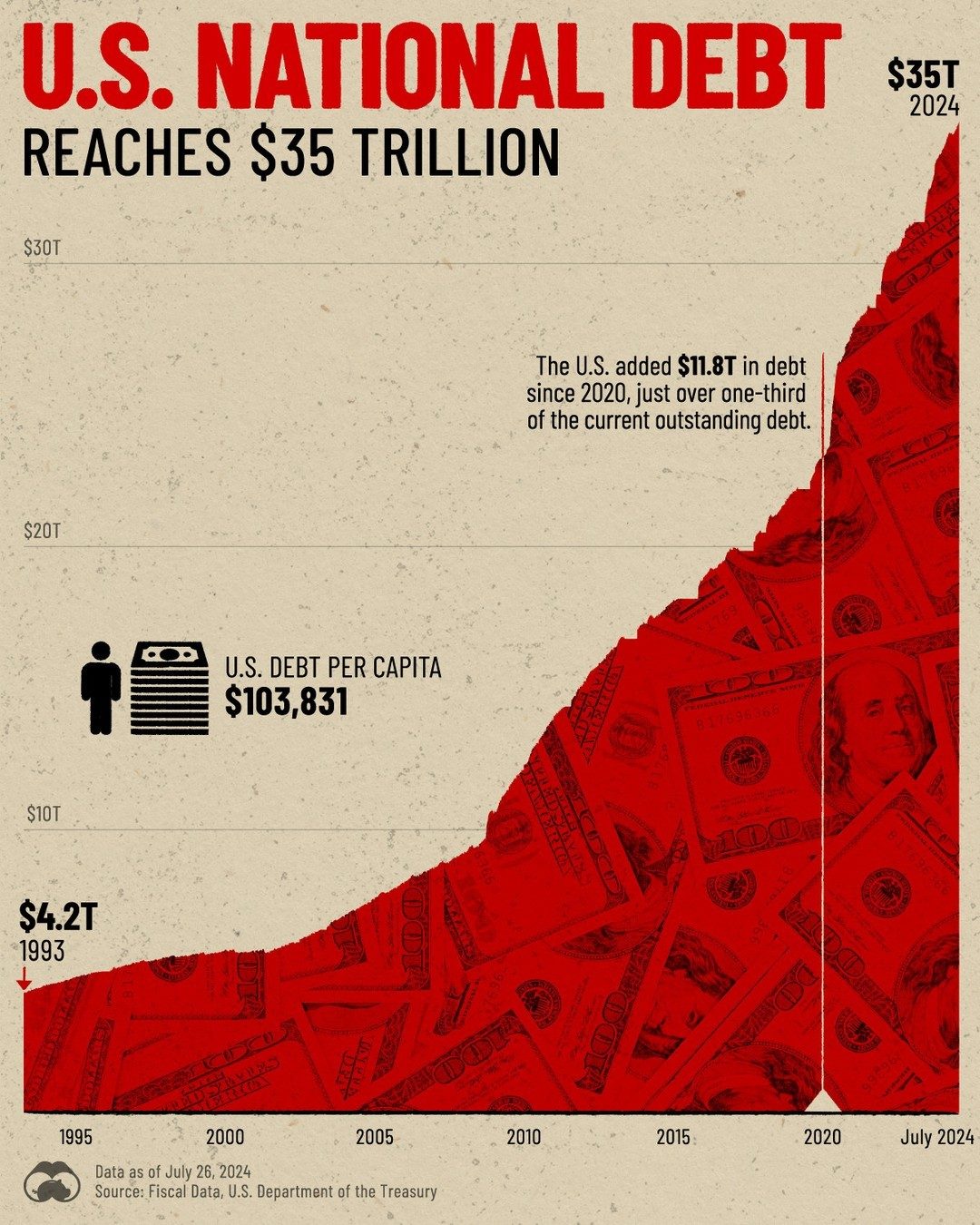
U.S. National Debt: Understanding the $35 Trillion Marker
The U.S. national debt has surged past $35 trillion, a staggering figure that equals the combined GDP of some of the world's largest economies, including China, Japan, Germany, India, and the United Kingdom. This debt, which stands at approximately $103,831 per capita, represents a significant financial burden. Each day, $2 billion is spent on debt servicing, driven by rising interest rates and increasing debt levels.
Context: Why This Matters
The national debt is a critical aspect of the U.S. economy. It reflects the cumulative borrowing by the federal government to fund its operations and programs. Understanding the national debt is essential for several reasons:
- Economic Impact: High levels of debt can affect economic growth, inflation, and interest rates.
- Fiscal Policy: The debt influences government spending and taxation policies.
- Public Interest: Taxpayers and citizens are directly affected by the debt, as it impacts future generations through higher taxes or reduced services.
Main Discussion
Historical Perspective
The U.S. national debt has grown significantly over the years. In 1993, the national debt was around $4.2 trillion. By July 2024, it had soared to $35 trillion, with the majority of the increase—$11.8 trillion—occurring since 2020. This rapid escalation can be attributed to various factors, including economic stimulus packages, healthcare expenditures, and military spending.
Current Debt Levels
As of July 26, 2024, the U.S. national debt sits at $35 trillion. This figure includes both public debt (held by individuals, corporations, and foreign governments) and intragovernmental debt (held by federal agencies and trusts). The public debt component is particularly concerning, as it represents the amount owed to external entities, which can influence interest rates and economic stability.
Debt per Capita
The U.S. debt per capita is $103,831, which means that each citizen, on average, is responsible for this amount of the national debt. This figure highlights the individual impact of the national debt and underscores the importance of fiscal responsibility.
Debt Servicing Costs
Each day, approximately $2 billion is spent on debt servicing. This cost is driven by interest payments on the outstanding debt, which has been rising due to higher interest rates. As the debt continues to grow, so does the cost of servicing it, potentially diverting funds from other critical areas such as education, healthcare, and infrastructure.
Practical Tips
Understanding Debt Servicing
Debt servicing costs can be managed through prudent fiscal policies. Governments can reduce borrowing, increase revenue, or balance the budget to minimize the amount spent on interest payments. Transparent communication about the debt and its impact on the economy can also help in making informed decisions.
Monitoring Economic Indicators
Keeping an eye on economic indicators such as GDP, inflation, and unemployment rates can provide insights into the health of the economy. These indicators can help in predicting future debt levels and the potential impact on the national budget.
Fiscal Responsibility
Promoting fiscal responsibility involves reducing unnecessary spending, increasing revenue through efficient taxation, and investing in long-term economic growth. Citizens can play a role by staying informed about fiscal policies and advocating for responsible financial management.
Public Awareness
Increasing public awareness about the national debt and its implications can foster a more engaged citizenry. Understanding the debt per capita and the daily servicing costs can help individuals appreciate the significance of fiscal policy and the importance of financial responsibility.
Advocating for Change
Engaging with policymakers and advocating for sustainable fiscal policies can make a difference. Citizens can participate in public debates, support transparency initiatives, and encourage lawmakers to prioritize long-term economic stability over short-term gains.
Important Takeaways
- The U.S. national debt stands at $35 trillion, with a significant portion added since 2020.
- The debt per capita is $103,831, highlighting the individual impact of the national debt.
- Each day, $2 billion is spent on debt servicing, driven by rising interest rates and increasing debt levels.
- Understanding the national debt and its implications is crucial for economic stability and public interest.
- Fiscal responsibility, public awareness, and advocacy can help manage the national debt effectively.
Conclusion
The U.S. national debt is a critical aspect of the country's financial health. With the debt surpassing $35 trillion, it is essential to understand its implications and take steps to manage it effectively. By staying informed, promoting fiscal responsibility, and advocating for sustainable policies, individuals and policymakers can work together to ensure a stable economic future.
Watch the Reel
Questions readers ask
What does the current U.S. national debt mean for the average American?
The current U.S. national debt of over $35 trillion translates to over $100,000 per person. This means that each individual in the U.S. is theoretically responsible for a significant portion of the national debt. This figure is important for understanding the financial burden that the country faces and the potential implications for future generations.
How does the U.S. national debt compare to other countries' economies?
The $35 trillion U.S. national debt is substantial enough to surpass the combined GDP of the world’s top economies, including China, Japan, Germany, India, and the United Kingdom. This comparison highlights the enormous scale of the U.S. debt and its significance on a global level.
What are the daily costs associated with servicing the U.S. national debt?
The U.S. government spends approximately $2 billion daily on debt servicing. This cost is driven by rising interest rates and the increasing levels of debt, making it a significant expense that impacts the federal budget and potentially reduces funds available for other public programs.
What factors have contributed to the rapid growth of the U.S. national debt in recent years?
Several factors have contributed to the rapid growth of the U.S. national debt, including increased government spending on programs like healthcare, defense, and social security, as well as revenue shortfalls due to tax cuts and economic downturns. For instance, the U.S. debt skyrocketed during the 2020 COVID-19 pandemic due to unprecedented emergency spending.
How can I visualize the growth of the U.S. national debt over the past few decades?
To visualize the growth of the U.S. national debt, you can look at a U.S. debt infographic or timeline starting from 1993. These visuals typically show a steady increase in debt levels over the years, with notable spikes during economic crises and periods of significant government spending. For instance, the debt has more than doubled since 2008.
What are the potential long-term effects of the rising U.S. national debt on the economy?
The rising U.S. national debt can have several long-term effects on the economy, including increased interest payments, reduced fiscal flexibility, and potential impacts on economic growth. High levels of debt may also influence the U.S. credit rating and affect global financial markets.
Where can I find the most current data on the U.S. national debt?
The most current data on the U.S. national debt can be found on the U.S. Treasury Department's website. This site provides up-to-date figures, including daily debt levels, historical data, and detailed reports on the national debt and its components. Additionally, various financial news outlets and economic research organizations offer regular updates and analysis.
Related deep dives
Similar reads based on topic and creator.


Recent articles
Fresh deep dives from the latest Reels we unpacked.




Comments
Be the first to comment.