US Jobs Supported by Exports to China
US exports to China support a significant number of American jobs, with a notable concentration in agriculture and education. Understanding the geographic distribution of these jobs provides valuable insight into the economic implications of the ongoing trade tensions between the two countries.
Context / Why This Matters
The trade relationship between the United States and China is a critical component of the global economy. Exports to China support hundreds of thousands of jobs across various sectors in the U.S. According to estimates from the US-China Business Council, these jobs span from coastal states to the heartland, showcasing the widespread economic impact of this trade partnership. Given the current trade war, it is crucial to examine how certain states are more economically exposed to fluctuations in this trade relationship.
Main Discussion
State-by-State Breakdown
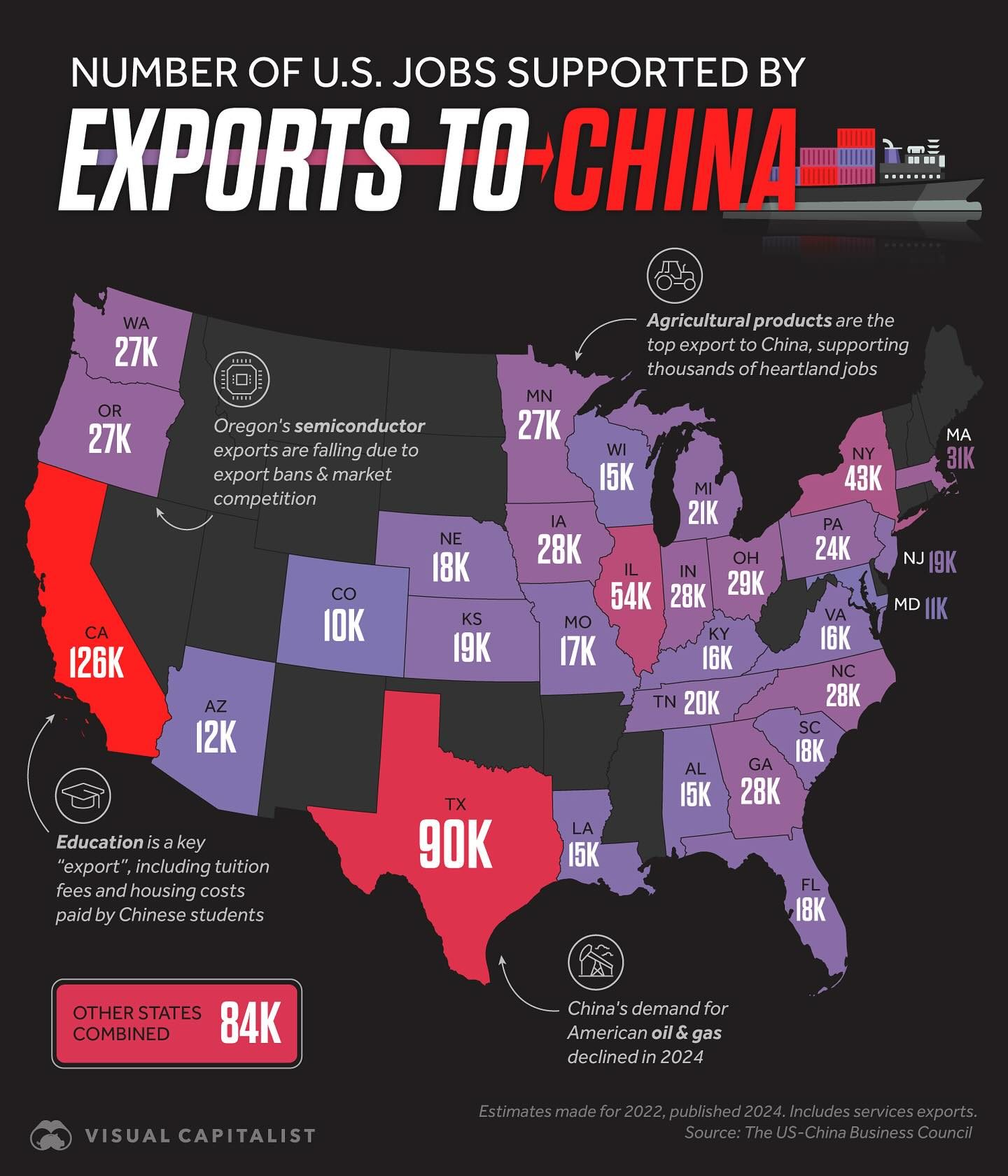
The infographic from Visual Capitalist provides a clear breakdown of the number of jobs supported by exports to China, state by state. Here are some key figures:
- California: Leads with 126,000 jobs supported by exports to China.
- Texas: Supports 90,000 jobs.
- Washington and Oregon: Each supports 27,000 jobs.
- Wisconsin: Supports 54,000 jobs.
- New York: Supports 43,000 jobs.
- Massachusetts: Supports 31,000 jobs.
- Other Notable States: Illinois (54,000 jobs), Indiana (24,000 jobs), Michigan (21,000 jobs), and many more.
These numbers highlight the diverse geographic impact of US-China trade, affecting both coastal and inland states.
Key Export Sectors
Agricultural Products: Agricultural exports are a significant driver of US jobs supported by China. This sector includes a variety of products from crops to livestock, supporting thousands of jobs in rural and agricultural communities.
Education: Education is another key export, encompassing tuition fees and housing costs paid by Chinese students studying in the US. This sector not only supports academic institutions but also the broader economy through ancillary services.
Decline in Oil and Gas Demand: The infographic notes a decline in China's demand for American oil and gas. This shift could impact energy-producing states, which have traditionally relied on these exports to support jobs and economic stability.
Practical Tips
For those involved in or impacted by the trade between the US and China, here are some practical considerations:
- Diversify Export Markets: Diversifying export markets can mitigate the risks associated with trade tensions. Exploring new markets can provide stability and growth opportunities.
- Invest in Education: The education sector's significant contribution to job support underscores the importance of investment in educational infrastructure and attractiveness to international students.
- Monitor Policy Changes: Staying informed about policy changes and trade agreements can help businesses and individuals adapt and plan for potential shifts in demand.
Important Takeaways
- Economic Sensitivity: The US economy, especially in certain states, is highly sensitive to trade dynamics with China. Understanding this sensitivity can guide policy and business decisions.
- Sector Diversity: While agriculture and education are key sectors, the diversity of exports highlights the need for a balanced approach to trade policy.
- Rising Competition in Education: With China’s rising education sector, the US must continue to attract international students to maintain its competitive edge.
Conclusion
The trade relationship between the US and China is multifaceted and deeply integrated into the American economy. From agriculture to education, the jobs supported by these exports are spread across the country, impacting both urban and rural communities. As trade tensions continue, it is essential for policymakers, businesses, and individuals to understand the economic stakes and adapt accordingly.
Watch the Reel
Questions readers ask
Which US states are most affected by the trade tensions with China?
The states most affected by US-China trade tensions are California, Texas, and Washington. These states have substantial job support from exports to China, making them particularly vulnerable to disruptions in trade.
What industries in the US are most at risk due to China trade tensions?
The industries most at risk include agriculture and services. These sectors have significant export volumes to China, and any trade disruption could have a large impact on employment.
How many US jobs are supported by exports to China?
Exports to China support hundreds of thousands of American jobs across various sectors. The exact number can fluctuate, but the impact is significant, stretching from coastal states to the heartland of the US.
What are the key agricultural products exported from the US to China?
Key agricultural products exported from the US to China include soybeans, corn, and sorghum. These exports are crucial for the livelihood of many American farmers and contribute significantly to the US economy.
How do US-China trade tensions impact US businesses?
US-China trade tensions can disrupt supply chains, increase tariffs, and create uncertainty for businesses. These factors can lead to job losses, reduced investments, and decreased competitiveness for American companies.
What is the significance of US oil exports to China?
US oil exports to China are important for both countries' energy security and economic stability. However, trade tensions can lead to fluctuations in oil exports, affecting both US producers and the broader economy.
Recent articles
Fresh deep dives from the latest Reels we unpacked.




Comments
Be the first to comment.