U.S. GDP Growth and the Impact of Imports
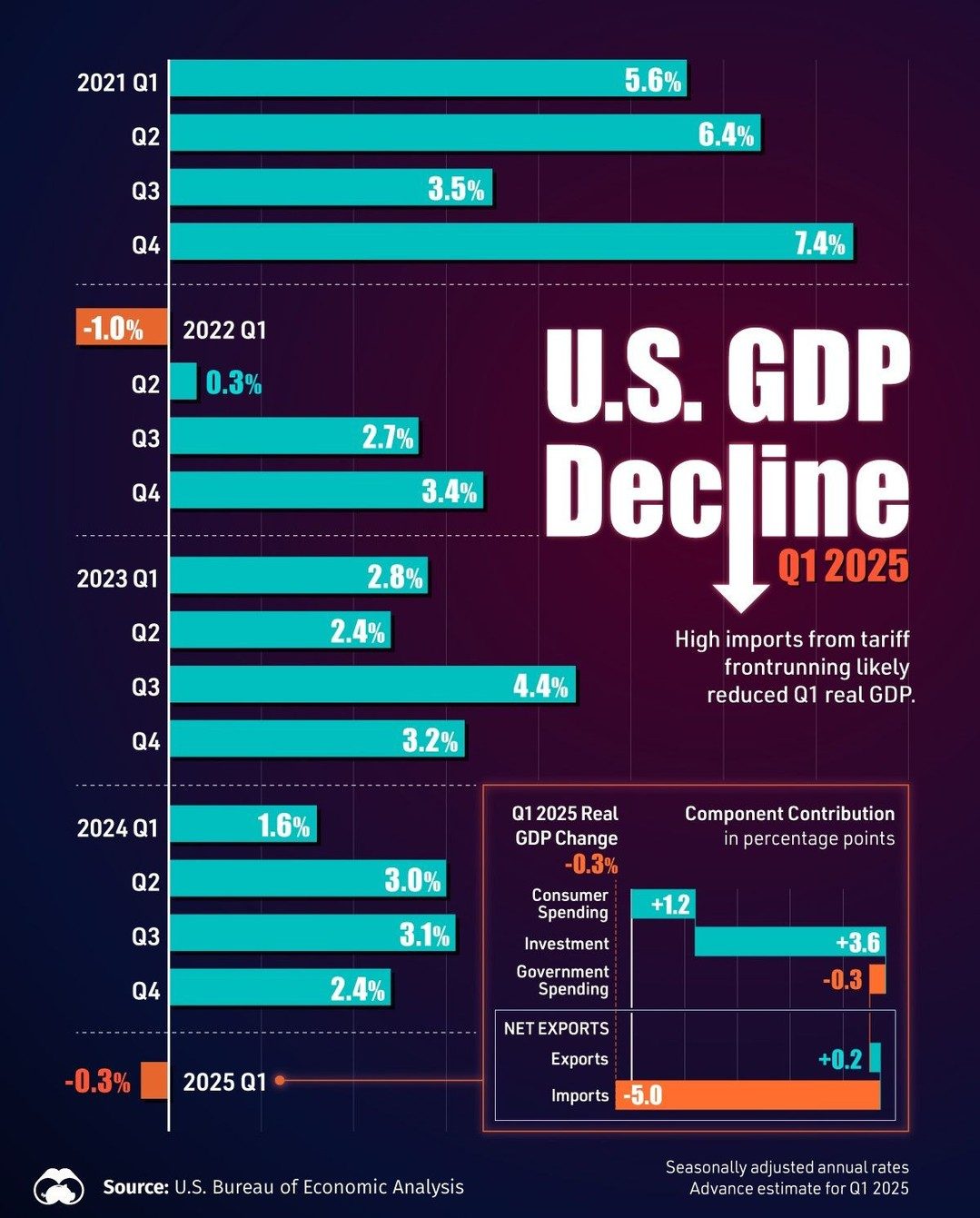
U.S. GDP growth experienced a notable decline of 0.3% in the first quarter of 2025, marking the first contraction since the first quarter of 2022. This downturn was primarily driven by a surge in imports, which negatively impacts GDP growth as they represent spending on foreign rather than domestic production. Let's delve into the factors contributing to this economic shift and examine the broader trends in U.S. GDP growth since 2021.
Why This Matters
Understanding the fluctuations in U.S. GDP growth is crucial for various stakeholders, including policymakers, investors, and businesses. It provides insights into the overall health of the economy and helps in making informed decisions. The recent contraction highlights the importance of monitoring trade dynamics and their impact on economic performance.
The Breakdown: Factors Affecting GDP Growth
Seasonally Adjusted Annual Rates
The data presented is seasonally adjusted, which means it accounts for regular, predictable fluctuations in economic activity throughout the year. This adjustment helps in providing a clearer picture of the underlying trends in GDP growth.
Consumer Spending
Consumer spending is a significant contributor to GDP growth. It includes expenditures made by households on goods and services. Historically, consumer spending has been a reliable driver of economic growth, and its performance is closely watched by economists.
Investment
Investment, both in physical capital (such as machinery and structures) and intellectual property, plays a vital role in economic growth. It reflects the confidence of businesses in the future economic outlook. High levels of investment can signal robust economic growth, while declines may indicate uncertainty.
Government Spending
Government spending includes expenditures made by federal, state, and local governments on goods and services. It can influence economic activity by creating jobs, boosting infrastructure, and providing social services. Changes in government spending can have both short-term and long-term impacts on GDP growth.
Net Exports
Net exports, which is the difference between exports and imports, have been a point of concern. While exports contribute positively to GDP, imports are subtracted from it. The surge in imports has been a significant factor in the recent decline of U.S. economic growth, reflecting increased reliance on foreign goods and services.
Import Surge and Its Impact
The surge in imports has been a significant factor in the recent decline in GDP growth. Imports represent spending on foreign goods and services, which are subtracted from the GDP calculation. This shift can indicate changes in consumer preferences, supply chain dynamics, or trade policies. Understanding the root causes and consequences of this trend is essential for addressing the economic downturn.
Historical Trends Since 2021
Q4 2021: A Notable Decline
In Q4 2021, the U.S. GDP experienced a notable decline, with a growth rate of -1.0%. This period marked a significant downturn and set the stage for subsequent economic trends. The decline in Q4 2021 is crucial in understanding the broader economic context.
2022: Fluctuations and Recovery
Following the 2021 decline, the GDP growth rate fluctuated between 2.8% and 4.4% through 2022, indicating a period of recovery and growth. This period showcased the resilience of the economy and the effectiveness of recovery efforts.
2023: Steady Growth and 2025 Forecast
Throughout 2023, the GDP growth rate ranged between 1.6% and 3.1%, continuing the trend of steady but moderate growth. The forecasts for Q1 2025 suggest a growth rate of 2.4%, reflecting ongoing economic activity and stability.
Practical Tips for Understanding Economic Data
Utilize Seasonally Adjusted Data
When analyzing economic data, it’s essential to use seasonally adjusted figures. This adjustment helps in identifying underlying trends by removing the effects of seasonal variations, providing a more accurate picture of economic performance.
Consider the Components of GDP
Breaking down GDP into its components—consumer spending, investment, government spending, and net exports—offers deeper insights. Each component has unique drivers and can have different impacts on overall economic growth.
Monitor Trade Dynamics
Trade dynamics, including the balance between exports and imports, are critical for understanding economic performance. Monitoring these trends can help in anticipating economic shifts and their potential impacts.
Stay Informed with Reliable Sources
Rely on authoritative sources like the U.S. Bureau of Economic Analysis (BEA) for accurate and up-to-date economic data. This ensures that decisions are based on reliable information and not on speculation or incomplete data.
Important Takeaways
The recent contraction in U.S. GDP growth underscores the importance of monitoring economic trends and understanding their underlying factors. Consumer spending and investment continue to be key drivers, while the balance of trade remains a crucial aspect to watch. Utilizing seasonally adjusted data, focusing on GDP components, and staying informed with reliable sources are essential practices for a comprehensive understanding of economic performance.
Conclusion
The U.S. GDP growth has shown fluctuations and resilience over recent years, with a notable decline in Q1 2025. Imports have been a significant factor in this downturn, reflecting broader changes in trade dynamics and economic activity. Understanding these trends and their impacts requires a thorough analysis of economic data, focusing on key components and reliable sources. By staying informed, stakeholders can make more informed decisions and navigate the complexities of economic performance.
Watch the Reel
Questions readers ask
What caused the U.S. GDP to decline in the first quarter of 2025?
The U.S. GDP declined by 0.3% in Q1 2025 primarily due to a significant increase in imports. Imports reduce GDP because they represent spending on foreign goods rather than domestically produced items, thereby decreasing domestic economic activity.
How does the 2025 GDP contraction compare to previous years?
The 0.3% contraction in Q1 2025 is the first decline since the first quarter of 2022. Prior to this, the U.S. economy had shown steady growth, making this recent shift particularly noteworthy for economists and stakeholders.
Why are imports considered a factor in GDP fluctuations?
Imports are a crucial factor in GDP calculations because they represent spending on foreign products. When imports increase, it means more money is being spent on goods produced outside the country, which does not directly contribute to domestic economic output, hence lowering GDP.
What does the Bureau of Economic Analysis report say about the 2025 GDP decline?
The Bureau of Economic Analysis has reported the GDP contraction in Q1 2025, highlighting the significant impact of imports on the economic downturn. The report underscores the importance of monitoring trade dynamics to understand broader economic trends.
How can businesses and investors interpret this GDP decline?
For businesses and investors, the GDP decline in Q1 2025 signals a shift in economic conditions, emphasizing the need to reassess strategies. It's important to consider the impact of trade dynamics on domestic production and consumer spending when making investment and operational decisions.
What are the implications of the 2025 GDP decline for policymakers?
The recent GDP decline serves as a critical indicator for policymakers to review and potentially adjust economic policies. Policymakers may need to focus on strategies to boost domestic production and reduce reliance on imports to mitigate future economic contractions.
Recent articles
Fresh deep dives from the latest Reels we unpacked.




Comments
Be the first to comment.