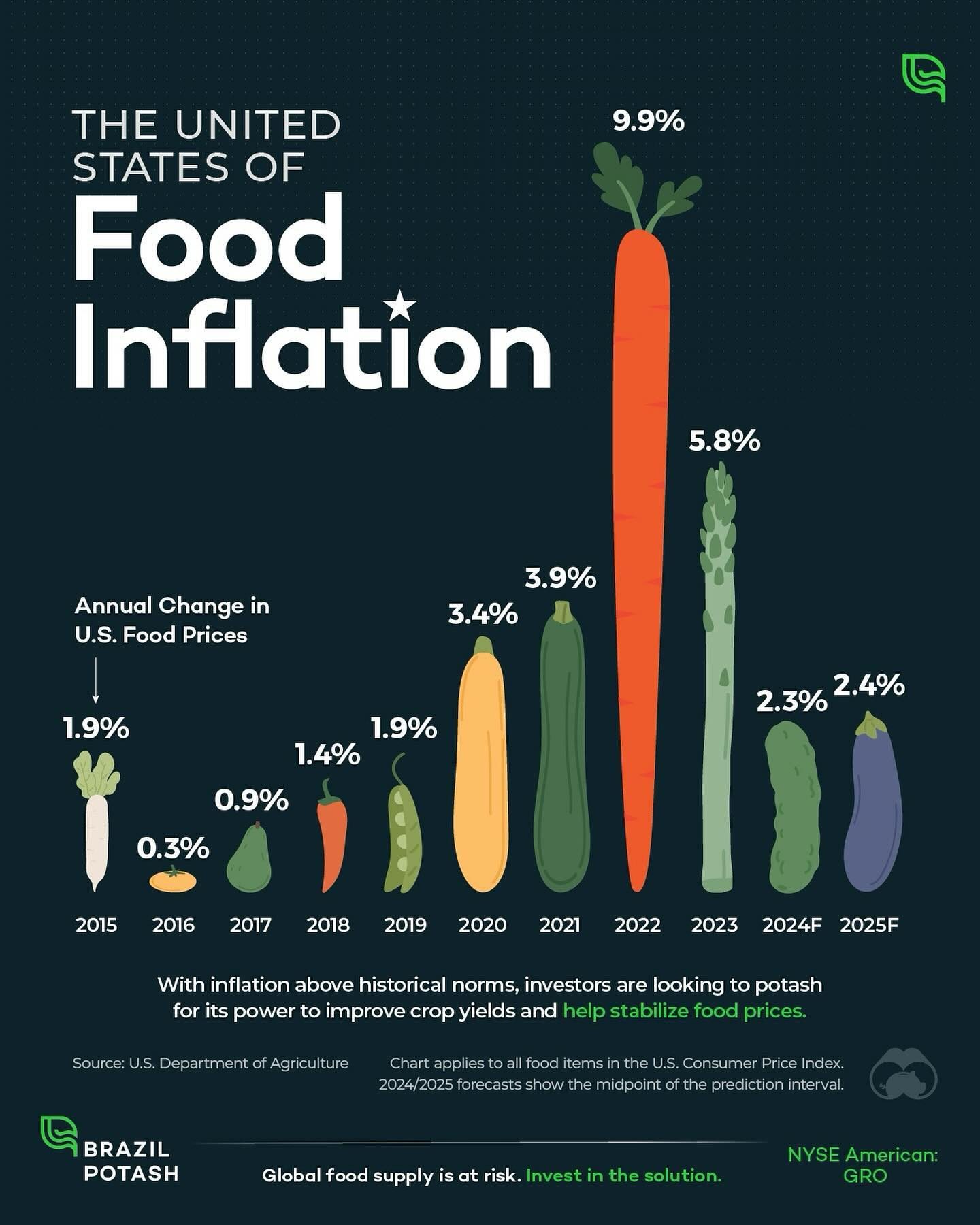
Food Inflation in the U.S. from 2015 to 2025
Rising food prices have a significant impact on household budgets, making it crucial to understand the trends and factors driving this inflation. Annual food inflation in the U.S. has shown notable fluctuations from 2015 to 2025, as highlighted in a recent analysis. This article delves into the key trends, the role of potash in stabilizing food prices, and the broader implications for consumers and investors.
Why This Matters
Understanding food inflation is essential for both households and investors. For households, it directly affects budgeting and food security. For investors, it presents opportunities and risks, particularly in agricultural sectors. By examining the trends and potential solutions, consumers and investors can make more informed decisions.
Food Inflation Trends from 2015 to 2025
Historical Data and Patterns
The annual change in U.S. food prices from 2015 to 2023 shows a mix of stability and volatility. Here's a breakdown of the key years:
- 2015: 1.9%
- 2016: 0.3%
- 2017: 1.4%
- 2018: 1.9%
- 2019: 3.4%
- 2020: 3.9%
- 2021: 2.3%
- 2022: 2.4%
- 2023: 5.8%
These figures reveal a period of relatively low inflation in the mid-2010s, followed by a sharp increase in 2019 and 2020, likely influenced by factors such as global trade disruptions, supply chain issues, and increased demand.
Forecasted Trends
Looking ahead, the forecasted inflation rates for 2024 and 2025 are 2024 (forecasted): 2.3% and 2025 (forecasted): 2.4%. These projections indicate a potential stabilization of food prices, though they remain above historical norms.
Impact on Households
High inflation rates directly impact household budgets. Food is a staple expense, and significant increases in prices can strain household spending. Understanding these trends helps families plan their budgets more effectively and seek out cost-saving strategies.
The Role of Potash in Stabilizing Food Prices
What is Potash?
Potash refers to a group of water-soluble potassium salts, primarily used as fertilizer in agriculture. It is a vital nutrient for plant growth, enhancing crop yields and quality.
Potash and Food Prices
Investors are increasingly looking to potash as a means to stabilize food prices. Potash fertilizers improve crop yields, which can lead to a more abundant food supply. With a stable and sufficient food supply, price volatility can be reduced.
Benefits for Investors
For investors, potash presents an attractive opportunity. The demand for potash is likely to remain strong as global food security becomes an increasingly pressing issue. By investing in potash, investors can support sustainable agriculture and potentially stabilize food prices.
Investing in Potash
Potash can be accessed through various investment vehicles, including stocks in companies like Brazil Potash, which focuses on the production and distribution of potash. Investors can also explore Exchange-Traded Funds (ETFs) that include potash-related stocks.
Practical Tips for Coping with Food Inflation
Budgeting Strategies
- Plan Meals: Meal planning can help reduce impulse buying and ensure that you only purchase what you need.
- Buy in Bulk: Purchasing non-perishable items in bulk can save money in the long run.
- Use Coupons and Sales: Take advantage of sales, discounts, and coupons to maximize savings.
Investing in Agriculture
- Explore Agricultural Stocks: Consider investing in companies that focus on improving crop yields and agricultural efficiency.
- Diversify Your Portfolio: Include a mix of domestic and international agricultural stocks to mitigate risks.
Important Takeaways
- Inflation Trends: Food inflation in the U.S. has fluctuated significantly from 2015 to 2025, with forecasted stabilization in the coming years.
- Impact on Households: High inflation rates can strain household budgets, making it crucial to understand and adapt to these trends.
- Role of Potash: Potash fertilizers can improve crop yields, potentially stabilizing food prices and offering investment opportunities.
Conclusion
Food inflation is a complex issue with wide-ranging implications for both households and investors. By understanding the trends, the role of potash, and practical strategies for coping, individuals and investors can navigate this landscape more effectively. Whether through budgeting, investing, or advocating for agricultural solutions, there are actionable steps to mitigate the impact of food inflation and support sustainable practices.
Watch the Reel
Questions readers ask
What were the key factors driving U.S. food inflation from 2015 to 2023?
Several factors contributed to U.S. food inflation during this period. These include supply chain disruptions, changes in consumer demand, and increases in input costs, such as those for fertilizer. All of these can result in higher prices for consumers.
How have food prices in the U.S. changed from 2015 to 2023?
Annual food inflation in the U.S. has experienced significant fluctuations. Prices have shown a general upward trend, with notable increases in recent years. However, forecasts suggest a potential stabilization in the coming years, although prices are expected to remain higher than historical levels.
Why is potash important in the context of food prices?
Potash is a key component in fertilizer, which is crucial for agricultural productivity. Fluctuations in potash prices can significantly impact the cost of producing food, thereby influencing overall food prices. Understanding potash price trends can provide insights into potential future changes in food inflation.
What are the implications of food inflation for U.S. households?
Food inflation directly impacts household budgets, as it increases the cost of groceries and other food items. This can lead to challenges in maintaining food security and may require households to adjust their spending habits to accommodate higher food prices.
How might food inflation affect investors in the agricultural sector?
Food inflation presents both opportunities and risks for investors in the agricultural sector. Higher food prices can increase revenue for farmers and agricultural companies, but they can also lead to increased input costs. Investors need to consider these dynamics when making strategic decisions.
What can we expect from food price trends in the U.S. from 2023 to 2025?
Forecasts for the period from 2023 to 2025 suggest that food prices may stabilize but will likely remain above historical norms. This means that while the rate of increase may slow, consumers should still expect to pay more for food compared to previous years.
Recent articles
Fresh deep dives from the latest Reels we unpacked.




Comments
Be the first to comment.