U.S. Electricity Demand Projection
Understanding the future of electricity demand is crucial for planning and investment, especially in the face of rapid technological and societal changes. The U.S. is expected to experience a significant surge in electricity demand across various sectors by 2050, driven by advancements in AI, the rise of electric vehicles, and the adoption of renewable energy sources. This article delves into the projected growth across industrial, commercial, transportation, and residential sectors, providing a comprehensive overview of the electricity landscape.
Context / Why this matters
Electricity demand projections are critical for policymakers, investors, and energy companies. As the demand for electricity grows, so does the need for reliable and efficient power sources. The projected increase in electricity demand is not just a matter of keeping the lights on; it's about supporting the infrastructure that will power the future, including electric vehicles, data centers, and smart homes. This surge in demand will require significant investments in generation, transmission, and distribution infrastructure.
Main discussion
Total U.S. Electricity Demand
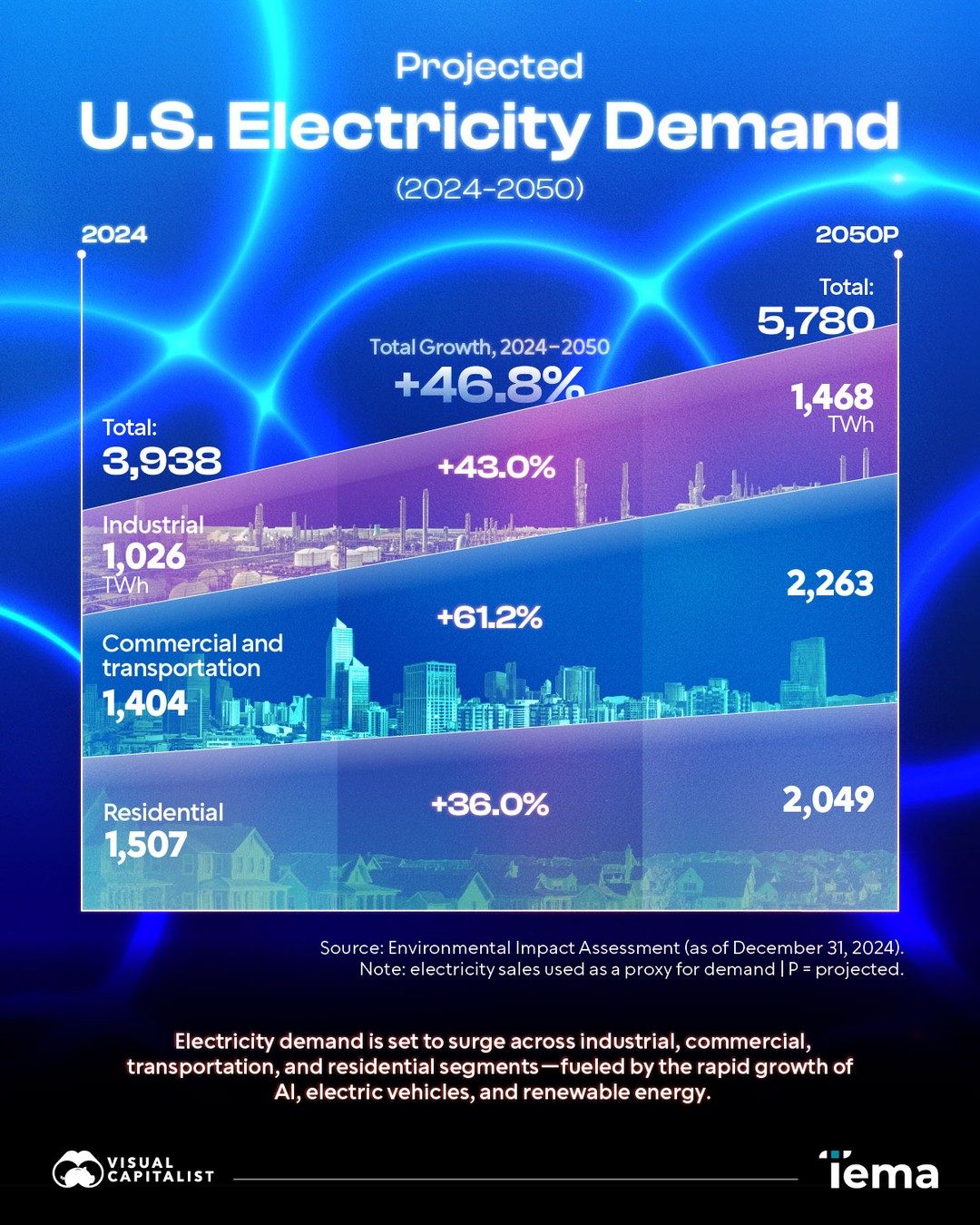
By 2050, the total U.S. electricity demand is projected to reach 5,780 terawatt-hours (TWh), a substantial increase from the 3,938 TWh in 2024. This represents an overall growth of 46.8% over a 26-year period. The surge in demand is largely attributed to the rapid adoption of new technologies and the shift towards more energy-intensive lifestyles and industries.
Industrial Sector
The industrial sector, which includes manufacturing, mining, and other heavy industries, is expected to see a 43.0% increase in electricity demand by 2050. This sector is crucial for economic growth and is driven by the need for more efficient and automated processes. The demand for electricity in this sector is expected to reach 2,263 TWh by 2050, up from 1,507 TWh in 2024.
Commercial and Transportation Sector
The commercial and transportation sector is projected to experience the highest growth rate of 61.2%. This includes electricity demand from commercial buildings, public transportation, and electric vehicles (EVs). The surge in demand is fueled by the increasing use of EVs and the expansion of public transportation systems. By 2050, this sector is expected to require 2,049 TWh, up from 1,404 TWh in 2024.
Residential Sector
The residential sector, which includes homes and small businesses, is expected to see a 36.0% increase in electricity demand by 2050. Factors driving this growth include the increased use of smart home devices, the rise in remote work, and the adoption of home-based renewable energy solutions. By 2050, the residential sector is projected to require 1,404 TWh, up from 1,026 TWh in 2024.
Practical tips
For Investors
Investing in the right sectors can yield significant returns as electricity demand surges. Consider looking into companies involved in:
- The manufacturing of electric vehicles and charging infrastructure
- Data centers and cloud services
- Renewable energy generation and storage
- Energy-efficient building materials and smart home technologies
For Policymakers
To manage the surge in electricity demand, policymakers should focus on:
- Promoting the adoption of renewable energy sources to reduce reliance on fossil fuels
- Investing in grid modernization to ensure reliable and efficient power delivery
- Implementing policies that incentivize energy conservation and efficiency
For Energy Companies
Energy companies should prepare for increased demand by:
- Expanding generation capacity, particularly in renewable energy sources
- Enhancing grid infrastructure to support a higher volume of electricity
- Investing in research and development for new energy storage technologies
Important takeaways
The projected growth in U.S. electricity demand is a significant development with far-reaching implications. Understanding the drivers behind this surge and the sector-by-sector breakdown can help stakeholders make informed decisions. Key points to remember:
- The total U.S. electricity demand is projected to reach 5,780 TWh by 2050, a 46.8% increase from 2024.
- The industrial sector will see a 43.0% increase in demand, driven by automation and efficiency.
- The commercial and transportation sector will experience the highest growth rate of 61.2%, fueled by the rise of electric vehicles and public transportation.
- The residential sector will see a 36.0% increase, spurred by the adoption of smart home devices and remote work.
Conclusion
The projected surge in U.S. electricity demand by 2050 presents a unique set of opportunities and challenges. As AI, electric vehicles, and renewable energy sources continue to gain traction, the demand for electricity will only grow. By understanding these trends and preparing for the future, stakeholders can ensure a reliable and sustainable electricity supply for decades to come. Investing in the right technologies and policies today will pave the way for a robust and efficient energy infrastructure tomorrow.
Watch the Reel
Questions readers ask
What are the primary drivers of the projected electricity demand surge in the U.S. by 2050?
The primary drivers include the widespread adoption of electric vehicles, advancements in artificial intelligence which require significant power, and the increasing integration of renewable energy sources into the grid. These factors will collectively contribute to a substantial increase in electricity consumption across various sectors.
How will the electricity demand surge impact different sectors?
The surge will affect all sectors differently, with the industrial and transportation sectors likely seeing the most significant increases. Industrial operations will require more power for advanced manufacturing and data centers, while the transportation sector will consume more electricity due to the rise of electric vehicles. Residential and commercial sectors will also see growth, driven by increased use of electronic devices and smart home technologies.
What role do electric vehicles play in the projected electricity demand growth?
Electric vehicles (EVs) are a major contributor to the projected electricity demand growth. As more consumers switch to EVs, the demand for charging infrastructure and the resulting electricity consumption will surge. This trend is expected to accelerate significantly by 2050, making EVs a critical factor in the total electricity demand increase.
What investments are needed to support the anticipated electricity demand surge?
To support the anticipated surge, substantial investments in infrastructure are required. This includes upgrading and expanding the power grid, building new power plants, and enhancing energy storage solutions. These investments are essential for ensuring a reliable and efficient electricity supply to meet the growing demands across all sectors.
How will the rise of AI impact the electricity demand projections?
The rise of AI will significantly impact electricity demand, particularly in data centers and cloud computing. AI technologies require vast amounts of computational power, leading to increased electricity consumption. As AI continues to advance and become more integrated into various industries, its contribution to the overall electricity demand will become even more pronounced.
What can consumers and businesses do to prepare for the electricity demand surge?
Consumers and businesses can prepare by investing in energy-efficient technologies and adopting smart energy management systems. Businesses should also consider renewable energy sources and on-site power generation to reduce reliance on the grid. Individuals can contribute by choosing energy-efficient appliances and opting for electric vehicles, which can be charged during off-peak hours to manage demand.
How do electricity demand projections inform policy and investment decisions?
Electricity demand projections provide valuable insights for policymakers and investors, helping them make informed decisions about infrastructure development, power generation, and resource allocation. Accurate projections allow for strategic planning, ensuring that the necessary investments are made to support the growing demand and maintain a stable electricity supply across all sectors.
Related deep dives
Similar reads based on topic and creator.


Recent articles
Fresh deep dives from the latest Reels we unpacked.




Comments
Be the first to comment.