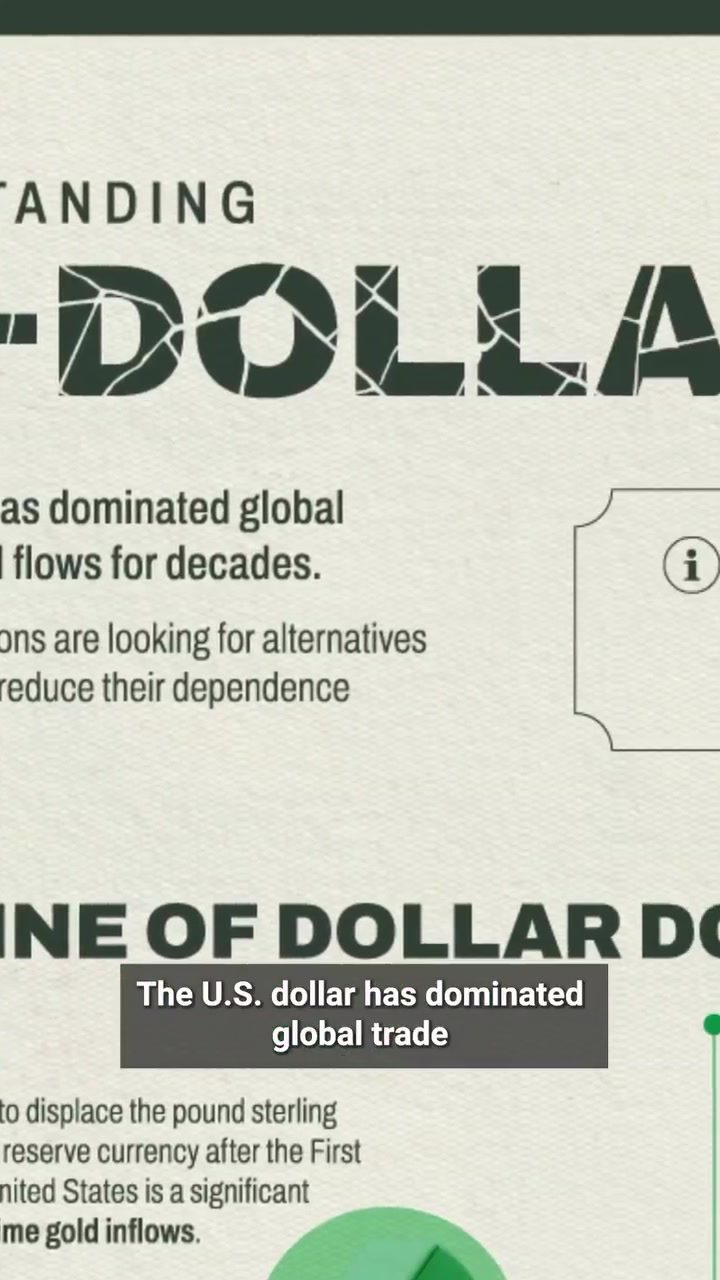
The U.S. dollar's dominance in global trade and finance is a well-established fact, but recent geopolitical shifts have spurred discussions about de-dollarization. Understanding the timeline of dollar dominance provides crucial context for current trends and future possibilities.
Context / Why This Matters
The U.S. dollar's status as the world's primary reserve currency influences global economics, politics, and trade. Comprehending how the dollar rose to this position and the forces pushing for change is essential for anyone engaged in international finance or geopolitics. The dollar's supremacy has shaped global trade since the mid-20th century, but recent geopolitical tensions and economic shifts are challenging this status quo. This timeline helps to understand not only the historical context but also the ongoing efforts to de-dollarize.
The Rise of the U.S. Dollar
The Post-WWI Era and the Fall of the Pound Sterling
The U.S. dollar's ascension began in the 1920s. Following the devastation of World War I, the British pound sterling, which had previously been the dominant currency for international trade, began to lose its luster. The war had weakened the British economy, and the pound's gold standard became increasingly untenable. This created an opportunity for the U.S. dollar to step into the void left by the pound. The stabilization of the U.S. economy and the country's growing industrial strength made the dollar an attractive alternative for international transactions.
The Bretton Woods Agreement and Dollar Dominance
The Bretton Woods Agreement, signed in 1944, formalized the U.S. dollar's new role. This agreement established a system of fixed exchange rates, with the dollar pegged to gold and other currencies pegged to the dollar. This arrangement made the U.S. dollar the de facto global reserve currency, as governments and central banks around the world began to hold dollars as their primary reserve assets. The Bretton Woods system lasted until the early 1970s, during which time the dollar became firmly entrenched as the world's leading currency.
The End of the Gold Standard
From the 1960s to 1971, the U.S. faced growing difficulties in backing the dollar with gold. This period saw the U.S. involved in costly interventions like the Vietnam War, which strained its financial resources. The situation became unsustainable, leading to the eventual collapse of the gold standard in 1971. This move, called the "Nixon Shock," marked a significant shift in global finance, as the U.S. dollar became a fiat currency, backed by nothing more than the full faith and credit of the U.S. government. Despite this change, the dollar maintained its dominance in global trade and capital flows.
De-dollarization Efforts
Russia's Move Towards De-dollarization
In 2014, Russia became a prominent advocate for de-dollarization. In response to Western sanctions imposed following Russia's annexation of Crimea, the country began to reduce its dependence on the U.S. dollar. This move was driven by a desire for financial independence and a need to protect against potential future sanctions.
Central Banks and Gold Purchases
In recent years, central banks around the world have been buying gold at an unprecedented pace. This trend, the fastest since 1967, indicates a growing interest in diversifying away from the U.S. dollar. Countries are increasingly looking for alternatives to the dollar, driven by concerns over geopolitical tensions, economic uncertainty, and the desire for financial sovereignty.
The Current State of De-dollarization
Despite these trends, the U.S. dollar still commands a significant portion of global reserves. About 60% of the world's reserves are held in dollars, highlighting the currency's enduring dominance. However, the recent push for de-dollarization suggests that this status may be under threat. The increasing emphasis on gold and other alternatives signals a potential shift in the global financial landscape.
Practical Tips for Navigating De-dollarization
Understanding the Impact on Your Portfolio
For investors and financial planners, understanding the implications of de-dollarization is crucial. As countries seek to reduce their reliance on the U.S. dollar, it could lead to fluctuations in the value of the dollar and other currencies. Diversifying your portfolio to include a mix of currencies, commodities, and other assets can help mitigate risks associated with these shifts.
Considering Alternative Currencies
Exploring alternative currencies and financial instruments can provide additional stability in a de-dollarizing world. Investments in gold, for example, can serve as a hedge against currency fluctuations. Similarly, currencies like the Euro, Chinese Yuan, or even digital currencies may offer new opportunities for investment.
Staying Informed on Global Trends
Keeping up with the latest developments in global finance and geopolitics is essential for anyone involved in international trade or investment. Regularly consulting economic reports, financial news, and expert analyses can help you stay ahead of potential changes and adapt your strategies accordingly.
Takeaways
Historical Context Matters
The first step in understanding de-dollarization is to recognize the historical context of the U.S. dollar's dominance. From the fall of the pound sterling to the Bretton Woods Agreement and the subsequent end of the gold standard, the dollar's rise has been shaped by key historical events.
De-dollarization is a Global Trend
The push for de-dollarization is a multifaceted, global phenomenon. Nations are exploring new financial strategies to reduce their dependence on the U.S. dollar, driven by geopolitical tensions and economic uncertainties. Recognizing this trend is crucial for navigating the changing financial landscape.
Diversification is Key
In a world where the U.S. dollar's dominance may be waning, diversification becomes more important than ever. Investors and financial planners should consider a range of currencies, commodities, and other financial instruments to build resilient portfolios.
Conclusion
The U.S. dollar's dominance in global finance is a complex and evolving issue. Understanding its historical context and the current trends in de-dollarization is essential for anyone navigating international trade and finance. By staying informed, considering alternative currencies, and diversifying portfolios, individuals and institutions can better navigate the challenges and opportunities presented by a changing global financial landscape.
Watch the Reel
Questions readers ask
What is the Bretton Woods Agreement and why is it significant to the U.S. dollar's global status?
The Bretton Woods Agreement, established in 1944, pegged foreign exchange rates to the U.S. dollar, which was convertible to gold. This system solidified the U.S. dollar's status as the world's primary reserve currency, a position it still holds today.
What is de-dollarization and why is it happening now?
De-dollarization refers to the process of reducing reliance on the U.S. dollar in international transactions and reserves. It's happening now due to geopolitical tensions, economic shifts, and a desire among some nations to diversify their reserves and reduce exposure to U.S. economic policies.
How does the fall of the pound sterling relate to the rise of the U.S. dollar?
The fall of the pound sterling in the mid-20th century, accelerated by World War II and Britain's colonial divestment, created a power vacuum. The U.S., with its strong economic position post-war, stepped in to fill this gap, leading to the U.S. dollar's rise as the dominant global currency.
Which countries are leading the de-dollarization trend?
Countries like China, Russia, and India are at the forefront of de-dollarization. They are promoting the use of their own currencies in international trade and encouraging the development of alternatives to the U.S. dollar-dominated financial system, such as the BRICS nations' currency reserve.
What are some alternatives to the U.S. dollar in global trade?
Alternatives to the U.S. dollar include the Euro, Chinese Renminbi, and the Russian Ruble. Additionally, there's a growing interest in Special Drawing Rights (SDRs), a type of international monetary unit created by the IMF. Cryptocurrencies are also being explored as a potential alternative.
How does the U.S. dollar's status as a reserve currency influence global economics and politics?
The U.S. dollar's status as a reserve currency allows the U.S. to influence global interest rates and borrow at lower costs. It also gives the U.S. significant political leverage, as countries holding U.S. dollar reserves must closely consider U.S. economic policies and geopolitical decisions.
Recent articles
Fresh deep dives from the latest Reels we unpacked.




Comments
Be the first to comment.