America's Credit Card Debt: A Growing Concern
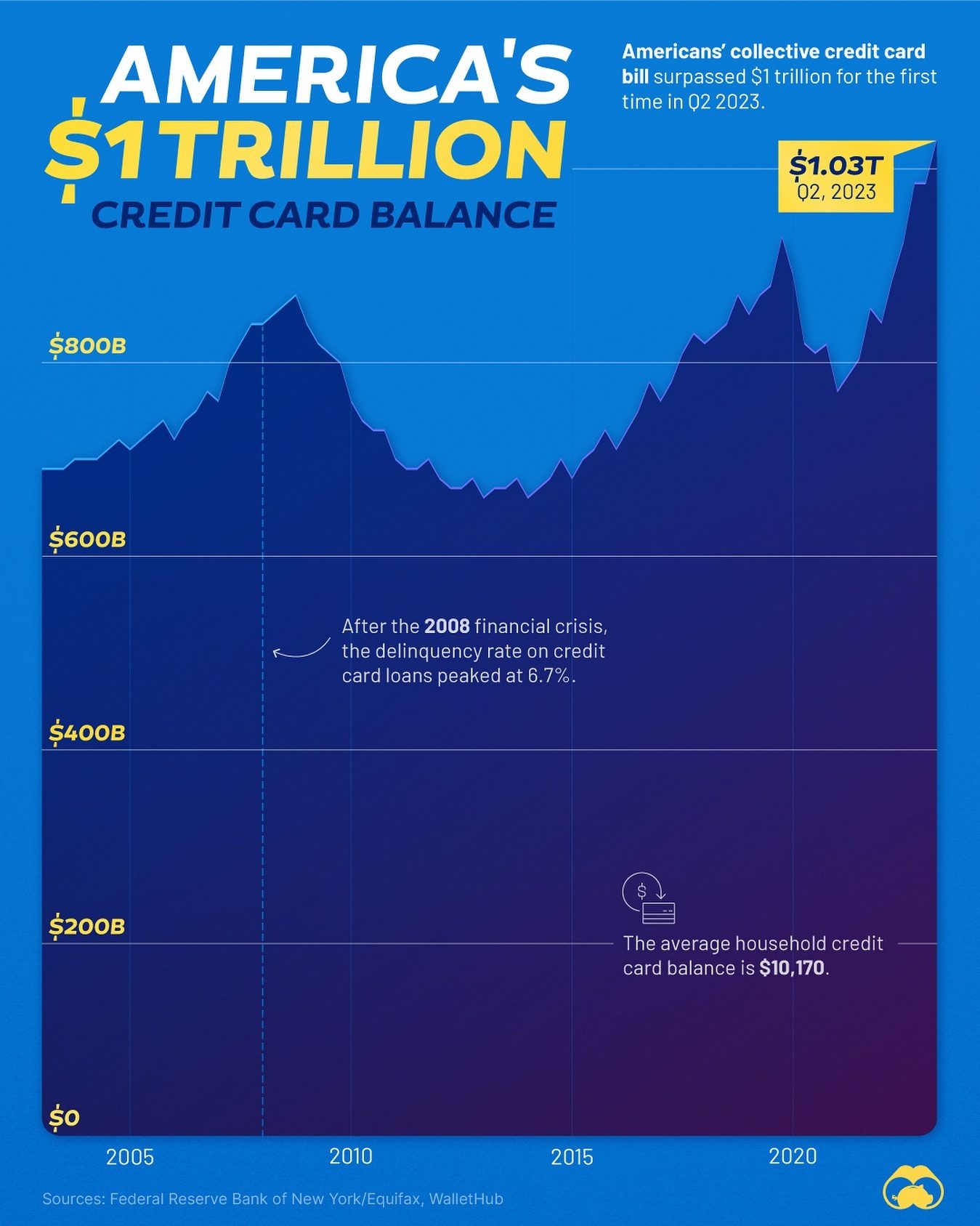
In the second quarter of 2023, Americans collectively owed more than a trillion dollars in credit card debt. This milestone marks a significant increase in consumer borrowing, with total credit card balances reaching $1.03 trillion. Understanding this trend and its implications is crucial for anyone managing their finances or concerned about the broader economic landscape.
Context: Why This Matters
With a population of over 330 million, America's financial health is closely tied to its citizens' spending habits and debt levels. The rise in credit card debt to over a trillion dollars is a critical indicator of economic behavior. It reflects not only individual financial choices but also broader economic trends, including inflation, interest rates, and consumer confidence.
The Rise of Credit Card Debt
Historical Perspective
Credit card debt in the United States has a long and complex history. Over the past decade, Americans have seen significant fluctuations in their collective credit card balances. The most notable spike occurred after the 2008 financial crisis, when the delinquency rate on credit card loans peaked at 6.7%. This period highlighted the vulnerability of consumers to economic downturns and the potential for high levels of debt to impact financial stability.
Current Trends
Since 2008, credit card debt has been on a steady rise. In the second quarter of 2023, total credit card balances crossed the trillion-dollar threshold. This increase is notable for several reasons:
- Increase in Spending: The rise in credit card debt suggests an increase in consumer spending, which can be a sign of economic growth. However, it also indicates that many Americans are relying more on credit to finance their purchases.
- Economic Uncertainty: High levels of debt can be a double-edged sword. On one hand, it can stimulate economic activity. On the other, it can lead to financial instability if consumers struggle to repay their debts, especially during economic downturns.
- Interest Rates: Changes in interest rates can significantly impact credit card debt. Higher interest rates make it more expensive to carry a balance, potentially leading to higher delinquency rates.
The Average Household
The average household credit card balance in 2023 stands at $10,170. This figure provides a snapshot of the typical American's financial situation. It underscores the importance of managing credit card debt effectively to avoid falling into a cycle of high-interest payments and financial stress.
Factors Contributing to the Rise in Credit Card Debt
Inflation and Cost of Living
Inflation has been a significant factor driving the rise in credit card debt. As the cost of living increases, many Americans turn to credit cards to cover everyday expenses, from groceries to utilities. This reliance on credit can quickly lead to high balances, especially if the cost of living continues to outpace income growth.
Economic Policies and Interest Rates
Economic policies, including changes in interest rates, play a crucial role in shaping credit card debt levels. When interest rates are low, consumers may be more inclined to use credit cards for larger purchases, knowing that the cost of borrowing is relatively low. However, when interest rates rise, the cost of maintaining high credit card balances can become prohibitive, leading to increased delinquency rates.
Consumer Behavior
Consumer behavior is another critical factor. With the rise of e-commerce and digital payment systems, it has become easier than ever to swipe a credit card or make a purchase with a few clicks. This convenience can lead to overspending and accumulating debt, especially if consumers do not monitor their spending closely.
Financial Awareness
Financial literacy is essential for managing credit card debt effectively. Many consumers may not fully understand the implications of carrying a balance or the importance of paying more than the minimum amount each month. Improving financial education can help consumers make more informed decisions about their credit card use and reduce the risk of accumulating unsustainable debt.
Practical Tips for Managing Credit Card Debt
Budgeting and Financial Planning
Creating a budget is one of the most effective ways to manage credit card debt. By tracking income and expenses, consumers can identify areas where they can cut back on spending and allocate more funds towards paying down their debt. Financial planning tools and apps can be invaluable in this process, providing insights and recommendations tailored to individual financial situations.
Paying More Than the Minimum
Paying only the minimum amount due on a credit card statement can prolong the repayment process and result in significant interest charges. To reduce debt more quickly, it is advisable to pay more than the minimum each month. This approach can help lower the overall balance and reduce the amount of interest accrued over time.
Credit Card Balance Transfers
Credit card balance transfers can be a useful strategy for managing high-interest debt. By transferring balances to a card with a lower interest rate, consumers can reduce the cost of their debt and pay it off more quickly. However, it is important to read the fine print and understand any fees or promotional periods associated with the transfer.
Seeking Professional Help
For those struggling with substantial credit card debt, seeking help from a financial advisor or credit counselor can be beneficial. These professionals can provide personalized advice and strategies for managing debt, including negotiating lower interest rates, consolidating debt, or developing a repayment plan.
Building an Emergency Fund
Building an emergency fund can provide a financial cushion in case of unexpected expenses, reducing the need to rely on credit cards. Aim to save at least three to six months' worth of living expenses in a separate, easily accessible account. This fund can help cover unforeseen costs and prevent the accumulation of additional debt.
Monitoring Credit Report
Regularly reviewing your credit report can help you stay on top of your financial health. By monitoring your credit report, you can identify any errors or signs of fraud, as well as track your progress in managing debt. Taking proactive steps to address any issues can help protect your credit score and overall financial well-being.
Important Takeaways
Credit card debt is a significant financial challenge for many Americans. The rise in collective credit card balances to over $1 trillion underscores the importance of managing debt responsibly. By understanding the factors contributing to this trend and implementing practical strategies, consumers can take control of their financial health and avoid the pitfalls of high-interest debt.
Conclusion
Credit card debt is a complex issue with far-reaching implications for both individual consumers and the broader economy. The recent milestone of surpassing $1 trillion in collective credit card balances highlights the need for vigilant financial management. By staying informed, planning ahead, and seeking help when needed, consumers can navigate the challenges of credit card debt and achieve financial stability.
Watch the Reel
Questions readers ask
What factors contribute to the rise in U.S. credit card debt in 2023?
The increase in U.S. credit card debt can be attributed to several factors, including rising inflation, which erodes purchasing power and encourages spending on credit. Additionally, changes in consumer spending habits, such as increased reliance on credit for daily expenses, and higher interest rates affecting the cost of borrowing have also played significant roles.
How does the $1 trillion credit card debt figure impact the economy?
The $1 trillion credit card debt figure is a significant economic indicator. It reflects higher consumer spending, which can drive economic growth, but also signals potential risks, such as increased default rates and slower economic recovery. Moreover, high debt levels can influence monetary policy decisions by the Federal Reserve.
What are some effective strategies for managing credit card debt?
To manage credit card debt effectively, consider strategies such as the debt avalanche or snowball method, which involve prioritizing payments based on interest rates or smallest balances. Additionally, creating a budget to control spending, negotiating lower interest rates with creditors, and exploring balance transfer offers can be beneficial. Consolidating debt through personal loans can also help reduce overall interest payments.
What does the Federal Reserve data reveal about credit card trends in 2023?
According to the Federal Reserve, credit card debt in the U.S. has reached a new unprecedented milestone of $1.03 trillion by the second quarter of 2023. This data highlights a surge in consumer borrowing, with a significant increase in outstanding balances, reflecting broader economic trends and individual financial choices.
Are there any geographic variations in credit card debt levels in the U.S.?
Yes, there are geographic variations in credit card debt levels. For instance, states like New York often have higher average credit card debt per capita due to higher living costs and income levels. Conversely, states with lower costs of living may have comparatively lower credit card debt levels. Understanding these regional differences can provide insights into local economic conditions and consumer behaviors.
Recent articles
Fresh deep dives from the latest Reels we unpacked.




Comments
Be the first to comment.