U.S. Copper Supply and Demand
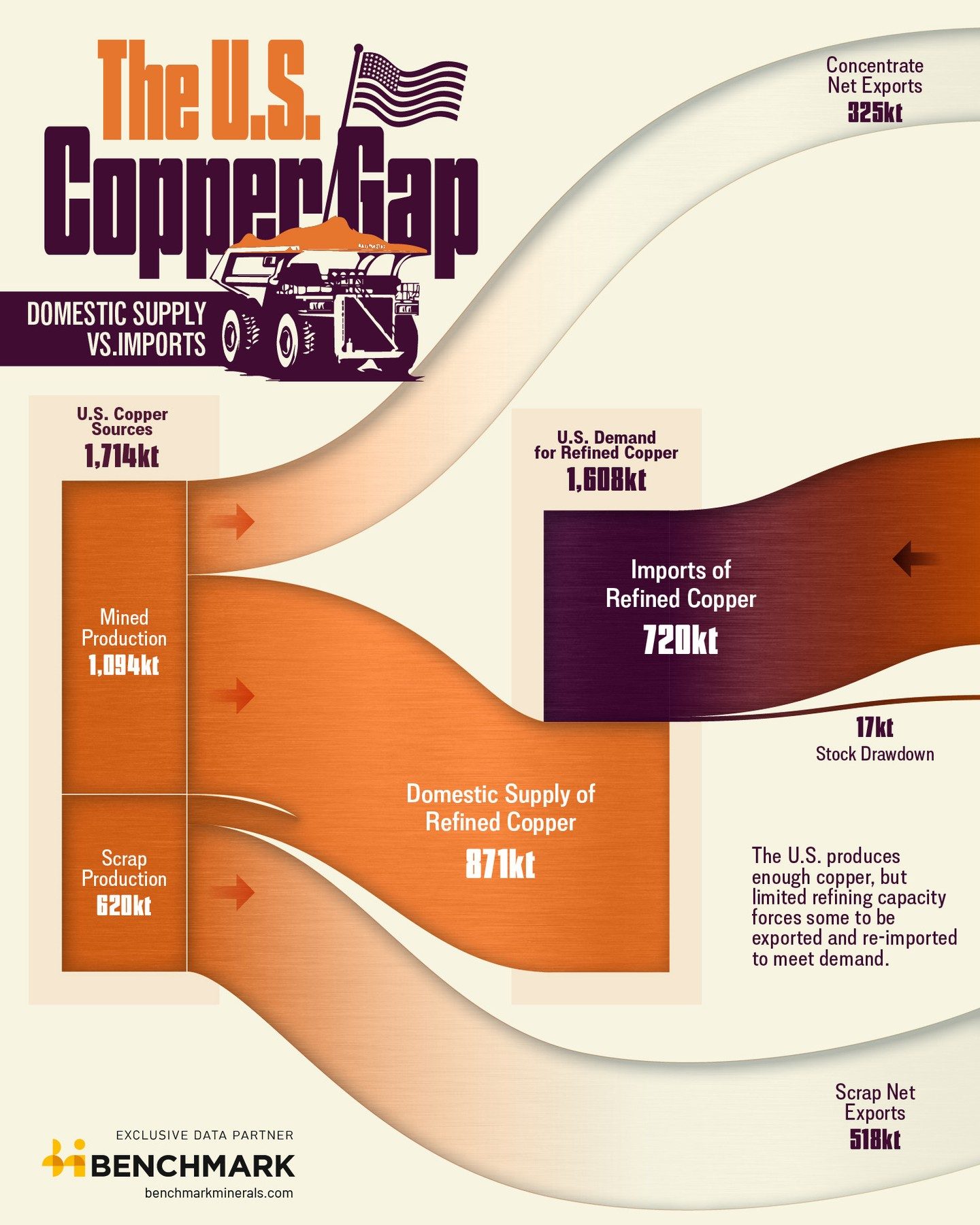
The U.S. copper supply chain faces a significant challenge, one that isn't related to mining. Despite exporting large volumes of raw copper, the country lacks the necessary infrastructure to process it into usable metal. This deficiency in smelting and refining capacity has made the U.S. heavily reliant on refined copper imports. Understanding this issue involves delving into the intricacies of copper production, import/export dynamics, and domestic supply gaps.
Why This Matters
Copper is a critical mineral, essential for various industries, including construction, electronics, and renewable energy. The U.S. copper supply chain is complex, involving multiple stages from mining and refining to distribution and consumption. The current gap in refining capacity has significant implications for the economy and national security, highlighting the need for a more robust domestic infrastructure.
Current Supply and Demand Dynamics
Copper Sources and Production
The U.S. copper supply comes from various sources, totaling approximately 1,714 kilotons (kt). This includes both mined production and scrap copper. Mined production is the primary source, contributing significantly to the overall supply. However, the U.S. also generates 520 kt of scrap copper, which is a valuable secondary source that helps meet the demand for refined copper.
Demand for Refined Copper
The U.S. demand for refined copper stands at 1,608 kt. This figure encompasses the total refined copper required by industries across the country. To meet this demand, the U.S. relies on a combination of domestic production and imports. The gap between the available refined copper and the demand is bridged by imports, which are essential for maintaining the supply chain's balance.
Import and Export Dynamics
Imports play a crucial role in the U.S. copper supply chain. The country imports about 720 kt of copper. While the U.S. exports a significant amount of raw copper, limited refining capacity forces some of this raw material to be exported and then re-imported as refined copper. This process highlights the inefficiencies in the current supply chain and the need for enhanced refining capabilities.
The Copper Gap
The "copper gap" refers to the difference between the available refined copper and the demand. Despite producing enough raw copper, the U.S. faces a stock drawdown of 17 kt. This gap is a result of the limited refining capacity, which forces the country to rely heavily on imports to meet its refined copper needs. Additionally, the U.S. exports 518 kt of scrap copper, further contributing to the copper gap.
The Role of Benchmark Minerals
Exclusive data from Benchmark Minerals provides valuable insights into the U.S. copper market. This data is instrumental in understanding the complexities of the supply and demand dynamics. Benchmark Minerals' expertise in the industry helps shed light on the current challenges and potential solutions for enhancing the U.S. copper supply chain.
Practical Tips for Enhancing the Copper Supply Chain
Investing in Refining Infrastructure
One of the most effective ways to address the copper gap is by investing in refining infrastructure. Increasing the refining capacity will reduce the reliance on imports and enhance the domestic supply of refined copper. This investment can be supported through government initiatives, private sector partnerships, and technological advancements.
Promoting Recycling and Scrap Utilization
Promoting the recycling of copper and the utilization of scrap material can significantly contribute to meeting the demand for refined copper. Encouraging industries to recycle copper and invest in advanced recycling technologies can help bridge the copper gap and reduce the environmental impact of mining.
Encouraging Public-Private Partnerships
Public-private partnerships can play a crucial role in enhancing the U.S. copper supply chain. Collaboration between government agencies, private companies, and research institutions can lead to innovative solutions for improving refining capacity, promoting recycling, and optimizing the supply chain.
Important Takeaways
Understanding the Copper Gap
The copper gap is a critical issue that affects the U.S. economy and national security. Understanding the gap and its implications is essential for developing effective strategies to address it. The gap is a result of limited refining capacity, which forces the U.S. to rely heavily on imports to meet its refined copper needs.
Enhancing Refining Capacity
Enhancing refining capacity is crucial for narrowing the copper gap and reducing reliance on imports. Investing in refining infrastructure, promoting recycling, and encouraging public-private partnerships can help achieve this goal. These measures will contribute to a more robust and sustainable U.S. copper supply chain.
The Role of Data and Expertise
Data and expertise play a vital role in understanding the copper supply chain and developing effective solutions. Exclusive data from Benchmark Minerals provides valuable insights into the complexities of the market, helping stakeholders make informed decisions and take action to enhance the supply chain.
Conclusion
The U.S. copper supply chain faces significant challenges, primarily due to limited refining capacity. Addressing these challenges requires a multi-faceted approach, including investing in refining infrastructure, promoting recycling, and encouraging public-private partnerships. By taking these steps, the U.S. can enhance its copper supply chain, reduce reliance on imports, and ensure a sustainable future for the industry.
Watch the Reel
Questions readers ask
What is the primary bottleneck in the U.S. copper supply chain?
The main bottleneck in the U.S. copper supply chain is not in the mining process, but in the lack of infrastructure to refine raw copper into usable metal. This deficiency forces the U.S. to rely on imported refined copper, impacting both economic and national security interests.
How does the lack of copper refining capacity affect the U.S.?
The lack of copper refining capacity in the U.S. leads to a heavy reliance on refined copper imports. This affects the economy by increasing the dependency on foreign supplies and potentially making the country vulnerable to global market fluctuations.
What industries are most affected by the U.S. copper supply chain issues?
Industries most affected by the U.S. copper supply chain issues include construction, electronics, and renewable energy. These sectors rely heavily on copper for their operations and infrastructure, making them vulnerable to supply disruptions or price fluctuations.
What is the current state of U.S. copper imports and exports?
The U.S. exports large volumes of raw copper but imports significant amounts of refined copper due to the lack of domestic refining capacity. This dynamic highlights the imbalance in the U.S. copper supply chain, where the country exports raw materials but must rely on imports for finished products.
What are some potential solutions to address the copper infrastructure gap in the U.S.?
Some potential solutions to address the copper infrastructure gap in the U.S. include investing in new copper refining facilities, modernizing existing infrastructure, and implementing policies that support domestic copper production and processing. Additionally, enhancing copper scrap recycling efforts can help supplement the domestic supply and reduce dependency on imports.
How does the copper demand forecast impact the U.S. supply chain?
The copper demand forecast suggests a growing need for copper in various industries, particularly in renewable energy. The U.S. supply chain must adapt to meet this increasing demand, which may exacerbate existing issues related to the lack of refining capacity and infrastructure.
Related deep dives
Similar reads based on topic and creator.


Recent articles
Fresh deep dives from the latest Reels we unpacked.




Comments
Be the first to comment.