Carbon Offset Projects in the U.S.
Context / Why this matters
Carbon offset projects play a pivotal role in the United States’ efforts to mitigate climate change. These projects allow individuals and organizations to reduce, eliminate, or offset carbon emissions by investing in initiatives that absorb, reduce, or avoid greenhouse gases. By understanding the distribution and impact of these projects, stakeholders can make more informed decisions about how to best address carbon emissions.
The U.S. carbon offset market is diverse, encompassing various project types, each contributing differently to overall emissions reduction. This breakdown is crucial for policymakers, businesses, and environmental advocates aiming to optimize their carbon offset strategies and support sustainable development.
Main discussion
Forestry and Land Use Projects
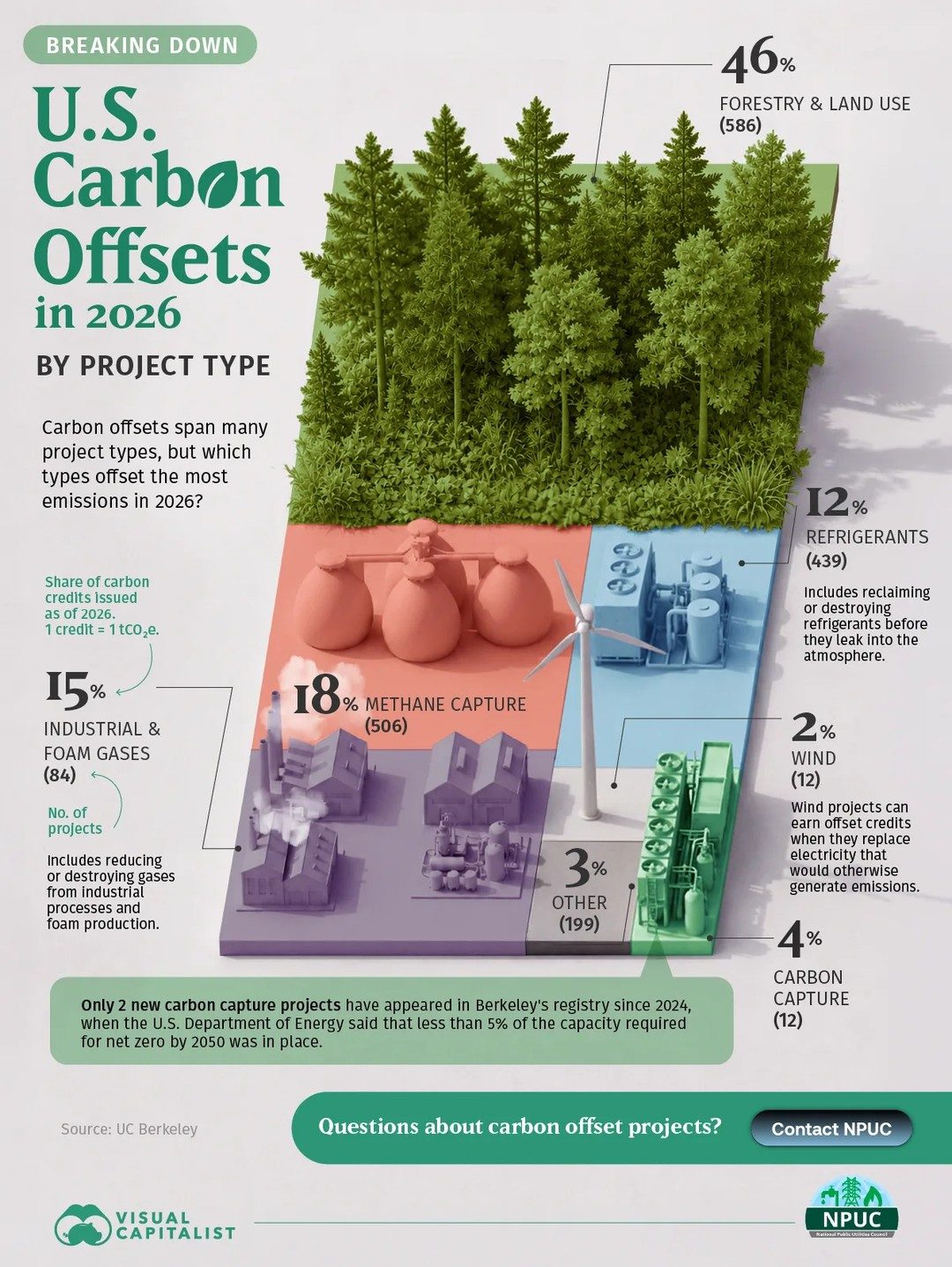
According to the latest data, forestry and land use projects account for nearly half (46%) of all issued U.S. carbon offset credits. These projects involve activities such as reforestation, afforestation, and sustainable land management practices that enhance carbon sequestration. With 586 projects in this category, forestry and land use initiatives are the backbone of the U.S. carbon offset market, highlighting the critical role of natural ecosystems in carbon mitigation.
Industrial and Foam Projects
Industrial and foam projects make up 15% of the carbon offset credits, with 84 projects identified. These initiatives focus on reducing emissions from industrial processes and the use of insulating materials. By improving manufacturing processes and using eco-friendly materials, these projects help lower the carbon footprint of industrial activities. This segment underscores the importance of innovation and technological advancements in reducing greenhouse gas emissions.
Methane Capture
Methane capture projects contribute 18% to the total carbon offset credits, with 506 projects in operation. Methane is a potent greenhouse gas, and capturing it from sources like landfills, agriculture, and wastewater treatment facilities can significantly reduce emissions. These projects are essential in preventing methane from entering the atmosphere and converting it into a usable energy resource.
Refrigerants
Refrigerant projects account for 12% of the carbon offset credits, with 439 projects. These initiatives focus on reducing emissions from refrigerants, which are often potent greenhouse gases. By improving refrigeration systems and using eco-friendly refrigerants, these projects help mitigate the environmental impact of cooling technologies, which are prevalent in both residential and commercial settings.
Wind Energy
Wind energy projects, while contributing only 2% to the carbon offset credits, are represented by 199 projects. These initiatives harness wind power to generate clean energy, reducing reliance on fossil fuels. Although the percentage is relatively low, wind energy projects are crucial for transitioning to renewable energy sources and promoting sustainable practices.
Carbon Capture
Carbon capture projects contribute 4% to the carbon offset credits, with only 12 projects in place. This category highlights a significant gap, as the U.S. Department of Energy has noted that less than 5% of the capacity required for achieving net-zero emissions by 2050 is currently in place. Carbon capture technology is essential for directly reducing emissions from industrial processes, but its limited adoption underscores the need for further investment and development in this area.
Other Projects
The "other" category, which includes 3% of the carbon offset credits, encompasses a variety of projects not covered by the above categories. These initiatives may involve emerging technologies, novel approaches, or localized efforts that contribute to overall emissions reduction. This diverse category reflects the dynamic nature of the carbon offset landscape, where new ideas and practices are continually being developed and implemented.
Practical tips
For individuals and organizations looking to engage in carbon offset projects, here are some practical tips:
Assess Your Emissions
Before investing in carbon offset projects, it's essential to assess your emissions. Understanding the sources and volumes of your greenhouse gas emissions will help you select the most appropriate offset projects to mitigate your environmental impact. This step is crucial for tailoring your carbon offset strategy to your specific needs and goals.
Choose Verified Projects
Ensure that the carbon offset projects you support are verified and adhere to recognized standards. Verified projects provide transparency and accountability, ensuring that your investment genuinely contributes to emissions reduction. UC Berkeley’s Voluntary Registry Offsets Database is a reliable resource for finding verified carbon offset projects.
Diversify Your Investments
Consider diversifying your carbon offset investments across different project types. This approach not only broadens the impact of your contributions but also helps manage risks associated with individual projects. For example, you might invest in a combination of forestry, methane capture, and industrial projects to achieve a balanced and effective emissions reduction strategy.
Support Emerging Technologies
Investing in emerging technologies, such as carbon capture and storage (CCS), can provide long-term benefits. While these technologies may have higher upfront costs, they offer significant potential for reducing emissions from industrial processes. Supporting their development and implementation can contribute to more sustainable practices in the future.
Monitor and Report
Regularly monitor and report on the progress of your carbon offset projects. This practice helps ensure that your investments are achieving the desired environmental benefits and allows for continuous improvement in your carbon offset strategy. Transparency and accountability are key to building trust and credibility in your emissions reduction efforts.
Important takeaways
Natural Ecosystems Play a Crucial Role
Forestry and land use projects dominate the carbon offset landscape, emphasizing the importance of natural ecosystems in carbon sequestration. Protecting and enhancing these ecosystems should be a priority in any long-term carbon mitigation strategy.
Technological Innovation is Key
Industrial and methane capture projects highlight the importance of technological innovation in reducing emissions. Investing in and promoting new technologies can significantly enhance the effectiveness of carbon offset initiatives.
Diverse Project Types Offer Comprehensive Solutions
The wide range of project types, from refrigerants to wind energy, demonstrates the need for a comprehensive approach to carbon offsetting. A diverse portfolio of projects can address various emission sources and contribute to a more sustainable future.
Emerging Technologies Need Support
The limited number of carbon capture projects underscores the need for greater investment and development in this area. Supporting emerging technologies can help achieve more significant emissions reductions and support the transition to a low-carbon economy.
Continuous Improvement is Essential
Regular assessment, monitoring, and reporting of carbon offset projects are crucial for ensuring their effectiveness and promoting continuous improvement. Transparency and accountability are key to building trust and credibility in emissions reduction efforts.
Conclusion
Carbon offset projects are vital for mitigating climate change and achieving sustainability goals. By understanding the distribution and impact of different project types, stakeholders can make informed decisions to optimize their carbon offset strategies. Whether through forestry, industrial innovation, or emerging technologies, the collective effort to reduce, eliminate, or offset carbon emissions is essential for a sustainable future.
Watch the Reel
Questions readers ask
What are the most prominent types of carbon offset projects in the U.S. by 2026?
In 2026, forestry and land use projects are at the forefront, followed by methane capture and industrial and foam projects. These types are expected to dominate the market due to their effectiveness in absorbing and reducing greenhouse gases.
How do forestry and land use projects contribute to carbon offsetting?
Forestry and land use projects increase carbon absorption by planting and preserving trees, which naturally sequester carbon dioxide. These initiatives also promote sustainable land management practices that reduce emissions from deforestation and land degradation.
What role do methane capture projects play in U.S. carbon offsets?
Methane capture projects target emissions from sources like landfills and livestock operations. By capturing and utilizing methane, these projects prevent a potent greenhouse gas from entering the atmosphere, thereby reducing the overall carbon footprint.
How do industrial and foam projects help in reducing emissions?
Industrial and foam projects focus on capturing and storing carbon emissions generated during manufacturing processes. These initiatives often involve the use of advanced technologies to capture carbon dioxide, which can then be used in various industrial applications or stored securely underground.
What are carbon offset credits, and how are they utilized?
Carbon offset credits represent the reduction of one metric ton of carbon dioxide or its equivalent in other greenhouse gases. These credits can be purchased by individuals and organizations to compensate for their emissions, supporting projects that reduce or absorb carbon.
Related deep dives
Similar reads based on topic and creator.


Recent articles
Fresh deep dives from the latest Reels we unpacked.




Comments
Be the first to comment.