U.S. Battery Capacity Growth: A Forecast for the Power Grid
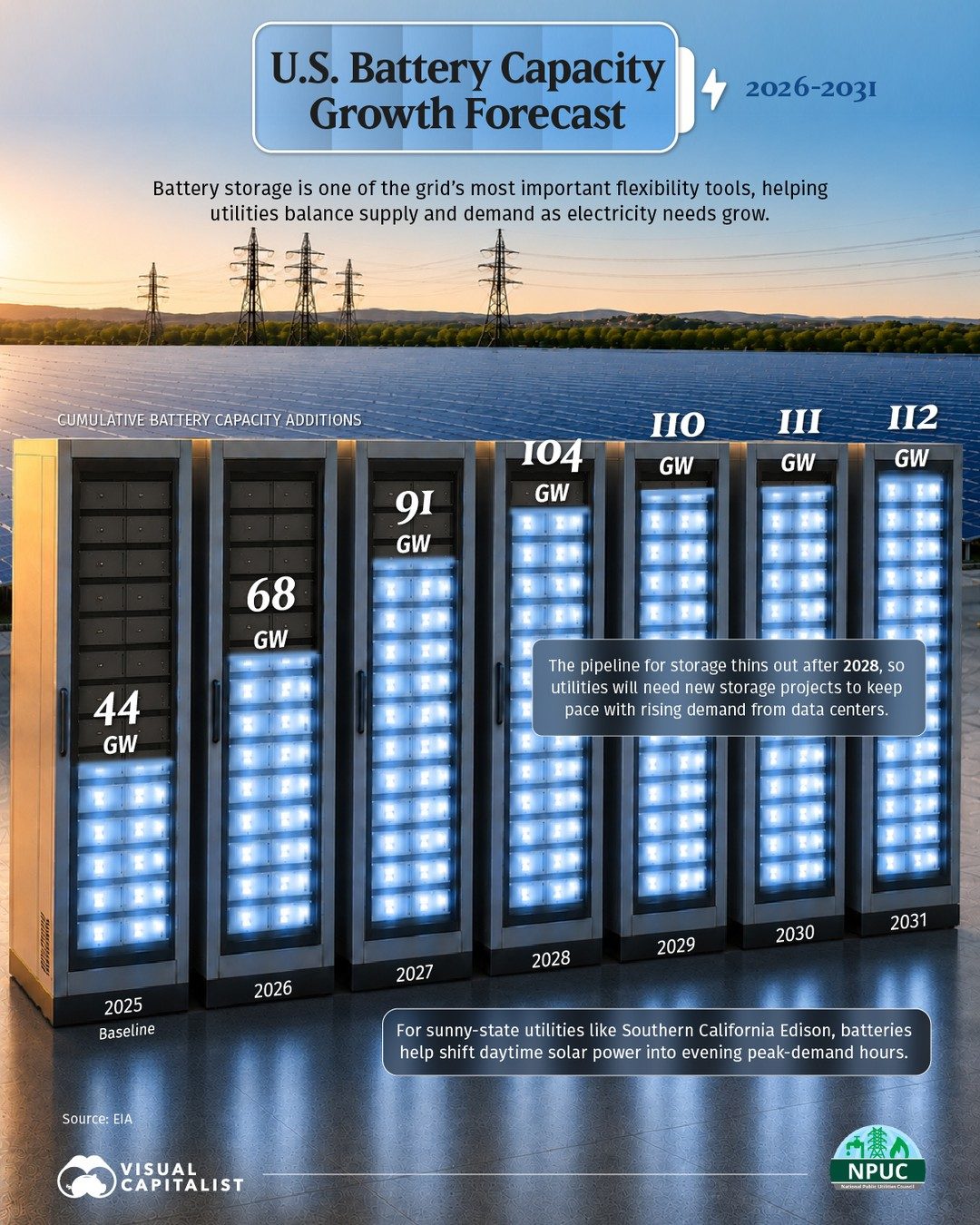
U.S. battery capacity is set to more than double between 2025 and 2028, marking a significant shift in the power grid's infrastructure. This growth is crucial for maintaining a balanced supply and demand of electricity as needs continue to grow.
Why This Matters
Battery storage is essential for the grid's flexibility, helping utilities balance supply and demand. As electricity needs rise, particularly from data centers, the role of battery storage becomes even more critical. The U.S. Energy Information Administration (EIA) provides valuable insights into how battery capacity is expected to evolve through 2031.
The Forecast: 2026-2031
Projected Growth
The forecast shows a steady increase in battery capacity from 2026 to 2031. By 2026, the cumulative battery additions are projected to reach 104 GW, rising to 91 GW in 2027, 68 GW in 2028, and 44 GW by 2029. This trend highlights the significant investments and developments in battery storage technology.
Thinning Pipeline Post-2028
One of the key insights from the forecast is the thinning pipeline for storage after 2028. This means that while the initial years will see substantial additions, the rate of new projects will slow down. Utilities will need to strategize and initiate new storage projects to keep up with the rising demand, particularly from data centers.
Understanding the Data
Baseline and Cumulative Additions
The baseline for 2025 sets the stage for the cumulative additions in subsequent years. Understanding this baseline is crucial for planning future projects and allocating resources effectively. The cumulative additions in gigawatts (GW) for each year provide a clear picture of the growth trajectory.
Implications for Utilities
For utilities, this forecast implies a need for proactive planning. The thinning pipeline post-2028 means that utilities must start planning and initiating new projects well in advance to ensure a steady supply of battery storage. This is especially important as data centers, which require reliable and substantial power, continue to grow.
Practical Tips for Utilities
Strategic Planning
Utilities should start identifying potential sites for new battery storage projects. Early planning can mitigate the risk of a supply shortage and ensure that the grid remains stable. Engaging with local communities and stakeholders can also help streamline the approval process for new projects.
Investing in Technology
As battery technology continues to evolve, utilities should invest in the latest advancements. This includes exploring new battery chemistries, energy management systems, and integration technologies. Staying ahead of the technological curve can provide a competitive edge and ensure long-term stability.
Collaboration with Data Centers
Given the significant demand from data centers, utilities should collaborate closely with these entities. Understanding their power needs and growth plans can help utilities tailor their storage solutions to meet these demands effectively. This collaboration can also lead to mutual benefits, such as shared resources and cost savings.
Important Takeaways
Future of Battery Storage
The future of battery storage in the U.S. looks promising, with significant growth expected through 2031. However, utilities must be proactive in their planning and investment to keep up with the rising demand.
Importance of Proactive Measures
The thinning pipeline after 2028 underscores the need for proactive measures. Utilities should start planning and initiating new projects well in advance to ensure a steady supply of battery storage.
Data-Center Demand
Data centers are a significant driver of electricity demand. Utilities should prioritize meeting the power needs of these centers while also ensuring grid stability.
Conclusion
The projected growth in U.S. battery capacity through 2031 presents both opportunities and challenges. Utilities must leverage this forecast to plan and invest in battery storage solutions effectively. By doing so, they can ensure a stable and reliable power grid that meets the growing demands of the future.
Watch the Reel
Questions readers ask
What is driving the projected growth in U.S. battery storage capacity from 2025 to 2028?
The primary drivers are the increasing electricity demands, particularly from data centers, and the need for a more flexible power grid. Batteries help balance the supply and demand of electricity, which is crucial as the grid evolves.
How does battery storage help in managing electricity demand?
Battery storage systems act as buffers, storing excess electricity generated during low-demand periods and releasing it during peak times. This process helps maintain a stable and reliable power supply, ensuring that utilities can meet the growing demand efficiently.
What role do data centers play in the projected growth of battery storage capacity?
Data centers require a significant and consistent amount of power to operate. As their numbers and energy demands grow, so does the need for reliable and flexible power sources. Battery storage systems help meet these demands by providing a stable power supply and reducing the strain on the grid.
What is the significance of the EIA's forecast for battery storage capacity through 2031?
The U.S. Energy Information Administration (EIA) provides critical insights into the expected growth and changes in battery storage capacity. These forecasts help utilities, policymakers, and industry stakeholders plan and prepare for future energy needs and infrastructure developments.
What can we expect from battery storage additions between 2025 and 2028?
The period from 2025 to 2028 is expected to see a significant increase in battery storage additions. This growth is vital for accommodating rising electricity needs and enhancing grid flexibility, with a particular focus on supporting the increasing demands from data centers.
How does battery storage support grid flexibility solutions?
Battery storage supports grid flexibility by providing a scalable and responsive power source. Utilities can quickly dispatch stored energy to meet sudden demand surges, manage intermittent renewable energy sources, and ensure a reliable power supply during peak times, all of which contribute to a more resilient grid.
Related deep dives
Similar reads based on topic and creator.


Recent articles
Fresh deep dives from the latest Reels we unpacked.




Comments
Be the first to comment.