Uninsured Bank Deposits in the U.S. After the Silicon Valley Bank Collapse
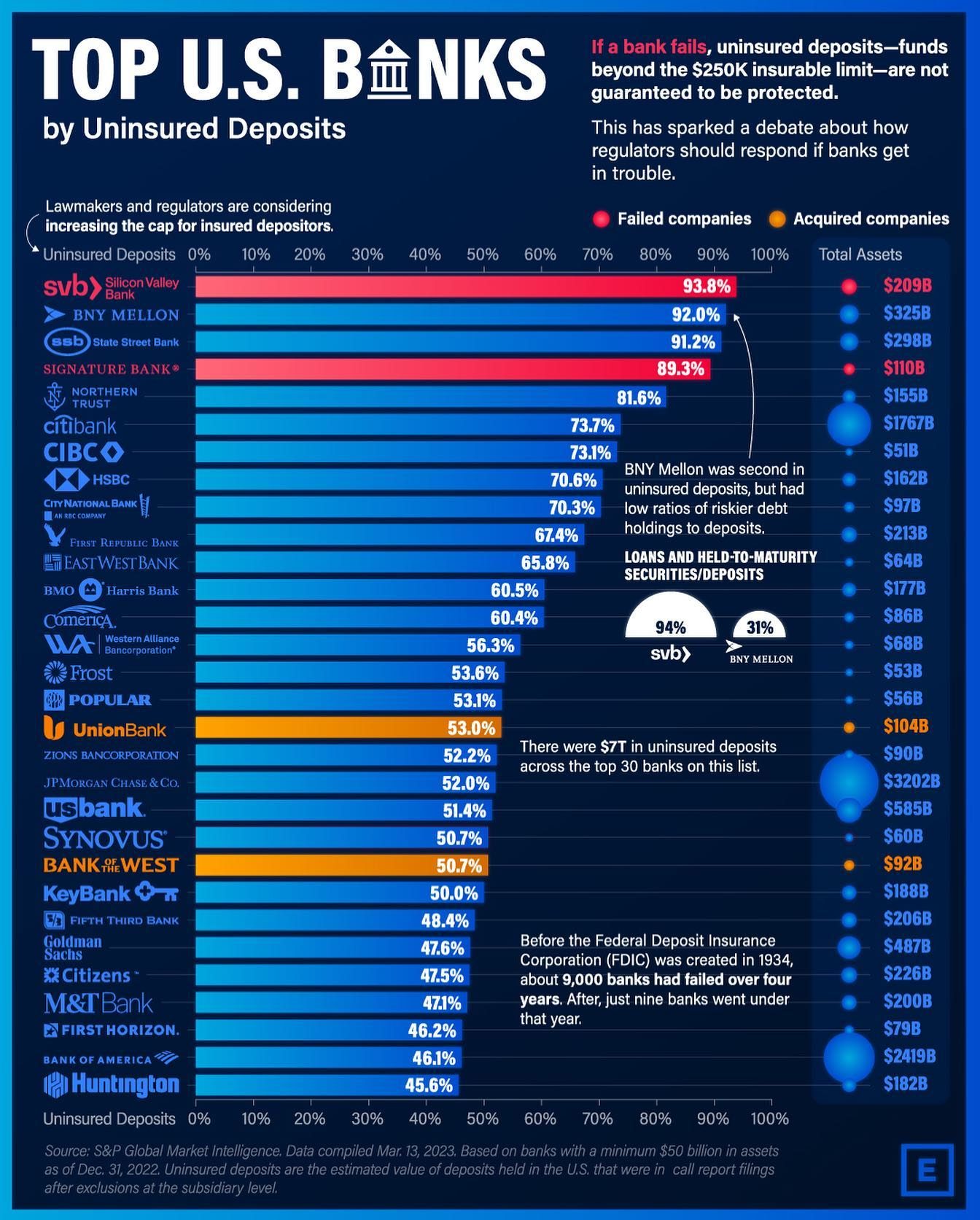
The financial landscape in America has seen significant shifts, with at least $7 trillion in uninsured bank deposits. This situation has become more critical in the wake of the Silicon Valley Bank (SVB) collapse. This article examines the 30 U.S. banks with the highest percentage of uninsured deposits, using data from S&P Global. Understanding this data can provide valuable insights into the current state of bank risk and potential regulatory changes.
Why This Matters
The collapse of Silicon Valley Bank has brought attention to the significant amount of uninsured deposits held by U.S. banks. Uninsured deposits are funds that exceed the Federal Deposit Insurance Corporation (FDIC) coverage limit, currently set at $250,000 per depositor, per insured bank, for each account ownership category. When a bank fails, depositors with uninsured funds may face losses. This situation underscores the importance of understanding which banks have the highest exposure to uninsured deposits and the potential risks involved.
Bank Risk Analysis
Top U.S. Banks by Uninsured Deposits
The data reveals a list of 30 U.S. banks with the highest percentage of uninsured deposits. Here are some of the key findings:
- Silicon Valley Bank (SVB): 93.8% of deposits are uninsured. SVB's collapse has highlighted the risks associated with high uninsured deposit percentages.
- BNY Mellon: 92.0% of deposits are uninsured, making it one of the banks with the highest exposure to uninsured funds.
- Signature Bank: 89.3% of deposits are uninsured, another bank with significant uninsured exposure.
- Northern Trust: 81.6% of deposits are uninsured, indicating a high level of risk.
- Citibank: 73.7% of deposits are uninsured, showing a substantial portion of uninsured funds.
- CIBC: 70.6% of deposits are uninsured, reflecting a high percentage of uninsured deposits.
- City National Bank: 67.4% of deposits are uninsured, indicating a notable risk level.
- First Republic Bank: 65.8% of deposits are uninsured, another bank with significant uninsured exposure.
- East West Bank: 60.5% of deposits are uninsured, showing a high level of uninsured funds.
- BMO Harris Bank: 60.4% of deposits are uninsured, reflecting a substantial portion of uninsured deposits.
- Western Alliance: 56.3% of deposits are uninsured, indicating a notable risk level.
- Popular: 53.1% of deposits are uninsured, showing a high percentage of uninsured deposits.
- UnionBank: 53.0% of deposits are uninsured, another bank with significant uninsured exposure.
- Zions Bancorporation: 52.2% of deposits are uninsured, indicating a high level of risk.
- JPMorgan Chase & Co.: 52.0% of deposits are uninsured, reflecting a substantial portion of uninsured funds.
- tSBANK: 51.4% of deposits are uninsured, showing a high level of uninsured funds.
- Synovus: 50.7% of deposits are uninsured, indicating a notable risk level.
- KeyBank: 50.7% of deposits are uninsured, another bank with significant uninsured exposure.
- Northwest: 48.4% of deposits are uninsured, reflecting a substantial portion of uninsured deposits.
- Oppenheimer & Thames: 47.6% of deposits are uninsured, showing a high percentage of uninsured deposits.
- Valley National Bank: 46.9% of deposits are uninsured, indicating a notable risk level.
- MUFG Bank: 42.0% of deposits are uninsured, another bank with significant uninsured exposure.
- Huntington: 41.9% of deposits are uninsured, reflecting a substantial portion of uninsured funds.
- PNC Bank: 40.2% of deposits are uninsured, showing a high level of uninsured funds.
- TD Bank: 39.8% of deposits are uninsured, indicating a notable risk level.
- Wells Fargo: 39.4% of deposits are uninsured, another bank with significant uninsured exposure.
- US Bank: 38.7% of deposits are uninsured, reflecting a substantial portion of uninsured deposits.
- Truist Financial: 37.9% of deposits are uninsured, showing a high percentage of uninsured deposits.
- Capital One: 36.6% of deposits are uninsured, indicating a notable risk level.
- Bank of America: 36.3% of deposits are uninsured, another bank with significant uninsured exposure.
Regulatory Considerations
The high percentage of uninsured deposits in these banks has prompted lawmakers and regulators to consider increasing the cap for insured depositors. This move aims to provide more protection for depositors and reduce the risk of significant losses in the event of a bank failure. The Federal Deposit Insurance Act of 1933 established the FDIC, which insures deposits up to the current limit. However, the recent bank collapses have highlighted the need for potential adjustments to this system.
Total Assets and Uninsured Deposits
The data also provides insights into the total assets of these banks, with some having significant holdings. For example, the total assets of the banks listed are noted to be around $209 billion. This underscores the financial scale and potential impact of uninsured deposits in the banking sector.
Practical Tips
For depositors looking to protect their funds, consider the following practical tips:
- Diversify Your Deposits: Spread your deposits across multiple banks to ensure that each account falls within the FDIC insurance limit.
- Stay Informed: Keep track of regulatory changes and updates to the FDIC insurance limits.
- Monitor Bank Health: Regularly assess the financial health and risk factors of the banks where you hold deposits.
- Consider Insured Accounts: Opt for accounts that are fully insured by the FDIC, such as savings accounts, checking accounts, and certificates of deposit (CDs).
- Seek Professional Advice: Consult with a financial advisor to develop a strategy that balances risk and return.
Important Takeaways
- The collapse of Silicon Valley Bank has brought attention to the significant amount of uninsured deposits in U.S. banks.
- High uninsured deposit percentages pose risks to depositors and the banking sector.
- Regulators are considering increasing the FDIC insurance limit to provide more protection for depositors.
- Diversifying deposits and staying informed about regulatory changes can help mitigate risks.
Conclusion
The situation with uninsured bank deposits in the U.S. highlights the need for both individual depositors and regulatory bodies to take proactive measures. By understanding the risks and staying informed about potential changes, depositors can better protect their funds. Meanwhile, regulators must continue to evaluate and adjust insurance limits to ensure the stability and security of the banking sector.
Watch the Reel
Questions readers ask
Which banks are most affected by the high percentage of uninsured deposits post-SVB collapse?
The 30 U.S. banks with the highest percentage of uninsured deposits are highlighted in the article, with data sourced from S&P Global. The banks are ranked based on the proportion of their deposits that exceed FDIC coverage limits, which provides a clear picture of their exposure to risk.
What are the implications of high uninsured deposits for these banks?
Banks with a high percentage of uninsured deposits face increased risk because these funds are not protected by FDIC insurance. This can lead to potential losses for depositors and heightened scrutiny from regulators, especially in light of the SVB collapse.
How does the SVB collapse impact the perception of uninsured deposits?
The collapse of Silicon Valley Bank has raised awareness about the risks associated with uninsured deposits. It has prompted discussions about the importance of understanding bank risk and the potential need for regulatory changes to address the vulnerabilities exposed by the SVB fallout.
What is the current FDIC coverage limit for U.S. bank deposits?
As of the knowledge cutoff in 2023, the FDIC insurance coverage limit is $250,000 per depositor, per insured bank, for each account ownership category. This means that funds exceeding this amount are considered uninsured and are not protected by the FDIC.
Why is it important to monitor banks with high uninsured deposits?
Monitoring banks with a high percentage of uninsured deposits is crucial for assessing financial stability. It helps in identifying potential risks and understanding how regulatory changes might affect these institutions, especially in the context of recent events like the SVB collapse.
What steps can individuals take to protect their uninsured deposits?
Individuals can take several steps to mitigate risks associated with uninsured deposits. This includes spreading their deposits across multiple banks to stay within FDIC coverage limits, or considering alternative investment options that may offer different levels of protection.
How might regulatory changes address the risks of uninsured deposits?
Regulatory changes could involve increasing FDIC coverage limits, enhancing oversight of banks with high uninsured deposits, or implementing stricter risk management guidelines. These changes aim to protect depositors and ensure the stability of the U.S. banking system in light of the SVB collapse and other potential risks.
Recent articles
Fresh deep dives from the latest Reels we unpacked.




Comments
Be the first to comment.