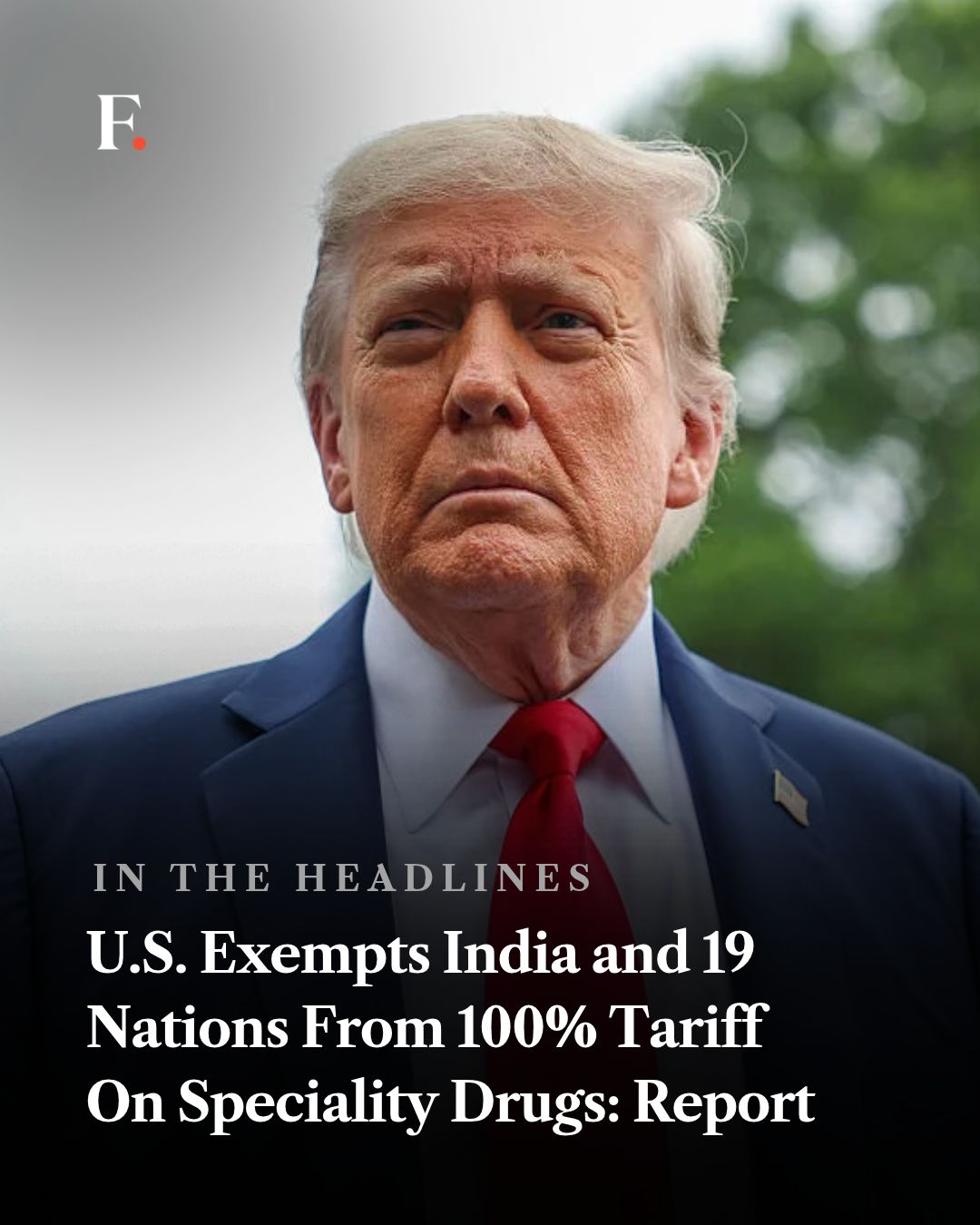
A respite from tariff punishment has been granted to specialty pharmaceutical imports from India and 19 other countries — but it carries a significant exception. The United States exempted those countries from a 100% tariff. Washington had imposed this penalty in the trade war with India. This applies to specific speciality drugs and related ingredients, now free from a duty that would have doubled their import cost.
Tariff Exception Triggered by Specialty Pharmaceutical Trade War
The United States announced that the phrase "ad valorem tariff" is crucial for understanding the latest trade adjustments. An ad valorem tariff is a duty determined by a fixed percentage of the assessed value of the imported goods. In this case, it would have been 100% levied on pharmaceutical products from India. That means a speciality drug priced at $100 would cost $200 to import under the 100% tariff. Wootas Boxes, and related ingredients have been targeted by the US Tariffs.
Little-known medical products under tariff spotlight
Increased import penalties on specialty drugs from India and 20 other nations were expected from Washington. Here we focus on India which exports specialty drugs to the USA. India's pharmaceutical sector supplies several medicines to the U.S. market, so American patients depend on plenty of popular name-brand pharmaceuticals.. These include treatments found in dozens of medicine cabinets, such as tetracycline, ranitidine, and toradol. With the exemption, specialist medical professionals such as oncologists managing cancer treatments can use speciality imported drugs.
Insulin and the Diabetic Import Business
More than 90% of diabetes patients in the United States use insulin. The insulin import market is one of the few still dominated by specialty drug manufacturers founded in the United States. Insulin is no longer a highly regulated product resulting in complex packaging and labeling rules to comply with regulations, and it is produced using recombinant human DNA technology. Specialty drugs such as insulin are subject to the 100% tariffs. They dominate the $28 billion US market for diabetes care products.
Speciality Drugs Import competition
The shift toward importing specialty drugs is significant for manufacturers who would like their drugs to be exempted from the 100% tariff. Companies such as Johnson & Johnson, Sanofi, Merck, and others all have facilities in India to make specialty drugs. As part of a trade dispute, however, the U.S. government imposed heavy duty on pharmaceuticals from India, which the U.S. is seeking to end. These drugs make up an essential component for treating patients with high cholesterol. This is an interesting angle as one nation seems to be able to make it cheaper, with the US trying to reduce the import costs by 100%.
The Trump Connection
The news story is reported by Fox News. Donald Trump is the President of the United States. He started the trade wars. Trump received the tariff exemptions while he was in office. He often used tariffs as a negotiating tactic.
Trade Intelligence for Medical Stock Traders
There is a large market for imported specialty drugs. Make sure any Insulin products you are considering buying for your pharmacy have the required permits. To understand the drug market, learn more about how pharmaceuticals are regulated. Insulin, for the treatment of Diabetes, is important in international trade. The FDA approves these drugs. For patients, the advances in diabetes care are more important than illegitimate drugs. Still, the landscape for drug import could change rapidly in the future, as the present exemption does not mean a permanent stay of 100% tariffs.
Watch the Reel
Questions readers ask
What exactly are specialty drugs, and why are they so important in this trade agreement?
Specialty drugs are a category of pharmaceuticals that often treat complex, chronic conditions like cancer, rheumatoid arthritis, and multiple sclerosis. They are significant in this trade agreement because they make up a large portion of the pharmaceuticals imported from India to the U.S. The recent tariff changes directly impact the cost and availability of these crucial medications for American patients.
How does the 100% tariff work, and why was it imposed on specialty drugs from India?
The 100% tariff is an ad valorem duty, meaning it's a tax based on a fixed percentage of the value of the imported goods. In this case, it would double the import cost of specialty drugs. The U.S. imposed this tariff as part of a trade war with India, aiming to use it as a negotiating tactic. However, the recent exemption means that these drugs are now free from this heavy duty, which could significantly reduce their cost.
Which specific specialty drugs from India are affected by this tariff change?
The tariff change affects a range of specialty drugs, including those used to treat cancer, diabetes, and high cholesterol. Some examples mentioned in the article include tetracycline, ranitidine, and toradol, which are commonly used treatments in the U.S. market. The change also applies to related ingredients used in these drugs.
Why is insulin a special case in this trade agreement?
Insulin is a special case because, unlike many other specialty drugs, the U.S. market for insulin is still dominated by American manufacturers. However, it is included in the list of drugs that would have been subject to the 100% tariff. The exemption means that insulin imports from India will now be cheaper, which could potentially benefit diabetes patients in the U.S. who rely on these imports.
How does this tariff change affect medical practitioners and patients in the U.S.?
The tariff change means that specialty drugs from India will be more affordable for American patients, as the cost of importing these drugs has been reduced by 50%. This could lead to increased availability and access to crucial medications, which is particularly important for patients with complex, chronic conditions. Specialists who rely on these drugs for treatment, such as oncologists, could benefit from the reduced cost as well.
What role did Donald Trump play in this tariff change, and why did he impose these tariffs in the first place?
Donald Trump, as the former President of the United States, initiated the trade wars that led to the imposition of heavy duties on pharmaceuticals from India. He often used tariffs as a negotiating tactic. The recent tariff exemptions were granted while he was in office, though the reasons behind the specific exemptions for specialty drugs are not detailed in the article.
Recent articles
Fresh deep dives from the latest Reels we unpacked.




Comments
Be the first to comment.