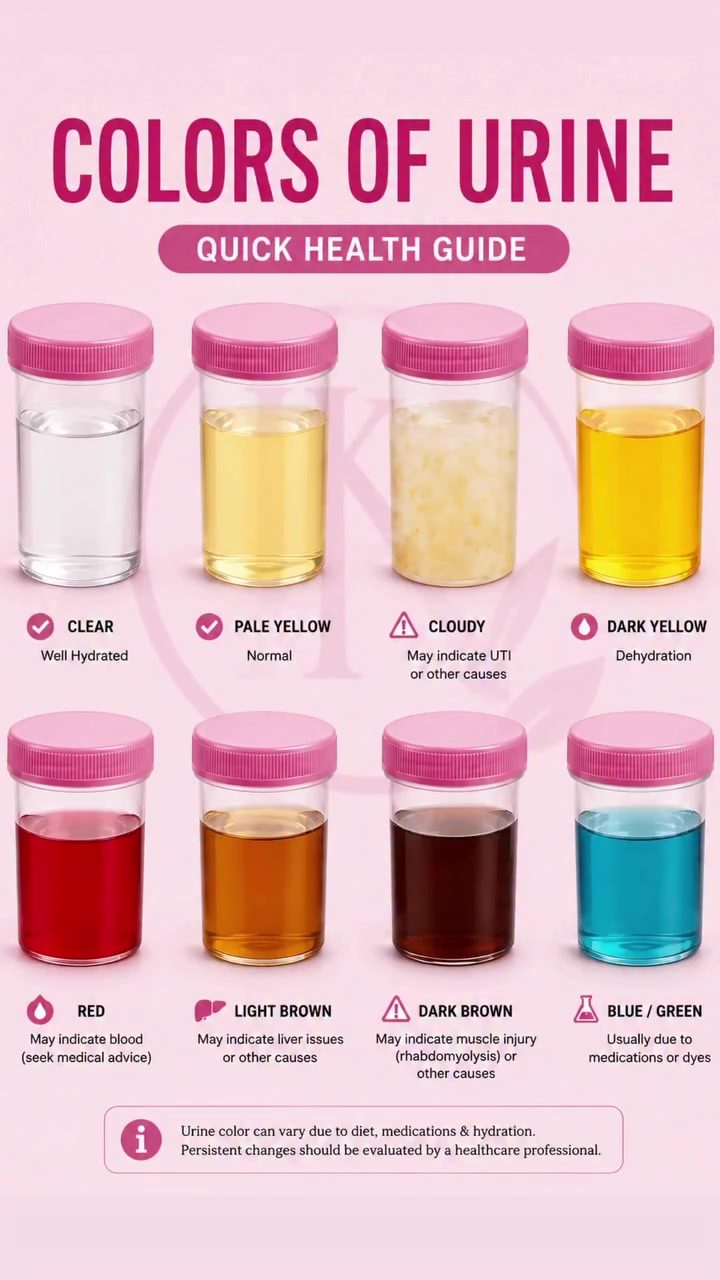
Urine Color: An Important Indicator of Hydration and Health
Urine color serves as a crucial indicator of hydration and overall health. While it cannot diagnose a condition on its own, it can provide valuable insights into what's going on inside your body. By understanding the different shades of urine and their potential meanings, you can take proactive steps to maintain your health.
Context: Why This Matters
Urine color is influenced by a variety of factors, including diet, medications, vitamins, and underlying medical conditions. Monitoring changes in urine color can help detect potential health issues early. For example, significant deviations from the normal range can indicate dehydration, urinary tract infections (UTIs), or even more serious conditions like liver disease or muscle injury. However, it's important to note that persistent changes in urine color should always be evaluated by a healthcare professional.
Understanding Urine Colors
Clear Urine
Clear urine is a sign of well-hydration. If your urine is almost transparent, it indicates that you are drinking enough water. However, extremely clear urine may also suggest that you are over-hydrated, which is less common but can occur if you drink excessive amounts of water.
Pale Yellow
Pale yellow urine is generally considered normal. This color suggests that you are adequately hydrated and that your body is functioning well. It's a good sign that you are maintaining a healthy balance of fluid intake.
Cloudy Urine
Cloudy urine can be a cause for concern. It may indicate a urinary tract infection (UTI) or other underlying issues. If your urine is consistently cloudy, accompanied by pain or fever, it is essential to seek medical advice promptly. Cloudy urine can also be caused by other factors, such as high levels of protein or phosphates in the urine.
Dark Yellow
Dark yellow urine is a clear indicator of dehydration. When your body is low on fluids, the kidneys excrete more concentrated urine, which appears darker in color. If you notice that your urine is consistently dark yellow, it's a sign that you need to increase your fluid intake.
Red
Red urine can be alarming, but it's not always a sign of a serious condition. While it may indicate the presence of blood, it can also be caused by certain foods or medications. Foods like beets, berries, and rhubarb, as well as some medications, can temporarily turn urine red. However, if you notice red or cola-colored urine without an obvious cause, it is crucial to seek medical attention.
Light Brown
Light brown urine can also indicate dehydration or liver issues, especially if accompanied by other symptoms. Liver problems, gallbladder issues, or bile duct obstructions can cause urine to turn a light brown color. If you experience persistent light brown urine, consult a healthcare professional for further evaluation.
Dark Brown
Dark brown urine is a more serious concern and should be evaluated by a healthcare professional immediately. It may indicate a muscle injury (rhabdomyolysis) or other severe conditions. Rhabdomyolysis is a breakdown of muscle tissue that releases myoglobin into the bloodstream, which can affect the kidneys. If you notice dark brown urine, seek medical attention right away.
Blue/Green
Blue or green urine is typically due to medications or dyes. Certain medications, such as those containing methylene blue, can turn urine blue or green. While this is generally harmless, it's essential to discuss any unusual urine color changes with your healthcare provider, especially if you are taking new medications.
Practical Tips
Stay Hydrated
One of the simplest ways to maintain healthy urine color is to stay hydrated. Drink plenty of water throughout the day to ensure your body is properly hydrated. Aim for at least 8 glasses of water a day, but adjust based on your activity level and climate.
Monitor Medications
Be aware of the side effects of any medications you are taking. Certain medications can affect urine color, so always read the labels and consult your doctor if you have any concerns.
Pay Attention to Diet
Diet can also impact urine color. Foods rich in pigments, such as beets and berries, can temporarily change the color of your urine. While this is usually harmless, be mindful of any persistent changes.
Seek Medical Advice
If you notice persistent changes in your urine color, especially if accompanied by other symptoms, do not hesitate to seek medical advice. Early detection and treatment can prevent more serious health issues.
Important Takeaways
- Urine color is a valuable indicator of hydration and health.
- Clear urine indicates well-hydration, while pale yellow is generally normal.
- Cloudy urine may signal a UTI or other issues and should be evaluated by a healthcare professional.
- Dark yellow urine suggests dehydration, while red urine can indicate blood and requires medical advice.
- Light brown urine may indicate liver issues, and dark brown urine could signal muscle injury.
- Blue or green urine is often due to medications or dyes.
Conclusion
Urine color can provide valuable insights into your health and hydration levels. While it cannot diagnose a condition on its own, monitoring changes in urine color can help detect potential health issues early. Staying hydrated, being aware of medications, and paying attention to your diet are all essential steps in maintaining optimal health. If you notice persistent changes in your urine color, especially if accompanied by other symptoms, consult a healthcare professional for further evaluation. By understanding the meanings behind different urine colors, you can take proactive steps to maintain your well-being.
Watch the Reel
Questions readers ask
What does a clear urine color indicate?
Clear urine typically indicates that you are well-hydrated. Your body is properly balanced and functioning. However, if your urine is too clear, it might suggest that you are overhydrated, which can also be a concern. Consult a doctor if you notice that your urine is consistently colorless.
How does dark urine relate to dehydration?
Dark urine is a common sign of dehydration. When your body lacks sufficient fluids, it produces concentrated urine. If you notice that your urine is consistently dark, it's important to increase your fluid intake and monitor your hydration levels. If dark urine persists, seek medical attention.
What causes cloudy urine?
Cloudy urine can be caused by a variety of factors, including urinary tract infections (UTIs), dehydration, or even dietary influences. If you experience cloudy urine, it is important to drink more water and observe if the color returns to normal. If the cloudiness persists, consult a healthcare provider for further evaluation.
What should I do if I see red or pink urine?
Red or pink urine can be alarming, but it is not always a cause for concern. Certain foods, medications, or vitamins can affect the urine color. However, it can also indicate the presence of blood in the urine, which may signify a urinary tract infection (UTI), kidney stones, or other medical issues. If you notice red or pink urine, consult a doctor to determine the cause.
Why might my urine be brown?
Brown urine can be a sign of severe dehydration, but it can also indicate more serious health issues, such as liver or kidney problems. If your urine is consistently brown, it is crucial to seek medical attention immediately. In some cases, certain medications or foods may cause temporary discoloration, but persistent brown urine should not be ignored.
Can medications affect urine color?
Yes, certain medications can significantly alter the color of your urine. For example, some antibiotics, laxatives, and antimalarial drugs can lead to changes in urine color, including orange, red, or green hue. If a change in medication coincides with a change in urine color, consult your doctor for advice.
What should I do if I notice changes in my urine color?
If you notice significant or persistent changes in your urine color, it is important to take note and consider other symptoms. Keep a record of your fluid intake, diet, and any medications you are taking. If the changes persist or worsen, consult a healthcare provider for a thorough evaluation. Early detection and treatment can prevent potential complications.
Recent articles
Fresh deep dives from the latest Reels we unpacked.




Comments
Be the first to comment.