Uranium Enrichment: A Global Perspective
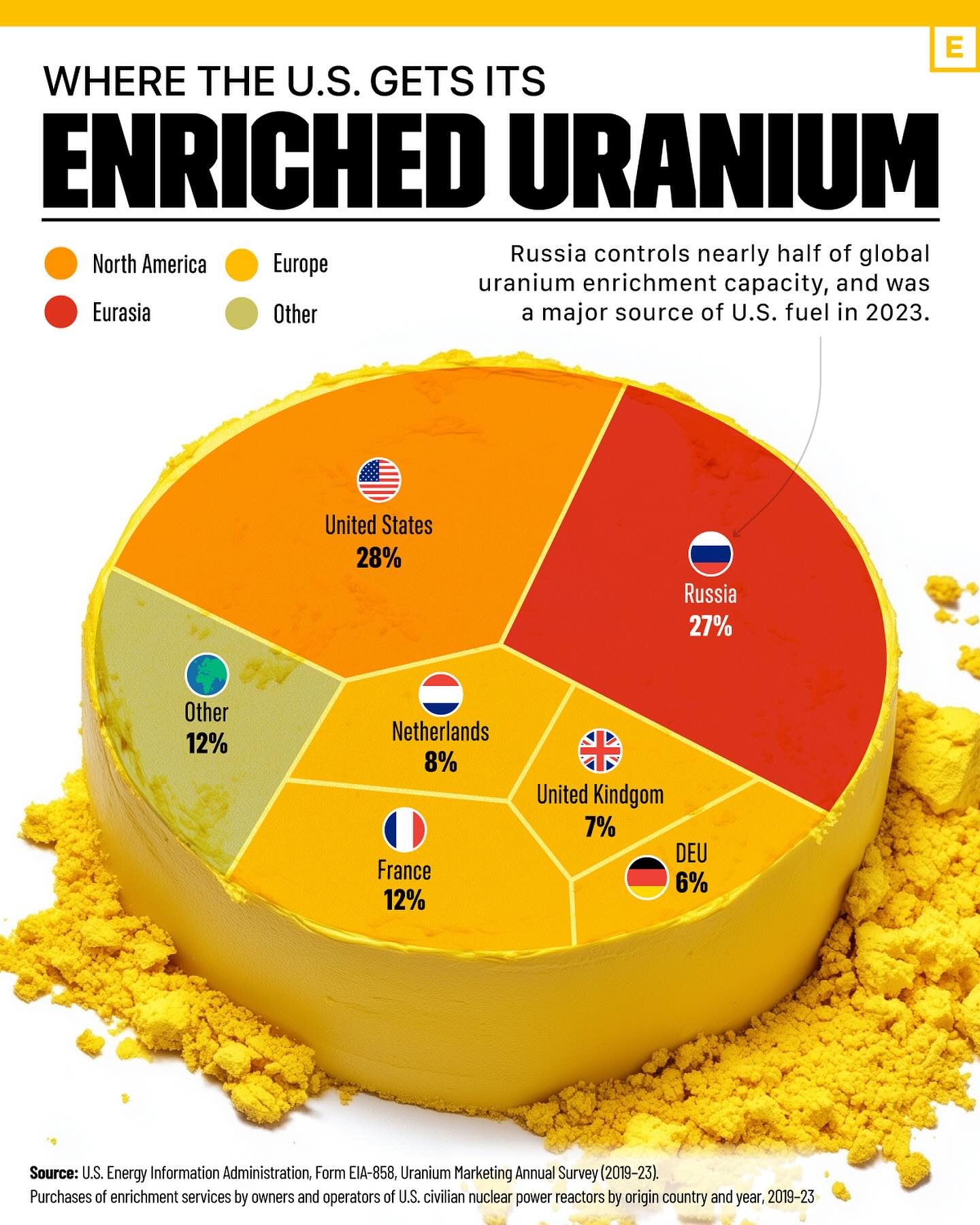
The U.S. relies heavily on foreign sources for its enriched uranium, with 71.7% of its supply coming from overseas. Russia, in particular, stands out as a significant provider, supplying 27.2% of enrichment services. This makes Russia the largest single foreign provider for U.S. civil nuclear power reactors. To understand this dynamic, it's crucial to examine the broader landscape of global enriched uranium capacity.
Why This Matters
Nuclear power plays a vital role in the U.S. energy mix, contributing a substantial portion of the country's electricity. The reliance on foreign sources for enriched uranium raises questions about energy security and geopolitical dynamics. Understanding the global distribution of enrichment capacity is essential for policymakers, energy analysts, and anyone interested in the future of nuclear power.
Global Enriched Uranium Capacity
Major Players in Uranium Enrichment
The global landscape of enriched uranium capacity is dominated by a few key players. Russia and the United States hold the largest shares, with Russia controlling nearly 27% and the United States accounting for 28% of global enriched uranium capacity. This significant presence underscores the strategic importance of uranium enrichment in global geopolitics.
European Contributions
Europe is also a significant contributor to global uranium enrichment. The Netherlands and the United Kingdom are notable players, with 8% and 7% of the global capacity, respectively. Germany, represented as DEU, contributes 6%. These countries' involvement highlights the region's commitment to nuclear power and energy security.
Other Notable Contributors
France and other countries collectively account for 12% each of the global enriched uranium capacity. While these contributions may seem smaller in comparison to the major players, they play a crucial role in maintaining a balanced and secure global energy supply.
The Significance of Uranium Enrichment
Uranium enrichment is a critical process in nuclear power generation. It involves increasing the concentration of the uranium-235 isotope to produce fuel for nuclear reactors. The ability to enrich uranium is a significant factor in a country's nuclear capabilities and energy independence. The distribution of enrichment capacity among different countries reflects their roles and influence in the global nuclear industry.
Practical Tips for Understanding Global Uranium Enrichment
Stay Informed
Keeping up-to-date with the latest data from sources like the U.S. Energy Information Administration (EIA) is essential. The EIA provides comprehensive reports and surveys that offer insights into the global uranium market, including enrichment capacity and supply chains. This information is invaluable for understanding the dynamics of the nuclear industry.
Analyze Trends
Pay attention to trends in uranium enrichment capacity. For example, changes in the percentage of capacity held by different countries can indicate shifts in global geopolitics and energy policies. Monitoring these trends can help predict future developments in the nuclear power sector.
Consider Geopolitical Implications
The geopolitical implications of uranium enrichment are significant. The reliance of the U.S. on foreign sources, particularly from Russia, has implications for energy security and international relations. Understanding these dynamics can provide a clearer picture of the challenges and opportunities in the global nuclear industry.
Important Takeaways
Russia's Dominant Role
Russia's dominant role in uranium enrichment underscores its influence in the global nuclear industry. The country's significant capacity and its role as the largest single foreign provider for U.S. nuclear power highlight the geopolitical complexities of energy dependence.
The Importance of Diversification
Diversifying the sources of enriched uranium is crucial for energy security. While the U.S. relies heavily on foreign suppliers, diversifying its sources can reduce dependence on any single country and enhance its energy independence.
The Role of European Countries
European countries, including the Netherlands, the United Kingdom, and Germany, play a significant role in global uranium enrichment. Their contributions are essential for maintaining a balanced and secure global energy supply.
The Future of Nuclear Power
The future of nuclear power is closely tied to the availability and distribution of enriched uranium. As countries around the world continue to invest in nuclear energy, the global landscape of uranium enrichment will evolve. Staying informed about these developments is key to understanding the future of nuclear power and its role in the global energy mix.
Conclusion
The global distribution of enriched uranium capacity is a complex and dynamic landscape. With Russia and the United States holding the largest shares, and significant contributions from European countries, the world's nuclear energy relies on a diverse set of suppliers. Understanding this landscape is essential for policymakers, energy analysts, and anyone interested in the future of nuclear power. By staying informed about trends, analyzing geopolitical implications, and considering the importance of diversification, we can gain a deeper understanding of the global uranium enrichment landscape and its impact on energy security and international relations.
Watch the Reel
Questions readers ask
Why does the U.S. rely on Russia for a significant portion of its enriched uranium?
The U.S. relies on Russia for about 27% of its enriched uranium due to Russia's substantial enrichment capacity and the U.S.'s insufficient domestic supply to meet its nuclear energy needs. This dependence is a result of the global distribution of enrichment facilities and historical trade agreements.
How does U.S. dependence on Russian uranium affect energy security?
Relying on Russia for nearly 27% of enriched uranium raises concerns about energy security, as geopolitical tensions or disruptions in trade could impact the steady supply of this critical resource. This can potentially affect the stability of the U.S. power grid, which depends on nuclear energy for a significant portion of its electricity.
What are the implications of the U.S. and Russia holding the largest shares of global enrichment capacity?
The U.S. and Russia holding the largest shares of global enrichment capacity means that both countries play pivotal roles in the global nuclear power landscape. This dynamic shapes international trade and political relations, as both nations can influence global uranium markets and nuclear energy policies.
What steps can the U.S. take to reduce its dependence on Russian uranium?
The U.S. can consider several strategies to reduce its reliance on Russian uranium, including investing in domestic enrichment facilities, diversifying foreign suppliers, and fostering international partnerships. These steps can help bolster the U.S.'s energy security and mitigate geopolitical risks associated with depending on a single foreign source.
How do geopolitical dynamics influence the U.S.'s reliance on Russian uranium?
Geopolitical dynamics can significantly impact the U.S.'s reliance on Russian uranium. Political tensions, trade disputes, or international conflicts can disrupt the steady supply of enriched uranium. This makes it crucial for the U.S. to consider these dynamics when planning its nuclear energy strategy and exploring alternatives to Russian supplies.
Which other countries supply enriched uranium to the U.S. besides Russia?
Besides Russia, the U.S. imports enriched uranium from various countries, with a total of 71.7% of its supply coming from overseas. The article highlights Russia as the largest single foreign provider, but other significant suppliers include countries like France, Germany, and the United Kingdom, which also possess substantial enrichment capacities.
What role does nuclear power play in the U.S. energy landscape?
Nuclear power is a significant contributor to the U.S. energy mix, generating a substantial portion of the country's electricity. The steady and reliable nature of nuclear power makes it a crucial component in maintaining a stable and secure energy supply. Ensuring a consistent and stable supply of enriched uranium is vital for the continued operation of U.S. nuclear power plants.
Recent articles
Fresh deep dives from the latest Reels we unpacked.




Comments
Be the first to comment.