Understanding What's Really in Your Food
The reality of packaged foods often diverges from what we perceive. Many products marketed as healthy, indulgent, or just a small treat contain unexpected ingredients. Let's dive into the actual composition of some popular items like Nutella, Oreos, and Activia Muesli, and explore how understanding these ingredients can empower better food choices.
Why This Matters
Awareness of what's in your food is crucial for making informed decisions about your diet. When you understand the ingredients in the products you consume, you can avoid eating on autopilot and instead choose foods that align with your health goals. This knowledge helps you prioritize whole, minimally processed foods and enjoy treats intentionally.
Ingredient Breakdowns
Nutella
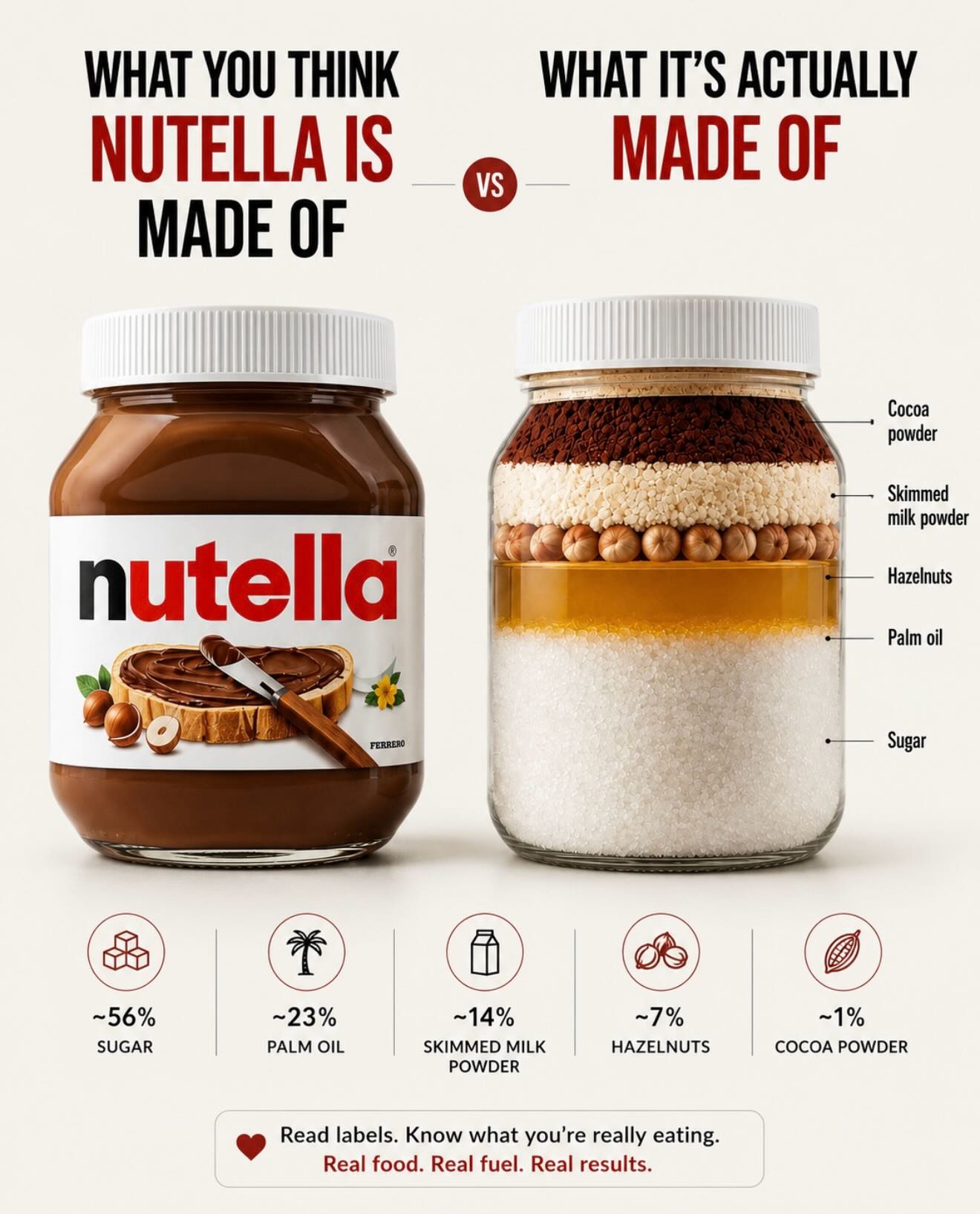
Nutella, often perceived as a healthier chocolate spread, is actually predominantly sugar and palm oil. Here’s a breakdown of its composition:
- ~56% Sugar
- ~23% Palm Oil
- ~14% Skimmed Milk Powder
- ~7% Hazelnuts
- ~1% Cocoa Powder
This highlights the importance of reading labels. Nutella, despite its hazelnut flavor, is primarily composed of sugar and palm oil, ingredients that are high in calories but low in nutritional value.
Oreos
Oreos, another beloved treat, are often seen as a simple cookie but are actually high in sugar and ultra-processed. The actual composition includes:
- ~24% Wheat flour
- ~24% Sugar
- ~13% Vegetable oil
- ~19% Glucose-fructose syrup
- ~1.5% Salt
These ingredients reveal that Oreos are not just a simple cookie but a product with a high sugar content and multiple processed components. Understanding this can help you make more mindful choices when indulging in treats.
Activia Muesli
Activia Muesli is often marketed as a healthy yogurt option, but its actual ingredients might surprise you. The composition includes:
- Pasteurized milk & yogurt cultures
- Sugar
- Muesli
- Citrus fiber
- Concentrated wholesome muesli
While this may sound healthier, it's important to note that the sugar content and other additives can still be significant. Reading the labels can help you compare this product with others and make a more informed choice.
The Role of Ingredient Awareness
Ingredient awareness is about more than just knowing what's in your food; it's about understanding how these ingredients affect your health. By reading ingredient lists, checking serving sizes, and comparing products, you can make better choices that support your health goals.
Practical Tips
Reading Ingredient Lists
Always start by reading the ingredient list on the packaging. Ingredients are listed in descending order of prevalence, so the first few ingredients make up the majority of the product. This can help you quickly identify high-sugar or high-fat items.
Checking Serving Sizes
Serving sizes can be misleading. A small serving size can make a product seem healthier than it is. Always check the serving size and the total number of servings per package to understand the actual nutritional content.
Comparing Products
Don’t rely on marketing claims alone. Compare the ingredient lists and nutritional information of similar products to find the healthiest option. For example, compare different brands of yogurt to see which one has the least added sugar and the most natural ingredients.
Prioritizing Whole Foods
Whole, minimally processed foods should make up the majority of your diet. These foods are generally more nutrient-dense and have fewer added sugars and unhealthy fats. Examples include fresh fruits, vegetables, lean proteins, and whole grains.
Enjoying Treats Mindfully
It’s okay to enjoy treats, but do so mindfully. Be aware of what you’re eating and savor the experience. This can help you avoid overindulging and maintain a balanced diet.
Important Takeaways
- Many packaged foods contain more sugar, processed ingredients, and unhealthy fats than expected.
- Reading ingredient lists and checking serving sizes are essential for making informed choices.
- Prioritizing whole, minimally processed foods can significantly improve your diet.
- Enjoying treats mindfully can help you maintain a balanced diet without feeling deprived.
Conclusion
Understanding what's in your food is a powerful tool for making informed dietary choices. By being aware of the actual ingredients in popular products, you can make healthier decisions and build a more sustainable eating pattern. Whether it's choosing healthier spreads, opting for less-processed cookies, or selecting yogurts with fewer added sugars, every decision adds up to a healthier you.
Watch the Reel
Questions readers ask
What are the primary ingredients in Nutella?
The primary ingredients in Nutella are sugar, palm oil, hazelnuts, and skimmed milk powder. Sugar is the first listed ingredient, indicating it makes up the largest portion by weight. The hazelnut content, while present, is relatively low, and the product also contains emulsifiers and preservatives.
How much sugar is in a serving of Oreos?
A single serving of Oreos, which is about 3 cookies, contains 14 grams of sugar. This amount is roughly equivalent to three teaspoons of sugar. It's important to note that this is a significant portion of the daily recommended sugar intake for both adults and children.
What are the main ingredients in Activia Muesli?
Activia Muesli is a mix of whole grain cereals, dried fruits, and nuts, but it also contains a significant amount of added sugars. The primary ingredients include whole grain wheat flakes, sugar, and dried apples. The product also contains various additives and preservatives.
Why is it important to look beyond the marketing labels on food packaging?
Marketing labels can often be misleading, as they may emphasize certain aspects of a product, like its fruit content or perceived indulgence, while downplaying the presence of added sugars, unhealthy fats, and processed ingredients. Looking beyond the marketing and examining the actual ingredients list can help you make more intentional and health-conscious food choices.
How does the sugar content in Nutella compare to that in Activia Muesli?
Nutella has a higher sugar content compared to Activia Muesli. In a 37-gram serving of Nutella, there are 21 grams of sugar, whereas in a 40-gram serving of Activia Muesli, there are 11 grams of sugar. This means that Nutella has a significantly higher percentage of sugar per serving.
Recent articles
Fresh deep dives from the latest Reels we unpacked.




Comments
Be the first to comment.