Brick manufacturing is a cornerstone of the construction industry, providing the fundamental building blocks for structures worldwide. The process involves a blend of traditional methods and modern technologies, each contributing to the production of high-quality bricks.
Context / Why this matters
Bricks play a pivotal role in the construction industry. They are essential for building walls, foundations, and other structural elements. The manufacturing process of bricks has evolved significantly over the years, incorporating advanced machinery and automated systems to increase efficiency and reduce waste. Understanding the intricacies of brick manufacturing helps in appreciating the engineering and technological advancements that support the construction sector.
Main discussion
The Importance of Brick Manufacturing
Bricks are critical in the construction of durable and aesthetically pleasing structures. Their manufacturing process involves several stages, from the selection of raw materials to the final product. The materials commonly used include clay, shale, and other earthen substances, which are often sourced from nearby quarries or pits.
The Manufacturing Process
Raw Material Preparation
The process begins with the selection and preparation of raw materials. Clay and shale are mixed with water to form a homogeneous mixture, which is then molded into bricks. The molding process can be done manually or using automated machinery, depending on the scale of production.
Drying and Firing
After molding, the bricks are dried to remove excess moisture. This step is crucial as it prevents the bricks from cracking during the firing process. Once dried, the bricks are fired in kilns at high temperatures, typically between 900°C to 1200°C. The firing process hardens the bricks, giving them their characteristic strength and durability.
Sorting and Quality Control
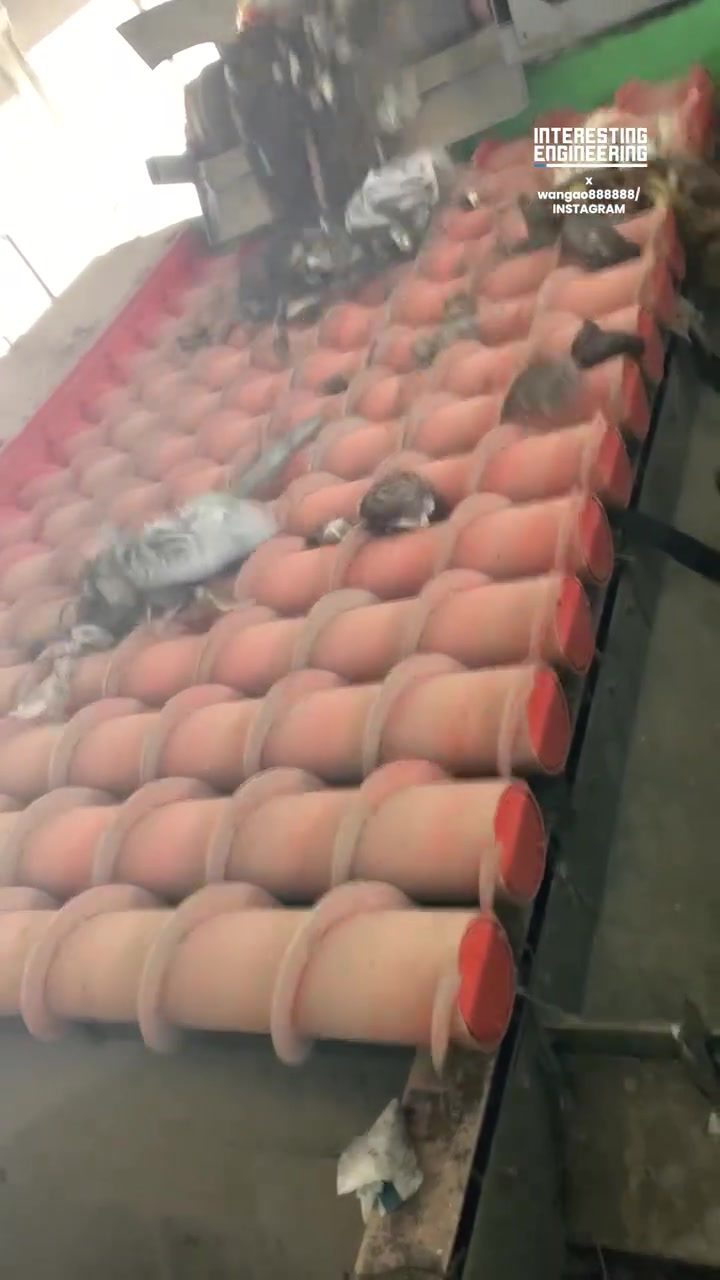
During the manufacturing process, sorting and quality control are essential. Rotating rollers mechanically sort mixed waste by size and shape, tearing open bags, allowing fine materials to fall through, and conveying larger, lighter items forward for further separation and recycling processes. This automated system enhances the efficiency of the manufacturing process by ensuring that only high-quality materials are used.
Automated Brick Handling Systems
Modern brick manufacturing facilities employ automated systems to handle and sort bricks. These systems use conveyor belts and robotic arms to move bricks through various stages of production, reducing human error and increasing productivity. The automated brick handling system shown in the video is an example of how technology is leveraged to streamline the manufacturing process.
Innovations in Brick Design
Conventional bricks are typically rectangular, but recent innovations have introduced cylindrical bricks with rounded ends. These cylindrical bricks offer unique aesthetic and functional benefits. They can be used to create curved walls and other architectural features, providing flexibility in design and construction. The use of such innovative designs signifies the evolution of brick manufacturing, driven by a demand for more versatile and aesthetically pleasing building materials.
Practical tips
When considering brick manufacturing or purchasing bricks for a construction project, keep the following tips in mind:
- Quality Over Quantity: Always prioritize the quality of bricks over the quantity. High-quality bricks ensure the durability and longevity of the structure.
- Efficient Sorting Systems: Implement efficient sorting systems to separate mixed waste and ensure the production of high-quality bricks. This saves time and resources, and enhances the overall manufacturing process.
- Consider Automation: Investing in automated systems can significantly improve efficiency and reduce human error. Automated sorting and handling systems can process bricks more quickly and accurately.
- Environmental Impact: Be conscious of the environmental impact of the manufacturing process. Recycling and reusing materials can help reduce waste and promote sustainability.
Important takeaways
- Precision and Efficiency: Brick manufacturing relies on precision and efficient processes to produce high-quality bricks. Modern technologies and automated systems enhance these aspects, contributing to better overall production.
- Innovation and Design: The evolution of brick design, including the introduction of cylindrical bricks, showcases the industry's commitment to innovation and creativity.
- **Waste Management: Sorting and recycling processes are integral to the manufacturing process, helping to manage waste and ensure the quality of the final product.
Conclusion
Brick manufacturing combines traditional techniques with modern technological advancements to create durable and versatile building materials. The process involves careful selection and preparation of raw materials, efficient sorting, and quality control measures, and the use of automated systems to enhance productivity. Innovations in brick design, such as cylindrical bricks, further enrich the possibilities in construction and architecture. By understanding the intricacies of brick manufacturing, one can appreciate the engineering and technological marvels that support the construction industry.
Watch the Reel
Questions readers ask
How has the modern brick manufacturing process improved efficiency?
The modern brick manufacturing process has significantly improved efficiency through the integration of advanced machinery and automated systems. These technologies streamline production, reduce manual labor, and minimize waste, ensuring a more consistent and faster output of high-quality bricks.
What role does technology play in brick size and shape control?
Technology plays a crucial role in controlling the size and shape of bricks. Modern machinery, such as extrusion presses and cutting systems, ensure precise dimensions and consistent shapes. This level of control is essential for maintaining the structural integrity of buildings and reducing the need for post-production adjustments.
How is waste managed in the brick manufacturing process?
Waste management in brick manufacturing involves recycling and repurposing excess materials. Modern facilities often implement systems to reclaim and reuse clay and other raw materials, reducing environmental impact. Brick waste recycling programs further contribute to sustainable practices by converting waste into usable materials for other construction projects.
What are the key methods for quality assurance in brick production?
Quality assurance in brick production involves multiple steps, including rigorous testing of raw materials, monitoring the manufacturing process, and conducting final inspections. Advanced techniques, such as non-destructive testing and automated quality control systems, ensure that each brick meets the required standards for strength, durability, and consistency.
How does the use of rollers impact the production of high-quality bricks?
Rollers in brick manufacturing help achieve high-quality bricks by ensuring consistent compaction and uniform density. Mechanical brick manufacturing with rollers presses the clay mixture evenly, removing air pockets and creating a uniform texture. This results in bricks that are more durable and resistant to weathering and structural stress.
What are the benefits of using mechanical systems in brick manufacturing?
Mechanical systems in brick manufacturing offer several benefits, including increased production speed, reduced human error, and enhanced consistency. These systems can handle large volumes of material efficiently, ensuring that each brick is produced to the same high standard, which is vital for the construction industry.
How do modern brick sorting methods contribute to the construction industry?
Modern brick sorting methods contribute to the construction industry by ensuring that bricks of the correct size, shape, and quality are used in building projects. Automated sorting systems can quickly and accurately separate bricks based on various criteria, minimizing waste and improving the overall efficiency of the construction process.
Related deep dives
Similar reads based on topic and creator.

Recent articles
Fresh deep dives from the latest Reels we unpacked.




Comments
Be the first to comment.