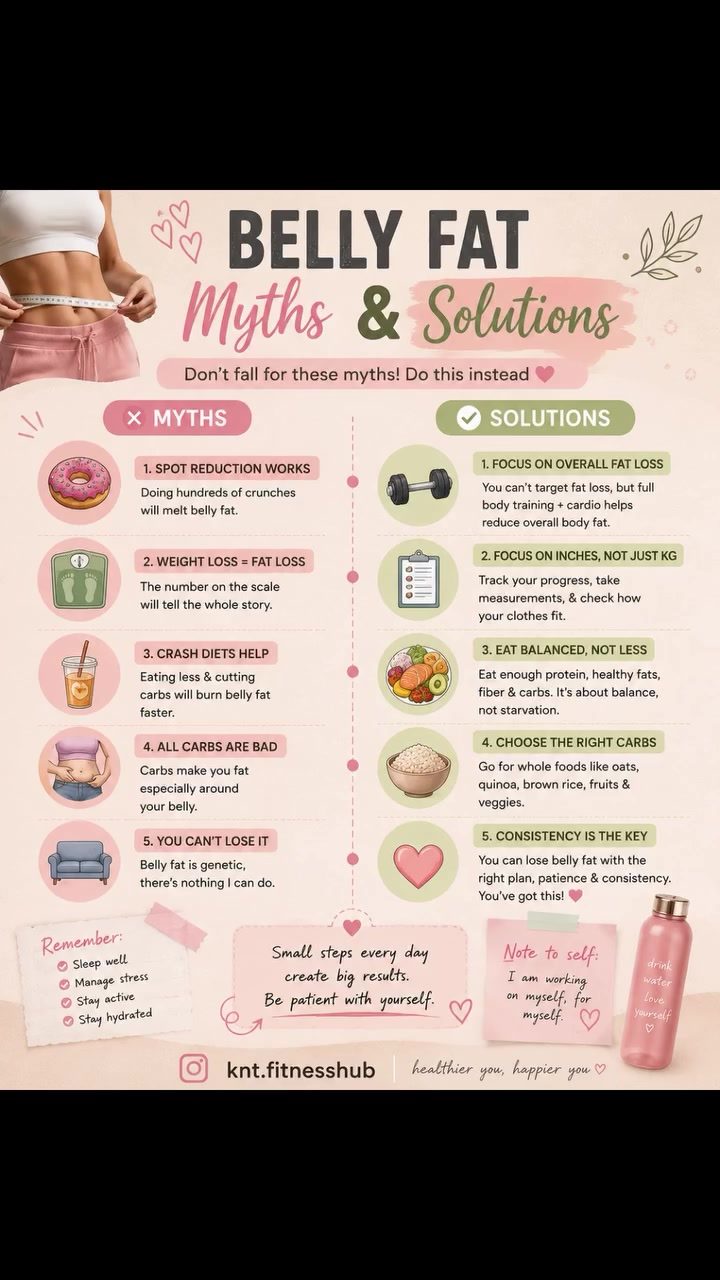
Belly Fat Myths and Solutions
Belly fat is a common concern for many people. Despite its prevalence, various myths can mislead individuals on the best ways to address it. Here, we debunk five common myths about belly fat and provide practical, evidence-based solutions.
Why this matters
Addressing belly fat goes beyond aesthetics; it has significant health implications. Excess belly fat, particularly visceral fat, is linked to various health issues, including heart disease, type 2 diabetes, and certain cancers. Understanding the facts about belly fat can help you make informed decisions about your health and fitness journey.
Common Belly Fat Myths
Myth 1: Spot Reduction Works
One of the most prevalent myths is that doing endless crunches or targeting belly fat with specific exercises will melt away the fat in that area. Unfortunately, this is not true. Your body doesn't work that way. You can't lose fat in one specific area by exercising that spot.
Solution: Focus on Overall Fat Loss
Instead of focusing on spot reduction, concentrate on overall fat loss. This involves a combination of full-body strength training and cardio exercises. By reducing your overall body fat, you'll see a decrease in belly fat as well. Remember, consistency is key. Small steps every day create big results.
Myth 2: Weight Loss Equals Fat Loss
The number on the scale isn't always the best indicator of fat loss. Muscle weighs more than fat, so you might be losing fat but gaining muscle, which can result in little change on the scale.
Solution: Focus on Inches, Not Just Pounds
Track your progress by taking measurements and checking how your clothes fit. This will give you a more accurate picture of your fat loss journey.
Supporting the idea of tracking progress beyond weight, multiple studies have shown that measuring waist circumference and body fat percentage are more reliable indicators of health improvements.
Myth 3: Crash Diets Help
Crash diets might seem like a quick fix, but they are not a healthy or sustainable solution. Eating too few calories and cutting out entire food groups, like carbohydrates, can lead to nutrient deficiencies and muscle loss.
Solution: Eat Balanced, Not Less
Focus on eating a balanced diet that includes enough protein, healthy fats, fiber, and carbohydrates. It's about balance, not starvation. Whole foods like fruits, vegetables, lean proteins, and whole grains should make up the bulk of your diet. Avoid processed and packaged foods as much as possible.
Myth 4: All Carbs Are Bad
Carbohydrates often get a bad rap, especially when it comes to belly fat. However, not all carbs are created equal. Simple carbohydrates, like those found in processed foods, can contribute to belly fat. However, complex carbohydrates are essential for a healthy diet.
Solution: Choose the Right Carbs
Choose whole, healthy carbohydrate sources like oats, quinoa, brown rice, fruits, and vegetables. These foods are packed with fiber, which helps keep you full and promotes healthy digestion.
Myth 5: Belly Fat is Genetic; There's Nothing You Can Do
While it's true that genetics play a role in where you store fat, it's not the only factor. Lifestyle choices, such as diet and exercise, have a significant impact on belly fat.
Solution: Consistency is the Key
You can lose belly fat with the right plan, patience, and consistency. Small, sustainable changes in your diet and exercise routine can lead to significant results over time.
Maintaining a Healthy Lifestyle
Consistency in healthy habits is crucial for long-term success. This includes regular physical activity, adequate sleep, stress management, and hydration.
Sleep Well
Aim for 7-9 hours of quality sleep per night. Poor sleep can disrupt hormones that regulate hunger and metabolism, leading to increased belly fat.
Manage Stress
Chronic stress can lead to increased cortisol levels, which in turn can promote belly fat storage. Find healthy ways to manage stress, such as meditation, yoga, or other relaxation techniques.
Stay Active
Regular physical activity is essential for overall health and weight management. Aim for at least 150 minutes of moderate-intensity or 75 minutes of vigorous-intensity aerobic activity per week, along with strength training exercises at least 2 days a week.
Stay Hydrated
Drinking enough water is crucial for overall health and can help with weight management. Sometimes, the body confuses thirst for hunger, leading to overeating.
Practical Tips
Here are some practical tips to help you on your journey to reducing belly fat:
- Eat Enough Protein: Protein helps keep you full and maintains muscle mass during weight loss.
- Stay in a Calorie Deficit: If fat loss is your goal, ensure you are in a calorie deficit. However, avoid extreme calorie restriction.
- Strength Train Regularly: Strength training helps build lean muscle mass, which boosts your metabolism.
- Walk Daily: Incorporate physical activity into your daily routine, such as walking.
- Eat Whole Foods: Focus on whole, unprocessed foods for a balanced diet.
- Limit Added Sugars and Refined Carbs: These foods can contribute to belly fat and overall inflammation.
- Stay Consistent: Consistency is key in any healthy lifestyle change. Small steps every day will create big results.
Important Takeaways
- Debunk the Myths: Understand that spot reduction, crash diets, and extreme measures don't work in the long run.
- Focus on Overall Health: Aim for overall fat loss through a balanced diet and regular exercise.
- Track Progress: Use multiple methods to track your progress, not just the scale.
- Stay Consistent: Small, sustainable changes are more effective than quick fixes.
- Practice Self-Care: Prioritize sleep, stress management, and hydration for overall health.
Conclusion
Belly fat is a common concern, but with the right approach, it can be managed effectively. By debunking common myths and focusing on evidence-based solutions, you can achieve your health and fitness goals sustainably.
Watch the Reel
Questions readers ask
What is the most effective way to reduce belly fat?
To reduce belly fat, focus on a combination of regular exercise and a balanced diet. Incorporate both cardiovascular exercises and strength training, and avoid processed foods and sugars. Consistency is key, as it can take time to see results. Remember, spot reduction is a myth, and overall body fat loss is necessary for reducing belly fat.
What is the difference between visceral fat and subcutaneous fat?
Visceral fat is the fat that surrounds your organs and is linked to serious health concerns like heart disease and type 2 diabetes. Subcutaneous fat, on the other hand, is the fat that lies just under the skin. While both types of fat can be harmful, visceral fat is more dangerous due to its proximity to vital organs.
Does eating carbohydrates cause belly fat?
Carbohydrates themselves do not directly cause belly fat. It's the type and amount of carbohydrates consumed that matters. Refined carbs and sugars can lead to weight gain when consumed in excess. Opt for complex carbs, like whole grains and vegetables, which are more filling and provide essential nutrients.
Which exercises are most effective for losing belly fat?
The best exercises for losing belly fat are those that combine fat-burning cardio and strength training. High-Intensity Interval Training (HIIT), running, cycling, and strength training exercises like squats and lunges can help. These exercises boost your metabolism and promote overall fat loss, including belly fat.
How does sleep impact belly fat?
Sleep plays a crucial role in managing belly fat. Lack of sleep can disrupt hormones that regulate appetite and metabolism. Aim for 7-9 hours of quality sleep per night. A good night's sleep can help control cravings and support a healthy metabolism, making it easier to manage weight and reduce belly fat.
Is it true that belly fat is more dangerous for men than women?
Excess belly fat is a concern for both men and women, but the health risks can manifest differently. Men tend to store more visceral fat, which increases the risk of heart disease and other health issues. Women, on the other hand, tend to store more subcutaneous fat, but post-menopause, they can also develop more visceral fat, increasing similar health risks.
What role do genetics play in belly fat accumulation?
Genetics can influence where your body stores fat, including in the belly area. However, genetics are not destiny. Lifestyle factors, such as diet and exercise, play a significant role in managing and reducing belly fat. Even if you are genetically predisposed to storing belly fat, making healthy choices can help mitigate these effects.
Related deep dives
Similar reads based on topic and creator.




Recent articles
Fresh deep dives from the latest Reels we unpacked.




Comments
Be the first to comment.