American Food Spending
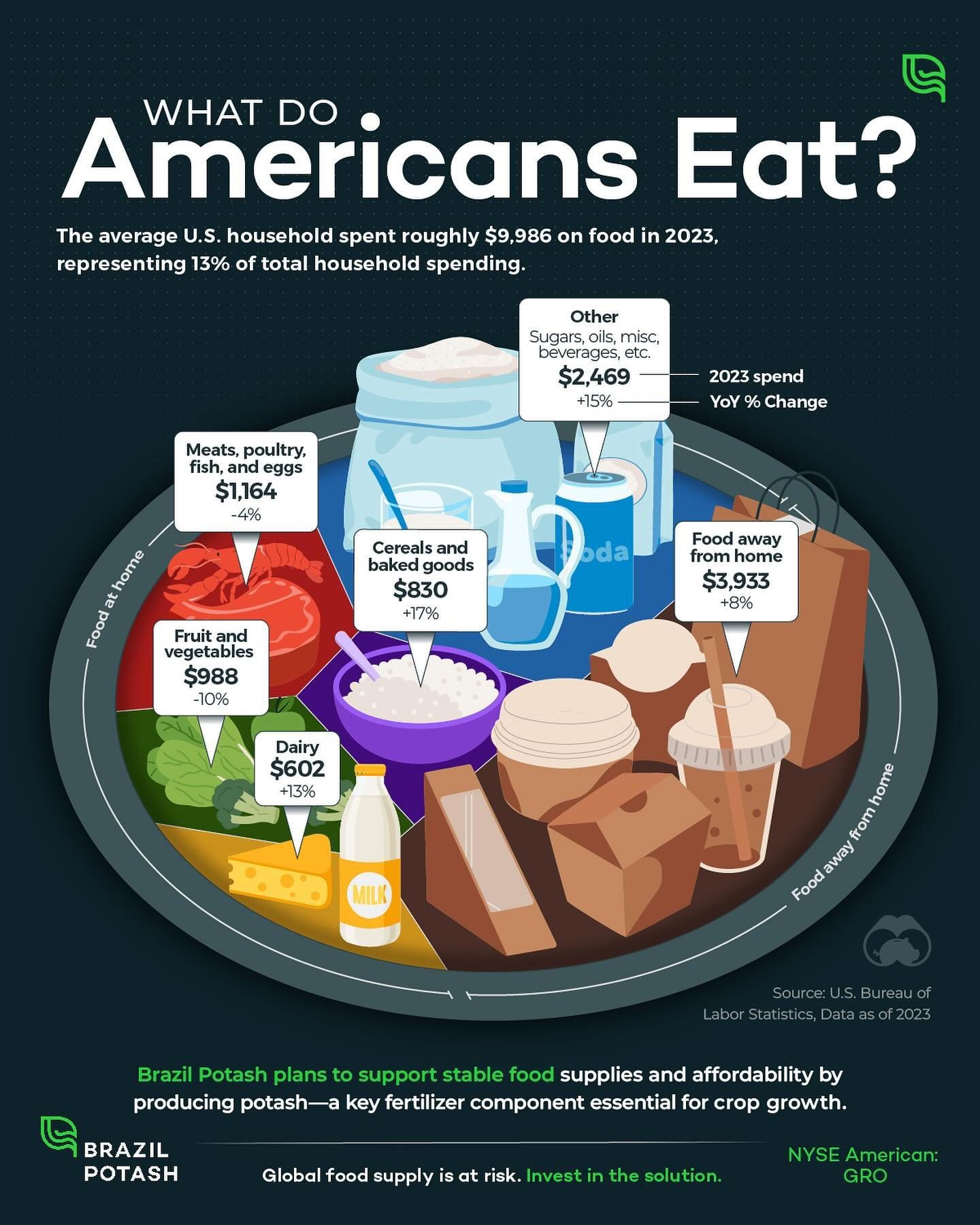
Food prices are rising, making it more crucial than ever to understand what Americans eat and how to keep food affordable. In 2023, the average U.S. household spent $9,986 on food, which represented 13% of total household spending.
Why This Matters
Food is a necessity, and understanding how we spend on it can help us make informed decisions. With food prices soaring, it is essential to look at the data to see where Americans are allocating their food budgets and how this impacts their overall spending.
Food Spending in 2023
Americans spent significant amounts on various food categories. Here’s a breakdown of the spending:
Meats, Poultry, Fish, and Eggs
Americans spent $1,164 on meats, poultry, fish, and eggs, which saw a -4% year-over-year (YoY) change. This category includes a variety of protein sources that are essential for a balanced diet. The slight decrease in spending could be attributed to various factors, including changes in consumer preferences or price fluctuations.
Cereals and Food from Home
Cereals and food consumed at home are staples in many households. While the exact spending on cereals isn't listed, the spending on food consumed at home is significant. This category includes a wide range of items from bread to pasta, which are consumed regularly by Americans.
Fruits and Vegetables
Fruits and vegetables are crucial for a healthy diet. Americans spent $988 on this category, which saw a -10% YoY change. This decrease could be due to various factors, including price increases or changes in dietary habits. Fruits and vegetables are essential for maintaining a balanced diet, and understanding the spending trends in this category can help in planning for future food security.
Dairy
Dairy products are a staple in many American households. In 2023, Americans spent $602 on dairy, which saw a +13% YoY change. This increase could be due to higher prices or increased consumption. Dairy products are essential for calcium and other nutrients, making them an important part of any diet.
Other Beverages
Other beverages and related items accounted for $2,469 of spending, with a +15% YoY change. This category includes a wide range of beverages, from coffee to soda, which are consumed regularly by Americans. The increase in spending could be due to higher prices or increased consumption.
Food Away from Home
Food consumed away from home, such as dining out or takeout, accounted for $3,933 of spending, with an +8% YoY change. This category includes a wide range of items, from fast food to fine dining, which are consumed regularly by Americans. The increase in spending could be due to higher prices or increased consumption.
Brazil Potash and Stable Food Supplies
Brazil Potash is promoting its role in supporting stable food supplies and affordability by producing potash—a key fertilizer component essential for crop growth. Potash is a critical nutrient for plants, and its production is essential for maintaining food supplies.
Global food supply is at risk due to various factors, including climate change and population growth. Investing in solutions like Brazil Potash can help ensure stable food supplies and affordability. Potash production is essential for maintaining healthy crops, which are crucial for food security.
Brazil Potash is a company that produces potash, a key fertilizer component essential for crop growth. The company is promoting its role in supporting stable food supplies and affordability. Potash is a critical nutrient for plants, and its production is essential for maintaining food supplies. Investing in solutions like Brazil Potash can help ensure stable food supplies and affordability.
Practical Tips
Here are some practical tips for managing food spending:
Shop with a List
Shopping with a list can help you stay on budget and avoid impulse purchases. Plan your meals for the week and make a list of the ingredients you need. This can help you avoid buying items you don't need and save money in the long run.
Buy in Bulk
Buying in bulk can save you money in the long run. Items like rice, pasta, and canned goods are often cheaper when bought in bulk. This can help you save money and reduce waste.
Choose Store-Brand Products
Store-brand products are often cheaper than name-brand products and can be just as good. Choosing store-brand products can help you save money and stay on budget.
Cook at Home
Cooking at home is often cheaper than eating out. Planning meals at home and cooking them yourself can help you save money and eat healthier. This can also help you control portion sizes and reduce waste.
Use Coupons and Discounts
Using coupons and discounts can help you save money on groceries. Look for coupons in newspapers, online, or in-store brochures. This can help you save money and stay on budget.
Important Takeaways
Understanding American food spending is crucial for making informed decisions about our diets and budgets. With food prices soaring, it is essential to look at the data to see where Americans are allocating their food budgets and how this impacts their overall spending.
Potash production is essential for maintaining healthy crops, which are crucial for food security. Investing in solutions like Brazil Potash can help ensure stable food supplies and affordability.
Conclusion
Food is a necessity, and understanding how we spend on it can help us make informed decisions. With food prices soaring, it is essential to look at the data to see where Americans are allocating their food budgets and how this impacts their overall spending.
Watch the Reel
Questions readers ask
What was the average food expenditure per household in the U.S. in 2023?
The average American household spent approximately $9,986 on food in 2023, which accounted for 13% of their total spending.
Which food categories saw the most significant spending in 2023?
Key food categories that saw substantial spending in 2023 included meats, poultry, fish, and eggs ($1,164); and dairy products, which are a staple in many American households.
How does the 2023 food spending trend compare to previous years?
In 2023, spending on meats, poultry, fish, and eggs decreased by 4% year-over-year, while overall food spending reached a new high.
What is the significance of understanding 2023's food spending trends?
Understanding 2023's food spending trends helps households make informed decisions about their budgets, plan for future food security, and adapt to rising food prices.
How much did Americans spend on produce and vegetables in 2023?
While the article does not provide specific figures for produce and vegetable spending, it highlights that significant allocations were made to essential categories like meats and dairy.
What are the implications of the 2023 food budget trends for American households?
The 2023 food budget trends indicate that households need to be mindful of their spending on key food categories, such as meats and grains, which are often essentials but can also be expensive.
What other food categories should Americans consider when reviewing their 2023 food spending?
When reviewing 2023 food spending, Americans should also consider their expenditure on home food supplies, as well as other key categories like cereal and grain spending, which can significantly impact the overall food budget.
Related deep dives
Similar reads based on topic and creator.




Recent articles
Fresh deep dives from the latest Reels we unpacked.




Comments
Be the first to comment.