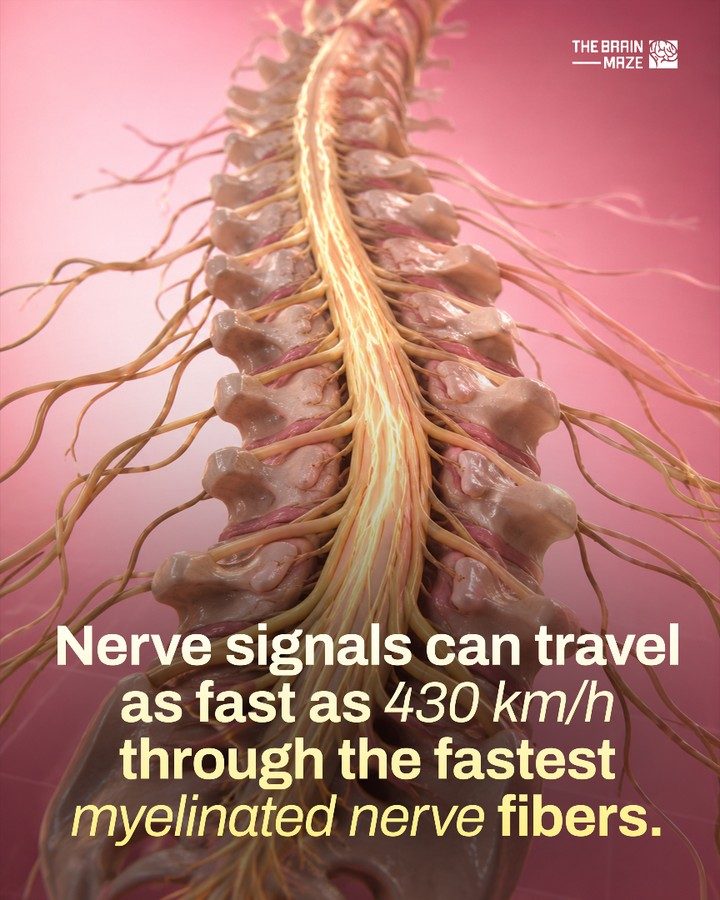
Nerve Signal Speed: How the Body's Electrical Communication System Works
Nerve signals are the body's electrical communication system, carrying messages between the brain, spinal cord, and the rest of the body. These signals are crucial for everything from voluntary movements to automatic responses like breathing and digestion. Understanding how these signals travel and the speeds at which they move can provide insight into the body's remarkable efficiency.
Context: Why This Matters
Nerve signals are essential for the body's ability to function and respond to its environment. The fastest nerve signals travel through myelinated nerve fibers, which are insulated by a fatty substance called myelin. This insulation allows the signals to travel at speeds of up to 430 km/h (270 mph), enabling rapid reactions to touch, movement, and danger. Slower nerve fibers, which are not myelinated, carry signals related to pain and temperature, resulting in sensations that are felt later than other stimuli.
Nerve Signal Pathway and Function
The Role of the Brain and Spinal Cord
The brain and spinal cord form the control center of the nervous system. The brain is responsible for processing information and issuing commands, while the spinal cord acts as a relay station, transmitting signals between the brain and the rest of the body. Nerve signals travel along pathways known as axons, which are part of neurons. These axons can be either myelinated or unmyelinated, influencing the speed at which the signals travel.
Myelinated vs. Unmyelinated Nerve Fibers
Myelinated nerve fibers are wrapped in a layer of fatty tissue called myelin, which acts as an insulator. This insulation helps to speed up the transmission of nerve signals by preventing electrical current from dissipating. Myelinated fibers are essential for quick reflexes and efficient communication between the brain and the rest of the body. Examples of myelinated nerve fibers include those involved in motor control and sensory perception. In contrast, unmyelinated nerve fibers lack this insulating layer and, as a result, transmit signals at a slower pace. These fibers are often associated with pain and temperature sensations, which is why these sensations are felt later than other stimuli.
The Speed of Nerve Signals
The speed at which nerve signals travel can vary significantly depending on whether the fibers are myelinated. The fastest signals, traveling through myelinated nerve fibers, can reach speeds of up to 430 km/h (270 mph). This rapid transmission is critical for immediate reactions to environmental stimuli and for coordinating complex movements. On the other hand, unmyelinated fibers transmit signals at a much slower pace, often around 2 meters per second (m/s), making them suitable for less urgent functions like pain and temperature perception.
Practical Tips for Maintaining Healthy Nerve Function
Maintaining healthy nerve function is essential for overall well-being. Here are some practical tips to support the health of your nervous system:
Nutrition and Lifestyle
A balanced diet rich in essential nutrients can support nerve health. Foods high in vitamin B, such as leafy greens, fish, and eggs, are particularly beneficial. Regular exercise and adequate sleep are also crucial for maintaining a healthy nervous system. Avoiding excessive alcohol and tobacco can further support nerve health by preventing damage to nerve fibers.
Managing Stress
Chronic stress can have a significant impact on nerve function. Techniques such as mindfulness, meditation, and deep-breathing exercises can help manage stress levels and promote overall mental well-being.
Physical Activity
Regular physical activity, including both aerobic exercise and strength training, can improve nerve function by increasing blood flow to the brain and spinal cord. This increased blood flow provides the necessary nutrients and oxygen to support nerve health.
Medical Interventions
In some cases, medical interventions may be necessary to maintain nerve function. Conditions such as multiple sclerosis and diabetic neuropathy can affect nerve signals and require medical treatment. Consulting a healthcare provider for personalized advice and treatment options is essential for managing these conditions.
Important Takeaways
Understanding the speed and function of nerve signals provides valuable insights into the body's remarkable communication system. The fastest nerve signals, traveling through myelinated fibers, play a critical role in rapid reactions and efficient body functions, whereas slower signals, often associated with pain and temperature, are essential for more nuanced sensory experiences. Maintaining a healthy lifestyle, managing stress, and seeking medical interventions when necessary can support the health of your nervous system and ensure optimal nerve function.
Conclusion
Nerve signals are the backbone of the body's electrical communication system, enabling rapid and efficient responses to environmental stimuli. Myelinated nerve fibers, in particular, allow for the swift transmission of signals, making them essential for quick reflexes and coordinated movements. By understanding the mechanisms behind nerve signal transmission and adopting a healthy lifestyle, you can support the overall health and function of your nervous system.
Watch the Reel
Questions readers ask
What is the significance of nerve signal speed in the human body?
Nerve signal speed is vital for the body's ability to react to its surroundings. Faster signals enable quicker responses, which are essential for both voluntary actions, like moving a limb, and involuntary functions, such as breathing. This makes nerve signal speed a crucial aspect of overall bodily function and health.
How does myelin contribute to the speed of nerve signals?
Myelin is a fatty substance that wraps around nerve fibers, creating an insulating layer. This insulation allows nerve signals to travel more quickly by preventing the signal from dissipating as it moves along the nerve. In myelinated fibers, signals can reach impressive speeds of up to 430 km/h.
What is the role of nerve signals in brain-spinal cord communication?
Nerve signals serve as the primary means of communication between the brain and the spinal cord. They transmit vital information that coordinates movements, processes sensory input, and regulates automatic functions. This continuous exchange of signals is essential for the body's overall coordination and response to stimuli.
What are myelinated nerve fibers and why are they important?
Myelinated nerve fibers are nerve cells that have a layer of myelin, a fatty substance, wrapped around them. This myelin sheath acts as an insulator, allowing electrical impulses to travel more efficiently and quickly between the brain and the rest of the body. This makes myelinated fibers crucial for rapid and accurate nerve signal transmission.
How do nerve signals travel through the body?
Nerve signals travel through the body along pathways called nerves, which are bundles of nerve fibers. These signals move as tiny electrical impulses that jump from one node of Ranvier to the next along myelinated fibers, or continuously along unmyelinated fibers. This process enables communication between the brain, spinal cord, and muscles, organs, and tissues.
Why is the speed of nerve signals in the brain important?
The speed of nerve signals in the brain is crucial for rapid processing and response to stimuli. Faster signal transmission allows for quicker decision-making, better coordination of movements, and more efficient control of automatic bodily functions. This is particularly important for tasks that require split-second reactions, such as reflexes and quick reflexes.
What factors influence the speed of nerve signals?
Several factors influence the speed of nerve signals, with the presence of myelin being the most significant. Other factors include the diameter of the nerve fiber (larger diameter fibers conduct signals faster), the temperature of the environment (cooler temperatures slow signal transmission), and the health of the nerve fibers (damage can impede signal speed).
Related deep dives
Similar reads based on topic and creator.

Recent articles
Fresh deep dives from the latest Reels we unpacked.




Comments
Be the first to comment.