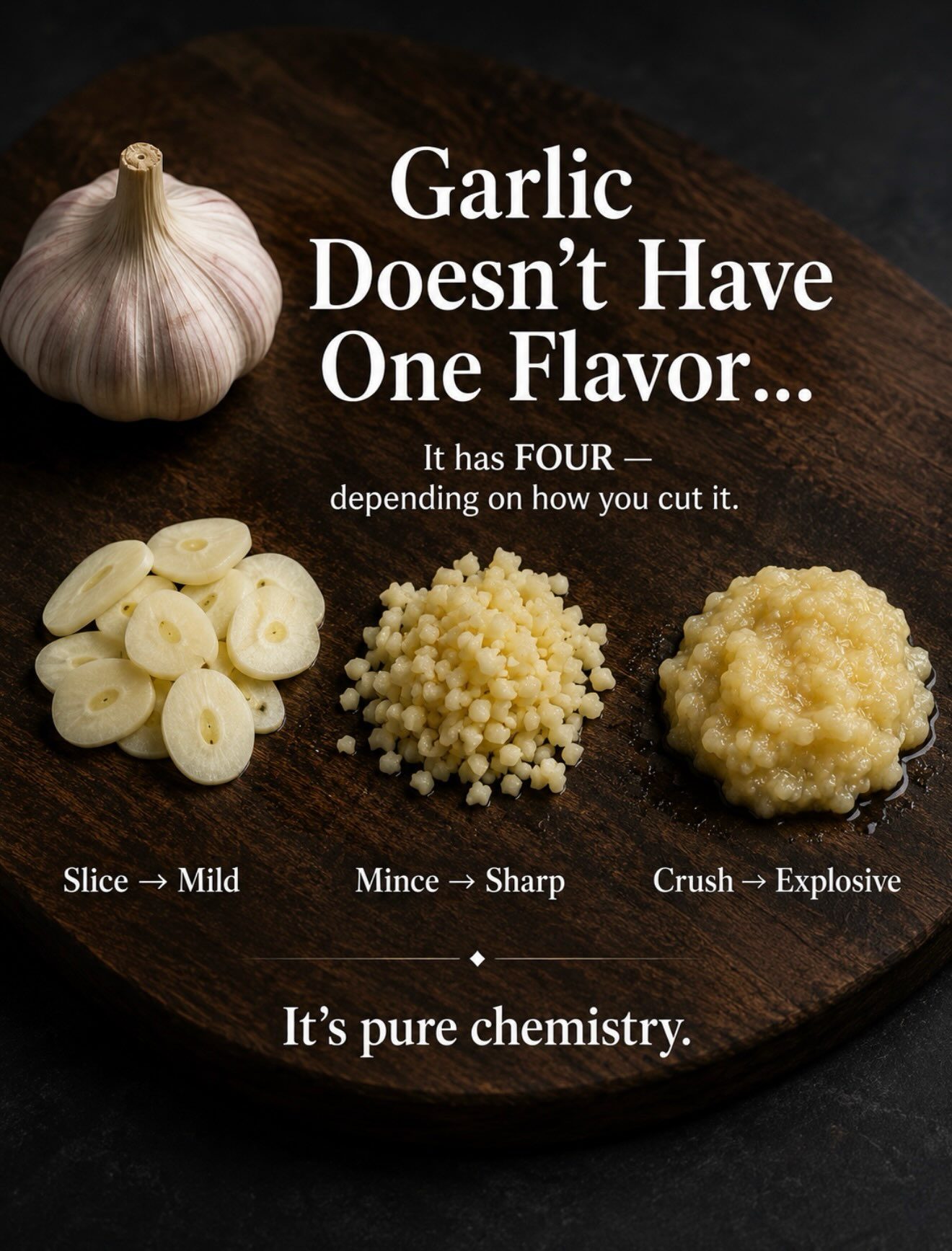
Understanding the Impact of Cutting Techniques on Garlic’s Taste
Garlic is a cornerstone in many kitchens, offering a versatile flavor that can transform dishes. However, the way you cut garlic significantly influences its final flavor. This article delves into the science behind garlic’s flavor chemistry, exploring how different cutting techniques and cooking methods can unlock a range of tastes.
The Science Behind Garlic’s Flavor
The pungent taste of garlic comes from a chemical process involving the compound allicin. When garlic is cut or crushed, the enzyme alliinase converts the compound alliin into allicin, which is responsible for the characteristic garlic aroma and flavor.
Why Cutting Matters
Different cutting techniques release varying amounts of allicin, which affects the garlic's intensity and flavor. Let’s explore the main cutting methods and their impacts.
Sliced Garlic
Slicing garlic results in the mildest flavor. This method damages fewer cells, leading to less allicin production. It’s perfect for dishes where you want a subtle, aromatic garlic note without overpowering other ingredients. Think of it as the gentle whisper of garlic in a dish.
Minced Garlic
Mincing garlic creates a stronger, sharper taste. By breaking more cells, this technique allows more sulfur compounds to form, resulting in a more robust flavor. Minced garlic is ideal for recipes where you want the garlic to be present but not overpowering.
Crushed Garlic
Crushing garlic delivers the boldest flavor. This method releases the most allicin, giving garlic its intense aroma and pungency. Crushed garlic is perfect for marinades, dressings, and dishes where you want garlic to shine as a prominent flavor.
The Art of Cooking Whole Garlic
Cooking whole garlic cloves slowly can transform their flavor entirely. Low and slow cooking deactivates the enzymes responsible for garlic’s sharp bite, allowing the natural sugars to caramelize. This process results in a sweet, buttery, almost nutty flavor.
The 10-15 Minute Rule
A common trick among chefs is to let chopped or crushed garlic rest for 10–15 minutes before cooking. This gives the enzyme alliinase enough time to convert alliin into allicin, maximizing both flavor and garlic’s beneficial sulfur compounds. By the time you cook the garlic, the reaction is already well underway, enhancing the final taste.
The Role of Moisture Release
When garlic is chopped, it begins to release moisture. This moisture is crucial for the formation of allicin. Immediately after cutting, garlic releases less moisture, resulting in a milder aroma and flavor. As time passes, more moisture is released, and the formation of allicin progresses, intensifying the aroma and flavor.
Understanding the Chemical Reaction
The conversion of alliin to allicin involves a chemical reaction between alliin and the enzyme alliinase. When garlic is cut, these two components mix, triggering the formation of allicin. This reaction is time-sensitive, as heat can deactivate the enzyme, stopping the production of allicin.
Beyond Garlic: Building Healthier Habits
While understanding garlic's flavor chemistry is fascinating, it’s also important to consider how small techniques like these can enhance the overall quality of your meals. Cooking isn't just about ingredients; it's about understanding the science behind them. Small techniques can completely transform the taste of your meals without adding extra calories, salt, or sugar.
The Workit App
The Workit App can help you build healthier habits with personalized nutrition plans, healthy recipes, calorie and macro tracking, grocery guides, workout programs, and progress tracking. It makes healthy eating simple and sustainable, allowing you to focus on enjoying great-tasting, nutrient-rich meals.
Important Takeaways
Garlic’s flavor is highly dependent on how it is cut and cooked. Sliced garlic is mild, minced garlic is sharp, and crushed garlic is explosive. Cooking whole garlic slowly transforms it into a sweet, mellow ingredient. Additionally, letting chopped garlic rest for 10-15 minutes maximizes allicin formation, enhancing both flavor and health benefits. By understanding these techniques, you can elevate your cooking and enjoy the full spectrum of garlic’s flavor.
Conclusion
Next time you reach for the garlic, remember that its flavor potential is vast. By adjusting your cutting and cooking techniques, you can unlock a range of tastes, from subtle and aromatic to bold and pungent. And with the Workit App, you can integrate these techniques into a healthier, more enjoyable cooking routine.
Watch the Reel
Questions readers ask
How does slicing garlic affect its flavor?
Slicing garlic releases a moderate amount of allicin, leading to a milder garlic flavor. This technique is ideal when you want a subtle garlic presence that doesn't overpower other ingredients. It is often used in dishes where garlic is cooked for a longer period, allowing the flavors to meld together.
What is the difference in taste between minced and crushed garlic?
Mincing garlic results in a more robust flavor compared to crushing. Mincing releases more allicin, giving a stronger garlic taste. Meanwhile, when garlic is crushed, alliinase breaks down more of the alliin into allicin and sulfenic acid, resulting in a more pungent, slightly more bitter flavor.
Why should I consider the size of my garlic pieces when cooking?
The size of your garlic pieces can greatly affect the final dish. Larger pieces will have a milder flavor and take longer to cook, which is great for slow-cooked dishes. Smaller pieces, like minced, will release more allicin and should be used with care as the flavor can become overpowering.
How can I maximize the garlic flavor in my dish?
To maximize garlic flavor, you can use a combination of cutting techniques and cooking methods. For instance, you can start by crushing garlic to release more allicin and then chopping or mincing it to further enhance the flavor. Additionally, allowing garlic to cook at medium heat for a short period helps to mellow out some of the harshness.
What happens if I cut garlic too finely?
Cutting garlic too finely, such as over mincing, can release a lot of allicin, making the dish too pungent. However, too much allicin can also break down into other compounds that may become bitter with prolonged cooking. It's best to adjust the fineness of your garlic cuts based on the specific dish and desired flavor profile.
Is it better to cut garlic before or after peeling?
It is generally recommended to peel garlic before cutting. Peeling garlic first allows for more precise and even cutting, ensuring that all cloves are consistently chopped or minced. This also helps to prevent garlic from flying around when cutting and making it easier to handle.
Recent articles
Fresh deep dives from the latest Reels we unpacked.




Comments
Be the first to comment.