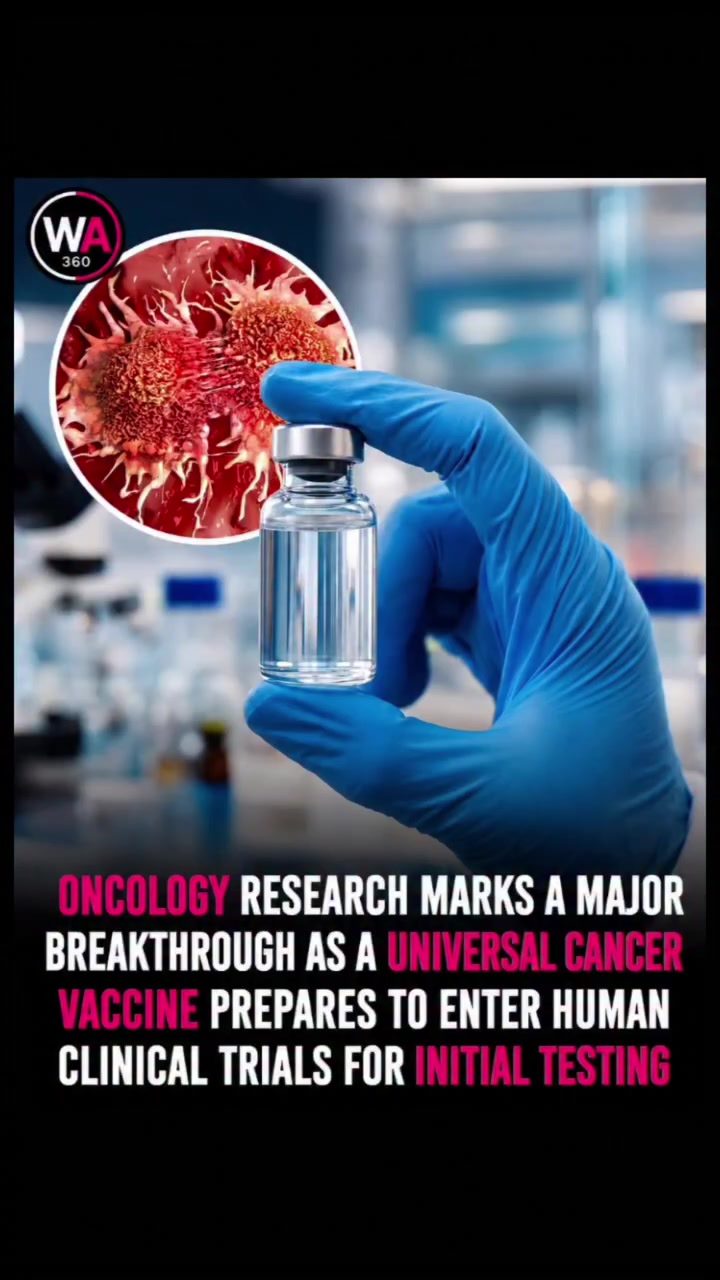
Universal Cancer Vaccine: A New Era in Oncology Research
The development of a universal cancer vaccine marks a significant milestone in oncology research. This innovative approach aims to revolutionize cancer treatment by training the body's immune system to recognize and fight multiple cancer types, rather than targeting specific tumor mutations. The WA 360 universal cancer vaccine is currently preparing to enter human clinical trials, a critical step in determining its safety and efficacy.
Why This Matters
Cancer research is a painstaking process that requires years of rigorous testing and development. While traditional targeted therapies have shown promise, they often involve complex and time-consuming processes to analyze individual tumor mutations. This new mRNA-based universal cancer vaccine offers a more streamlined approach, potentially providing broader protection against various types of cancer.
The Science Behind the Universal Cancer Vaccine
mRNA Technology
The WA 360 universal cancer vaccine leverages mRNA technology, which has gained significant attention with the development of COVID-19 vaccines. mRNA vaccines work by instructing cells to produce a protein that triggers an immune response. In the case of cancer, this technology aims to train the immune system to recognize and attack cancer cells broadly, rather than targeting specific mutations.
Broader Protection
One of the key advantages of this approach is its potential to provide broader protection. Traditional cancer vaccines are often personalized to individual patients, which can be both time-consuming and expensive. By contrast, a universal cancer vaccine could be administered more widely, offering a more efficient and cost-effective solution. This broader approach is particularly significant for cancers with multiple subtypes, such as breast cancer, lung cancer, and others.
Targeting Cancer Cells
The universal cancer vaccine is designed to train the immune system to identify and aggressively target cancer cells. This is achieved by introducing mRNA that encodes specific antigens found on the surface of cancer cells. Once the immune system recognizes these antigens, it can mount a robust response against cancer cells, potentially leading to better outcomes for patients.
From Lab to Clinic
The journey from lab discovery to real-world application is fraught with challenges, but the WA 360 universal cancer vaccine has shown promising results in animal studies. These encouraging findings have paved the way for the next critical step: human clinical trials.
Animal Studies and Encouraging Results
Before entering human trials, the universal cancer vaccine underwent extensive testing in animal models. These studies aimed to evaluate the vaccine's safety and efficacy. The results were encouraging, showing that the vaccine could induce a strong immune response and effectively target cancer cells. These findings provide a solid foundation for moving forward with human clinical trials.
Human Clinical Trials
Entering human clinical trials is a major milestone for any experimental treatment. For the WA 360 universal cancer vaccine, this phase marks the beginning of a rigorous process to determine its safety and efficacy in humans. Clinical trials typically involve multiple phases, each designed to answer specific questions about the treatment.
- Phase I: Focuses on safety and dosages. A small group of volunteers receives the vaccine to assess its safety and determine the optimal dosage.
- Phase II: Evaluates efficacy. A larger group of participants is involved to measure the vaccine's effectiveness and monitor side effects.
- Phase III: Confirm efficacy and monitor adverse reactions. This phase involves a large-scale trial to confirm the vaccine's benefits and further evaluate its safety.
Practical Tips for Understanding Cancer Vaccines
Understanding the development and potential of cancer vaccines can be complex, but a few key points can help demystify the process:
- Stay Informed: Keep up with the latest research and developments in cancer vaccine technology. Websites and publications from reputable medical institutions can provide valuable insights.
- Ask Questions: If you or someone you know is considering participating in a clinical trial, don't hesitate to ask questions. Understanding the risks, benefits, and expectations is crucial.
- Seek Professional Guidance: Consult with healthcare professionals who specialize in oncology. They can provide personalized advice and help you navigate the complexities of cancer treatment options.
Important Takeaways
The development of a universal cancer vaccine represents a significant breakthrough in oncology research. Key points to remember include:
- The WA 360 universal cancer vaccine uses mRNA technology to train the immune system to recognize and fight multiple cancer types.
- This approach offers broader protection compared to traditional personalized cancer vaccines.
- Human clinical trials are the next critical step in evaluating the vaccine's safety and efficacy.
- Staying informed and seeking professional guidance are essential for understanding and navigating cancer treatment options.
Conclusion
The progress in developing a universal cancer vaccine underscores the continuous advancements in medical research and technology. The journey from lab discovery to real-world application is a testament to the dedication and perseverance of researchers and scientists. As the WA 360 universal cancer vaccine moves into human clinical trials, it brings hope for a more effective and efficient solution in the fight against cancer. The future of oncology research looks promising, and continued support and participation in clinical trials will be crucial in achieving these goals.
Watch the Reel
Related deep dives
Similar reads based on topic and creator.


Recent articles
Fresh deep dives from the latest Reels we unpacked.




Comments
Be the first to comment.