Working Capital Pegs in M&A: Safeguarding Your Investment
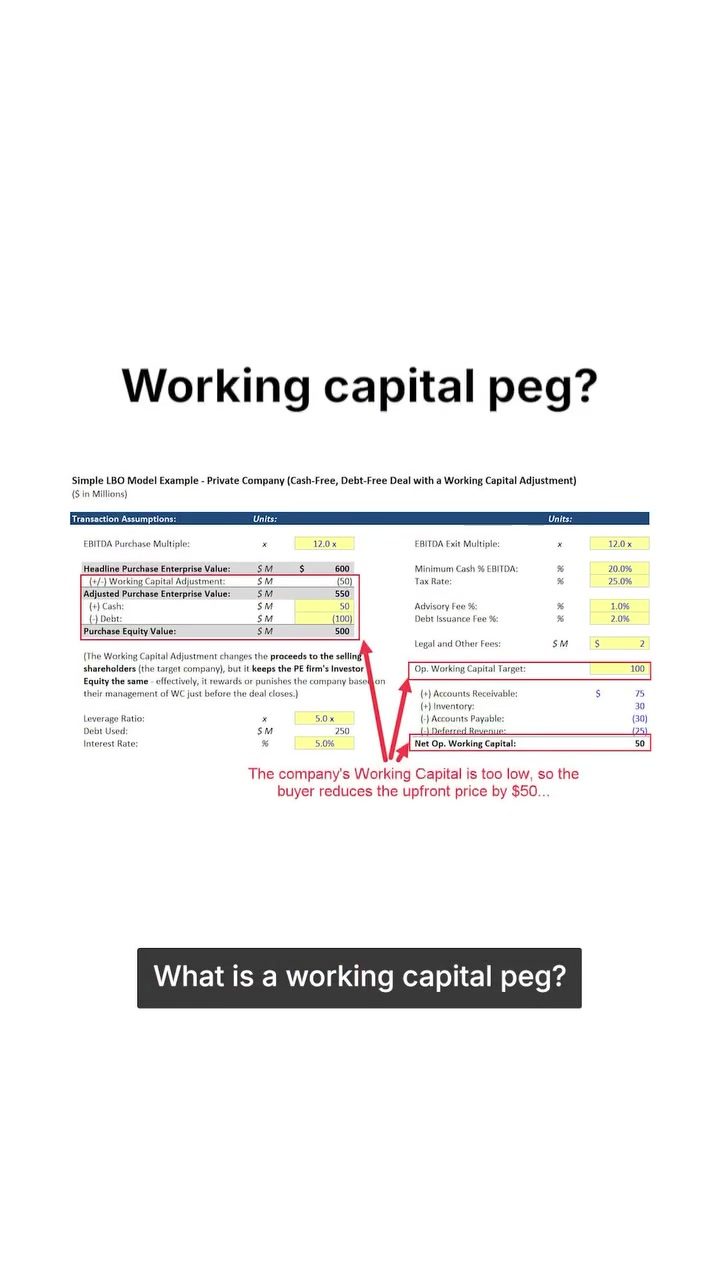
A working capital peg is a crucial clause in acquisition deals that sets a target amount of working capital a business must have at closing. This mechanism is designed to ensure that the buyer is not handed a business that is cash-starved or stripped of key assets. Understanding and effectively negotiating working capital pegs can significantly impact the success of a merger or acquisition (M&A) deal.
Why This Matters
Working capital, the difference between a company's current assets and current liabilities, is a vital indicator of a business's short-term financial health. In M&A transactions, working capital adjustments can significantly affect the final purchase price and the proceeds received by the seller. A well-negotiated working capital peg can protect against potential financial pitfalls, ensuring a smoother transition and more predictable returns. Conversely, an ill-negotiated peg can lead to unexpected costs and financial strain for the buyer.
Understanding Working Capital Pegs
Working capital pegs establish a minimum amount of operating capital, typically including cash, inventory, and receivables minus payables, that must remain in the business at the time of closing. These clauses are particularly important for ensuring that the buyer receives a business in good financial standing.
How Working Capital Pegs Work
The mechanism is straightforward: if the actual working capital at closing is below the agreed peg, the seller must compensate the buyer for the difference. Conversely, if the working capital exceeds the peg, the buyer owes additional consideration to the seller. This ensures that the seller does not strip the business of key assets or cash before the deal is finalized, thus maintaining the business's operational efficiency.
Common Pitfalls and Best Practices
Avoiding Short-Term Financial Snapshots
One of the most significant mistakes inexperienced buyers make is allowing the seller to set the working capital peg using short-term financial data. This practice can lead to artificial inflation of working capital, where sellers temporarily accelerate customer collections, delay vendor payments, or build excess inventory to inflate the working capital just before the measurement period.
Using Normalized Historical Averages
To mitigate the risk of manipulation, buyers should insist on using normalized historical averages to establish the working capital peg. This approach provides a more accurate and reliable measure of the business's true working capital, reflecting its long-term operational capabilities. By doing so, buyers can better protect their investment and ensure that the seller does not artificially inflate working capital to their detriment.
Practical Tips for Effective Negotiation
When negotiating working capital pegs, it's essential to consider the following strategies:
-
Conduct a Thorough Due Diligence: Understand the company’s working capital cycle and identify any potential manipulations.
-
Seek Historical Data: Request normalized historical financial data to establish a reliable working capital peg.
-
Establish a Collar Provision: Negotiate a collar provision that limits the working capital adjustment to a specific range, preventing extreme swings that could destabilize the deal.
-
Consult Experts: Engage financial advisors and legal experts who can help navigate the complexities of working capital adjustments and ensure that your interests are protected.
Important Takeaways
- Negotiate Carefully: A well-negotiated working capital peg can safeguard your investment in an M&A deal.
- Avoid Short-Term Data: Rely on normalized historical averages to establish the peg.
- Protect Against Manipulation: Insist on thorough due diligence and consider collar provisions to limit risk.
- Seek Expertise: Consult financial and legal advisors to ensure a robust negotiation process.
Conclusion
Working capital pegs are critical deal protection mechanisms in M&A transactions. By understanding their importance and negotiating them skillfully, buyers can safeguard their investments and ensure that the acquisition process is smooth and financially sound. Avoiding pitfalls such as relying on short-term financial data and conducting thorough due diligence are essential steps in securing a successful deal.
Watch the Reel
Questions readers ask
What is a working capital peg in the context of M&A transactions?
A working capital peg in M&A is a specified target for a company's working capital at the time of the deal's closure. It ensures that the business has adequate short-term financial resources, protecting both the buyer and seller by mitigating financial risks and maintaining operational stability.
Why is working capital important in M&A deals?
Working capital is crucial in M&A deals because it indicates a company's short-term financial health. It helps buyers assess the business's ability to meet its short-term obligations. Additionally, working capital adjustments can significantly impact the final purchase price and the proceeds received by the seller.
How is working capital calculated in M&A transactions?
Working capital in M&A is typically calculated as the difference between a company's current assets (such as cash, accounts receivable, and inventory) and its current liabilities (like accounts payable and short-term debt). The exact calculation can vary based on the specifics of the deal, so it's important to review the purchase agreement and any relevant schedules.
What happens if the working capital at closing does not meet the peg?
If the working capital at closing does not meet the peg, it can lead to a post-closing adjustment. This means the purchase price may be adjusted, with the buyer potentially receiving a price reduction or the seller having to make up the difference. The specifics depend on the terms outlined in the purchase agreement.
How can buyers and sellers negotiate working capital pegs effectively?
Both buyers and sellers should thoroughly understand the target company's working capital components, such as inventory, accounts receivable, and accounts payable. Conducting thorough due diligence and using historical data to predict future working capital needs can help in negotiating a realistic and fair working capital peg.
Why is inventory a critical component of working capital in M&A?
Inventory is a critical component of working capital in M&A because it represents a significant portion of a company's current assets. Properly managing inventory ensures that the company can fulfill its commitments to customers and maintain smooth operations. Ensuring inventory is included in the working capital calculation is essential for buyers to understand the true financial health of the company.
Recent articles
Fresh deep dives from the latest Reels we unpacked.




Comments
Be the first to comment.