U.S. Debt Ceiling and Its Implications
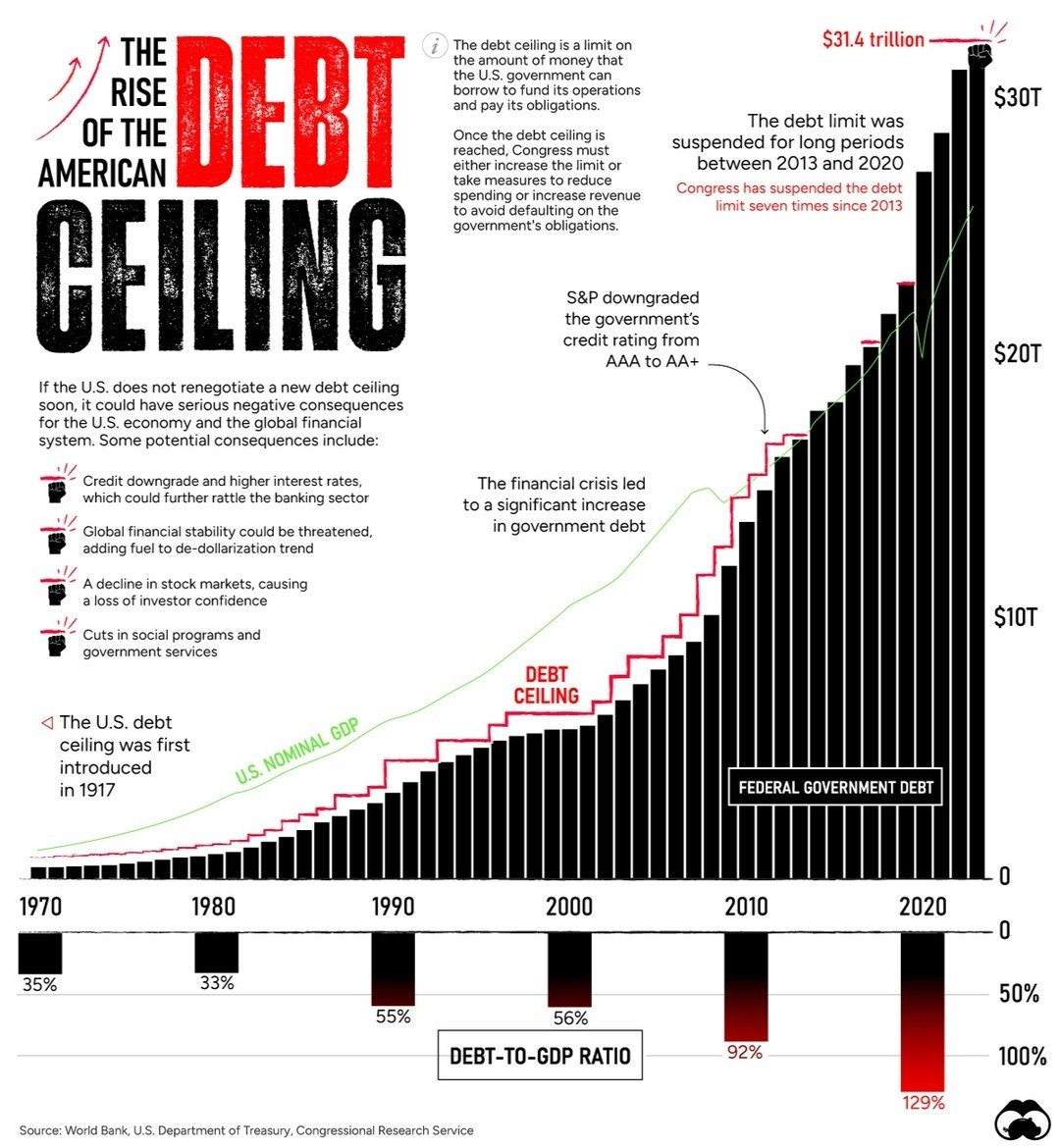
The U.S. debt ceiling is a critical financial topic that affects both domestic and global economies. In January, the U.S. reached its $31.4 trillion debt limit, which is the maximum amount of debt the federal government is authorized to hold. This limit requires urgent attention from Congress to avoid potential defaults and related financial risks.
Why This Matters
The debt ceiling is not just a financial metric; it has far-reaching implications for economic stability and public services. The debt limit impacts the government's ability to borrow money to fund its operations, including essential services like healthcare, education, and infrastructure. As of now, Treasury Secretary Janet Yellen has warned that cash reserves could be depleted by June 1st, underscoring the urgency of the situation. If Congress fails to act, the U.S. could default on its debt, leading to severe financial repercussions.
Understanding the Debt Ceiling
The debt ceiling is a legal limit set by Congress on the amount of national debt that can be issued by the U.S. Treasury. It was first introduced in 1917 to manage the government's borrowing. This limit does not authorize new spending; rather, it dictates the total amount of debt the government can carry. Currently, the debt ceiling stands at $31.4 trillion, a figure that has grown substantially in recent years.
Historical Context
Since 2013, Congress has suspended the debt limit seven times, reflecting the evolving economic landscape and the need for continuous borrowing to manage government expenditures. The historical graph of the debt-to-GDP ratio and federal government debt from 1970 to 2020 illustrates this trend, showing a steady increase in both metrics. This rise is influenced by economic factors, government policies, and spending priorities.
The Mechanics
When the debt ceiling is reached, Congress has two primary options: increase the limit or implement measures to reduce spending or increase revenue. Failure to act could lead to defaulting on government obligations, which could have catastrophic effects. For instance, the credit rating agency S&P downgraded the U.S. government's credit rating from AAA to AA+ during the 2013 debt ceiling crisis, highlighting the potential financial risks involved.
Potential Consequences of Not Renegotiating the Debt Ceiling
If a new debt ceiling is not renegotiated soon, the U.S. could face severe economic challenges:
Credit Downgrade and Higher Interest Rates
A credit downgrade could result in higher interest rates, further destabilizing the banking sector. This cost would be passed on to consumers and businesses, affecting everything from mortgage rates to corporate loans. Higher interest rates also make borrowing more expensive for the government, exacerbating the financial strain.
Global Financial Stability
Failure to manage the debt ceiling could weaken global financial stability. This instability could add fuel to the de-dollarization trend, where other countries reduce their dependence on the U.S. dollar. Global markets rely heavily on the dollar as a reserve currency, and any perceived instability could have ripple effects across international economies.
Market Declines and Investor Confidence
A default on the U.S. debt could lead to a significant decline in the stock markets, eroding investor confidence. Investors might seek safer havens, leading to capital outflows from U.S. markets. This liquidity crunch could trigger a broader economic downturn, affecting employment, consumer spending, and business investment.
Cuts in Social Programs and Government Services
To manage the debt crisis, the government might resort to drastic measures such as cutting social programs and government services. Such austerity measures could impact critical sectors like healthcare, education, and social security, leading to widespread social unrest and economic hardship.
Practical Tips for Managing the Debt Ceiling
Addressing the debt ceiling requires a multi-faceted approach:
Fiscal Responsibility
Congress and the administration must commit to fiscal responsibility, balancing the budget, and reducing wasteful spending. This approach ensures sustainable economic growth and long-term financial stability.
Revenue Generation
Exploring new revenue streams, such as tax reforms and closing loopholes, can help increase government revenue without imposing undue burdens on taxpayers.
Strategic Borrowing
While borrowing is necessary for funding government operations, it should be done strategically. This involves prioritizing essential spending areas and ensuring that borrowed funds are used efficiently.
Important Takeaways
The U.S. debt ceiling is a complex financial issue with significant implications for the economy and public welfare. Key points to remember include:
- The debt ceiling is the maximum amount of debt the U.S. government can hold.
- Congress has suspended the debt limit seven times since 2013, highlighting the need for continuous borrowing.
- Failure to renegotiate the debt ceiling could lead to severe economic consequences, including credit downgrades, higher interest rates, and cuts in social programs.
- Addressing the debt ceiling requires a balanced approach of fiscal responsibility, revenue generation, and strategic borrowing.
Conclusion
The U.S. debt ceiling is a critical financial issue that demands immediate attention. By understanding its implications and taking proactive measures, the U.S. can navigate this challenge and ensure long-term economic stability. The upcoming negotiations and decisions by Congress and the administration will shape the country's financial future and its impact on the global economy.
Watch the Reel
Questions readers ask
What happens if the U.S. reaches its debt ceiling?
If the U.S. reaches its debt ceiling, the Treasury Department can implement extraordinary measures to temporarily manage the situation. However, without congressional action to raise the limit, the U.S. could default on its debt obligations, leading to severe economic instability and global market disruptions.
How does the debt ceiling affect public services?
The debt ceiling directly impacts the government's ability to borrow money for funding essential public services such as healthcare, infrastructure, and social security. If the debt limit is not addressed, these services could face significant disruptions or delays.
What is the role of Congress in the debt ceiling crisis?
Congress has the authority to raise the debt ceiling and must pass legislation to do so. Inaction by Congress can lead to a government default, which can have far-reaching consequences for both domestic and global economies. Therefore, timely action by Congress is crucial to prevent a crisis.
Why is the U.S. debt ceiling important for the global economy?
The U.S. is one of the world's largest economies, and its debt ceiling has significant implications for global financial stability. A U.S. default on its debt could lead to market volatility, increased borrowing costs for other countries, and potential disruptions in global trade and investment.
What are the potential consequences of a U.S. default on its debt?
A U.S. default on its debt could lead to a range of consequences, including increased borrowing costs, reduced investor confidence, decreased economic growth, and potential disruptions to essential public services. Moreover, the global economy could face significant instability due to the interconnected nature of financial markets.
What measures can the Treasury Department take to manage the debt ceiling?
When the U.S. reaches its debt ceiling, the Treasury Department can use extraordinary measures to manage the situation temporarily. These measures may include suspending investments of certain federal funds and redeeming existing investments to create additional headroom under the debt limit. However, these measures are not a permanent solution and require congressional action to raise the debt ceiling.
How does the debt ceiling impact the U.S. GDP?
The debt ceiling can impact the U.S. GDP by affecting the government's ability to borrow and spend money on essential services and infrastructure projects. A default on debt obligations could lead to decreased consumer and business confidence, reduced spending, and ultimately, a slower economic growth rate, which negatively impacts the GDP.
Recent articles
Fresh deep dives from the latest Reels we unpacked.




Comments
Be the first to comment.