Understanding Urine Color and What It May Indicate
Urine color can offer valuable insights into your hydration levels and overall health. While the color alone cannot diagnose a medical condition, it serves as an important indicator that something might be amiss in your body. Understanding what different urine colors may indicate can help you stay aware of your health status.
Why This Matters
Monitoring your urine color is a simple yet effective way to gauge your hydration and detect potential health issues early. Dehydration, certain medications, and even specific foods can influence urine color, making it a reliable indicator of your body's internal state.
Main Discussion
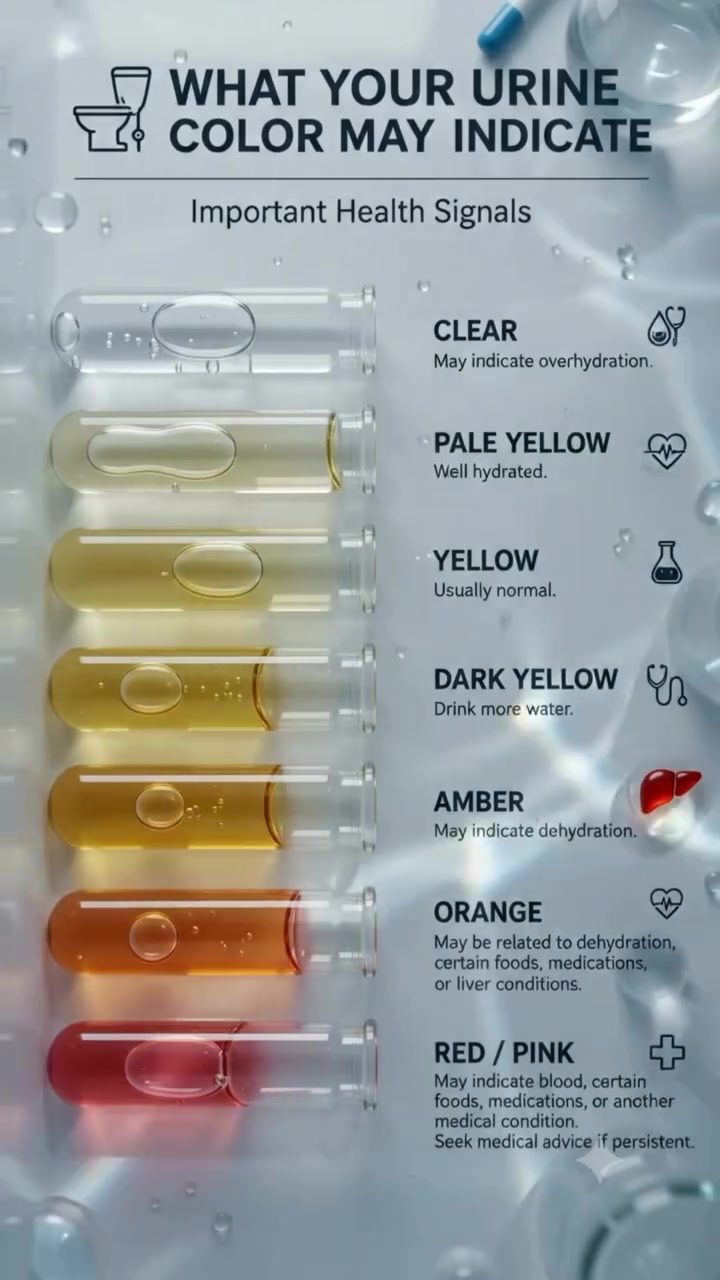
Clear Urine
Clear urine typically suggests that you are well-hydrated, but in some cases, it may indicate overhydration. In such instances, your body is flushing out more water than necessary, which can disrupt the balance of electrolytes. While it’s generally a sign of good hydration, be mindful not to overhydrate, as it can lead to electrolyte imbalances.
Pale Yellow Urine
Pale yellow urine is generally a good sign, indicating that you are well-hydrated. This color usually means that your body is functioning optimally and that you are consuming enough water to maintain proper hydration levels. However, if you notice that your urine turns pale yellow frequently, it could be a sign that you need to adjust your water intake.
Yellow Urine
Yellow urine is considered normal in most cases. This color is a balanced indicator of proper hydration levels. If your urine is consistently yellow, it suggests that your body is functioning as it should, with no immediate concerns regarding hydration or other health issues.
Dark Yellow Urine
Dark yellow urine is a clear indication that your body needs more fluids. This color suggests that you are slightly dehydrated and need to increase your water intake. Dark yellow urine can also be influenced by certain medications or foods, so consider your recent diet and any medications you have taken.
Amber Urine
Amber urine may indicate dehydration. This darker shade suggests that your body is conserving water, which can lead to a buildup of waste products in your urine. If you consistently see amber urine, it’s important to increase your water intake and monitor any changes in your health.
Orange Urine
Orange urine can be influenced by several factors, including dehydration, certain foods, medications, or liver-related conditions. Foods like carrots and certain medications like rifampin can cause your urine to turn orange. If you notice this color change and have not recently consumed foods or medications known to affect urine color, it may be a sign of a liver issue. Consult a healthcare professional if this color persists.
Red/Pink Urine
Red or pink urine can be alarming, but it may not always indicate a serious health issue. Certain foods like beetroot, medications, or even excessive physical activity can cause temporary red or pink discoloration. However, if the color persists or is accompanied by pain, fever, or other symptoms, it could indicate blood in the urine, which requires immediate medical attention. Seek medical advice if you notice persistent red or pink urine.
Practical Tips
-
Monitor Your Hydration Levels: Pay attention to the color of your urine to ensure you are well-hydrated. Aim for a pale yellow color, which indicates healthy hydration levels.
-
Stay Hydrated: If you notice that your urine is dark yellow or amber, increase your water intake to replenish your body’s fluids.
-
Be Mindful of Medications and Foods: Certain medications and foods can alter the color of your urine. Review your recent diet and medications if you notice unusual color changes.
-
Consult a Healthcare Professional: If you notice persistent changes in urine color, pain, fever, or blood in your urine, consult a healthcare professional immediately. While urine color can provide valuable clues, it is not a diagnosis and should not replace professional medical advice.
Important Takeaways
-
Urine Color as an Indicator: Monitoring urine color can provide insights into hydration levels and potential health issues.
-
Normal vs. Abnormal Colors: Knowing the meanings of different urine colors can help you recognize when something may be wrong.
-
Consult Professional Advice: While urine color is a helpful indicator, it should not replace professional medical advice. Always consult a healthcare professional if you notice persistent changes or symptoms.
-
Stay Hydrated: Proper hydration is crucial for maintaining overall health. Aim for a pale yellow urine color to ensure you are well-hydrated.
Conclusion
Urine color serves as a valuable tool for monitoring your hydration levels and overall health. By understanding what different colors may indicate, you can take proactive steps to maintain your well-being. Stay hydrated, pay attention to your urine color, and consult a healthcare professional if you notice persistent changes or symptoms. This simple yet effective approach can help you stay on top of your health and address any potential issues early.
Watch the Reel
Questions readers ask
What does a dark yellow or amber urine color indicate?
Dark yellow or amber urine is often a sign of dehydration. When you're not consuming enough water, your body reabsorbs more fluids, making urine more concentrated and darker in color. This could also be a sign of other ailments, so always take caution if your urine is consistently dark.
How can I use a urine color chart to monitor my hydration levels?
A urine color chart can help you quickly assess your hydration status. By comparing your urine color to the chart, you can determine if you're well-hydrated (clear or light yellow), slightly dehydrated (dark yellow), or severely dehydrated (amber or honey-colored). Adjust your water intake accordingly.
Why might my urine appear orange, and what could it mean for my health?
Orange urine can be caused by certain medications, such as phenazopyridine, or foods high in beta-carotene like carrots. However, it can also indicate liver or bile duct problems. If your urine is consistently orange and you haven't consumed foods or medications known to cause this, consult a healthcare provider.
Can medications affect urine color, and if so, how?
Yes, many medications can alter urine color. For example, certain laxatives and antacids can turn urine red or pink, while some antibiotics and chemotherapy drugs may cause a green or blue hue. If you notice a change in urine color after starting a new medication, check the packaging or consult your pharmacist or doctor for more information.
What does it mean if my urine is consistently pale yellow or clear?
Pale yellow or clear urine usually indicates that you are well-hydrated. However, in some cases, excessively clear urine may suggest overhydration, which can also be harmful. This is often seen in endurance athletes or people who drink excessive amounts of water. Check with your doctor to ensure you are not overhydrating.
How can I improve my hydration levels based on urine color?
If your urine is dark yellow or amber, increase your water intake gradually throughout the day. Aim for at least 8 glasses of water daily, along with consuming hydrating foods like fruits and vegetables. Limit caffeine and alcohol, as they can contribute to dehydration. Monitor your urine color regularly to ensure you maintain optimal hydration.
Related deep dives
Similar reads based on topic and creator.



Recent articles
Fresh deep dives from the latest Reels we unpacked.




Comments
Be the first to comment.