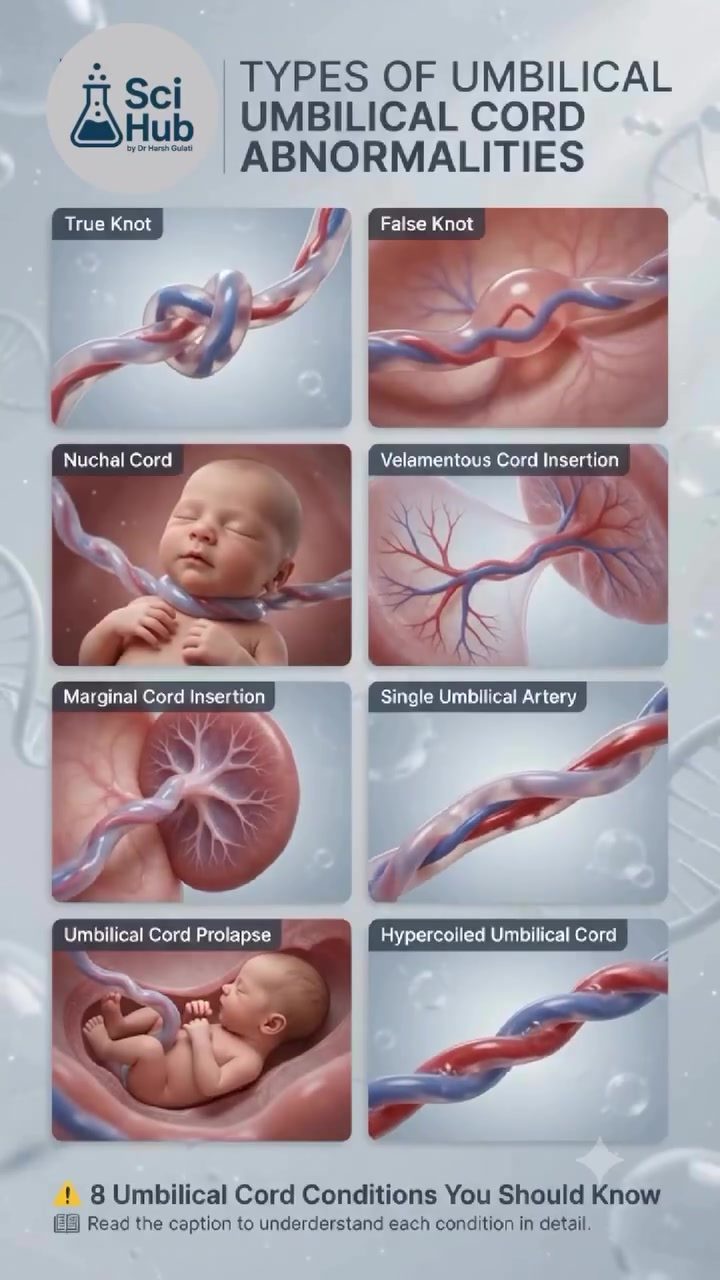
Umbilical Cord Abnormalities: Understanding Eight Important Conditions
The umbilical cord is a vital connection between a developing baby and the placenta, facilitating the exchange of oxygen and nutrients. While most umbilical cords develop normally, certain variations and abnormalities can occur. It is essential for expecting parents and healthcare providers to be aware of these conditions to ensure the health and safety of both the mother and the baby. This guide will cover eight common umbilical cord abnormalities, their implications, and the necessary monitoring and care.
Why This Matters
Understanding umbilical cord abnormalities is crucial for several reasons. Early detection and monitoring of these conditions can help prevent complications during pregnancy and delivery. Regular prenatal check-ups allow healthcare providers to identify and manage these issues, ensuring the best possible outcomes for both the mother and the baby. Being informed about these conditions can also help expecting parents make informed decisions about their prenatal care and prepare for any potential challenges.
Main Discussion
True Knot
A true knot is a physical knot that forms in the umbilical cord. This condition can affect blood flow if the knot tightens, potentially leading to complications such as reduced oxygen and nutrient supply to the baby. While true knots are relatively rare, they can occur in up to 1% of pregnancies. Regular prenatal check-ups can help detect a true knot, and in some cases, close monitoring or early delivery may be recommended to ensure the baby's safety.
False Knot
A false knot is a benign condition that appears as a bulge in the umbilical cord. Unlike a true knot, a false knot is simply a folded portion of the cord and does not pose a risk to the baby. This condition is harmless and does not require any special monitoring or treatment. False knots are relatively common and often resolve on their own as the pregnancy progresses.
Nuchal Cord
A nuchal cord occurs when the umbilical cord wraps around the baby's neck. This condition is more common than many people realize, occurring in about 20-35% of pregnancies. In most cases, a nuchal cord does not cause problems, and the baby can be delivered safely. However, if the cord is tightly wrapped around the neck, it may need to be unlooped or cut during delivery to ensure the baby's safety.
Velamentous Cord Insertion
Velamentous cord insertion occurs when the umbilical cord attaches to the placental membranes rather than directly to the placenta. This condition can leave the blood vessels more exposed and potentially at risk of compression or damage. Regular prenatal check-ups can help monitor this condition, and in some cases, additional precautions may be taken during delivery to ensure the baby's safety.
Marginal Cord Insertion
Marginal cord insertion occurs when the umbilical cord attaches near the edge of the placenta rather than the center. This condition is relatively common and does not typically pose a significant risk to the baby. However, it can be associated with other placental abnormalities, so regular prenatal check-ups are essential to monitor the baby's health and development.
Single Umbilical Artery
A single umbilical artery occurs when the umbilical cord has only one artery instead of the usual two. This condition can be associated with an increased risk of certain birth defects and other complications, so it may require additional prenatal monitoring. Early detection and close monitoring can help ensure the best possible outcomes for the baby.
Umbilical Cord Prolapse
Umbilical cord prolapse is a serious condition that occurs when the umbilical cord slips below the baby before birth. This condition requires immediate medical attention, as it can cut off the baby's oxygen and nutrient supply. If umbilical cord prolapse is suspected, an emergency cesarean section may be necessary to deliver the baby safely.
Hypercoiled Umbilical Cord
A hypercoiled umbilical cord has excessive twists, which may affect blood flow in some pregnancies. This condition can be associated with an increased risk of complications such as fetal growth restriction and preterm birth. Regular prenatal check-ups can help monitor this condition, and in some cases, additional interventions may be recommended to ensure the baby's health and safety.
Practical Tips
Regular prenatal check-ups are essential for detecting and managing umbilical cord abnormalities. During these visits, healthcare providers can monitor the baby's health and development, perform necessary tests, and provide guidance on any additional precautions or interventions that may be needed.
Expecting parents should also be aware of the signs and symptoms of potential complications, such as decreased fetal movement or abnormal vaginal bleeding. If any concerns arise, it is important to contact a healthcare provider promptly for evaluation and appropriate care.
Additionally, maintaining a healthy lifestyle during pregnancy can support overall maternal and fetal health. This includes eating a balanced diet, staying hydrated, getting regular exercise, and avoiding harmful substances such as alcohol and tobacco.
Important Takeaways
Understanding the various types of umbilical cord abnormalities is crucial for ensuring the best possible outcomes for both the mother and the baby. Regular prenatal check-ups, early detection, and appropriate monitoring can help manage these conditions effectively. Expecting parents should be aware of the signs and symptoms of potential complications and seek prompt medical attention if any concerns arise. By staying informed and working closely with healthcare providers, parents can help ensure a healthy and safe pregnancy and delivery.
Conclusion
The umbilical cord plays a vital role in supporting the growth and development of a baby during pregnancy. While many umbilical cords develop normally, it is important to be aware of the various abnormalities that can occur. By understanding these conditions and seeking appropriate medical care, expecting parents can help ensure the health and safety of both the mother and the baby. Regular prenatal check-ups, early detection, and appropriate monitoring are essential for managing umbilical cord abnormalities and achieving the best possible outcomes.
Watch the Reel
Questions readers ask
What are the most common types of umbilical cord knots and what are their implications?
The two main types of umbilical cord knots are true knots and false knots. True knots, which can restrict blood flow and oxygen to the baby, occur when the cord twists on itself and forms a complete loop. False knots, on the other hand, are typically harmless and are formed by the dilation of umbilical veins. Understanding the difference between the two can help in determining the necessary monitoring and care.
What is a nuchal cord and why is it a concern?
A nuchal cord is when the umbilical cord wraps around the baby's neck. While this can happen in up to 25% of pregnancies, it is usually not a cause for concern. However, in some cases, it can lead to complications during delivery, such as reduced blood flow to the baby. Regular prenatal check-ups can help monitor the situation and ensure a safe delivery.
What is velamentous cord insertion and how does it affect pregnancy?
Velamentous cord insertion is a condition where the umbilical cord inserts into the membranes of the amniotic sac rather than the center of the placenta. This can potentially lead to complications such as fetal distress, premature birth, and growth restrictions. Regular monitoring and close supervision by healthcare providers are crucial for managing this condition.
What are the different types of umbilical cord insertion abnormalities?
There are several types of umbilical cord insertion abnormalities, including velamentous, marginal, and eccentric insertions. Velamentous insertion occurs when the cord inserts into the membranes, marginal insertion is when it attaches to the edge of the placenta, and eccentric insertion is when it attaches to the side of the placenta but not at the edge. Each of these can have different implications for the pregnancy and delivery.
How can umbilical cord abnormalities be detected during pregnancy?
Umbilical cord abnormalities can be detected through various prenatal screenings, including ultrasound examinations. Regular ultrasounds can help identify issues such as knots, abnormal insertions, and other variations in the umbilical cord. If an abnormality is detected, your healthcare provider will discuss the necessary monitoring and care to ensure both the mother's and baby's safety.
What precautions can be taken if an umbilical cord abnormality is detected?
If an umbilical cord abnormality is detected, healthcare providers may recommend closer monitoring, more frequent ultrasounds, and additional testing to assess the baby's well-being. In some cases, changes to the delivery plan, such as planning for a cesarean section, may be discussed. The specific course of action will depend on the type and severity of the abnormality.
How do umbilical cord abnormalities impact placental function and blood flow?
Umbilical cord abnormalities can impact placental function and blood flow in various ways. Conditions like true knots can restrict the flow of oxygen and nutrients to the baby, while abnormal insertions can affect the efficiency of the placenta. Regular monitoring and timely interventions can help mitigate these risks and ensure the health and safety of both the mother and the baby.
Related deep dives
Similar reads based on topic and creator.


Recent articles
Fresh deep dives from the latest Reels we unpacked.




Comments
Be the first to comment.