Ultra-Wealthy Investment Strategies
Understanding how the world's wealthiest individuals allocate their assets can provide valuable insights into strategic wealth management. Ultra-high-net-worth individuals (UHNWIs) are defined as those with a net worth of $30 million or more, including their primary residence. This group represents a unique segment of the investing world, and their investment strategies often reflect a balance of stability, growth, and diversification.
Why This Matters
The investment strategies of UHNWIs are of particular interest because they often have access to exclusive investment opportunities and advanced financial planning tools. By examining their investment allocations, we can gain a deeper understanding of how to build and preserve wealth in a variety of economic conditions. Additionally, these strategies can influence broader market trends and offer a glimpse into the future of high-net-worth investing.
Main Discussion
Real Estate Investments
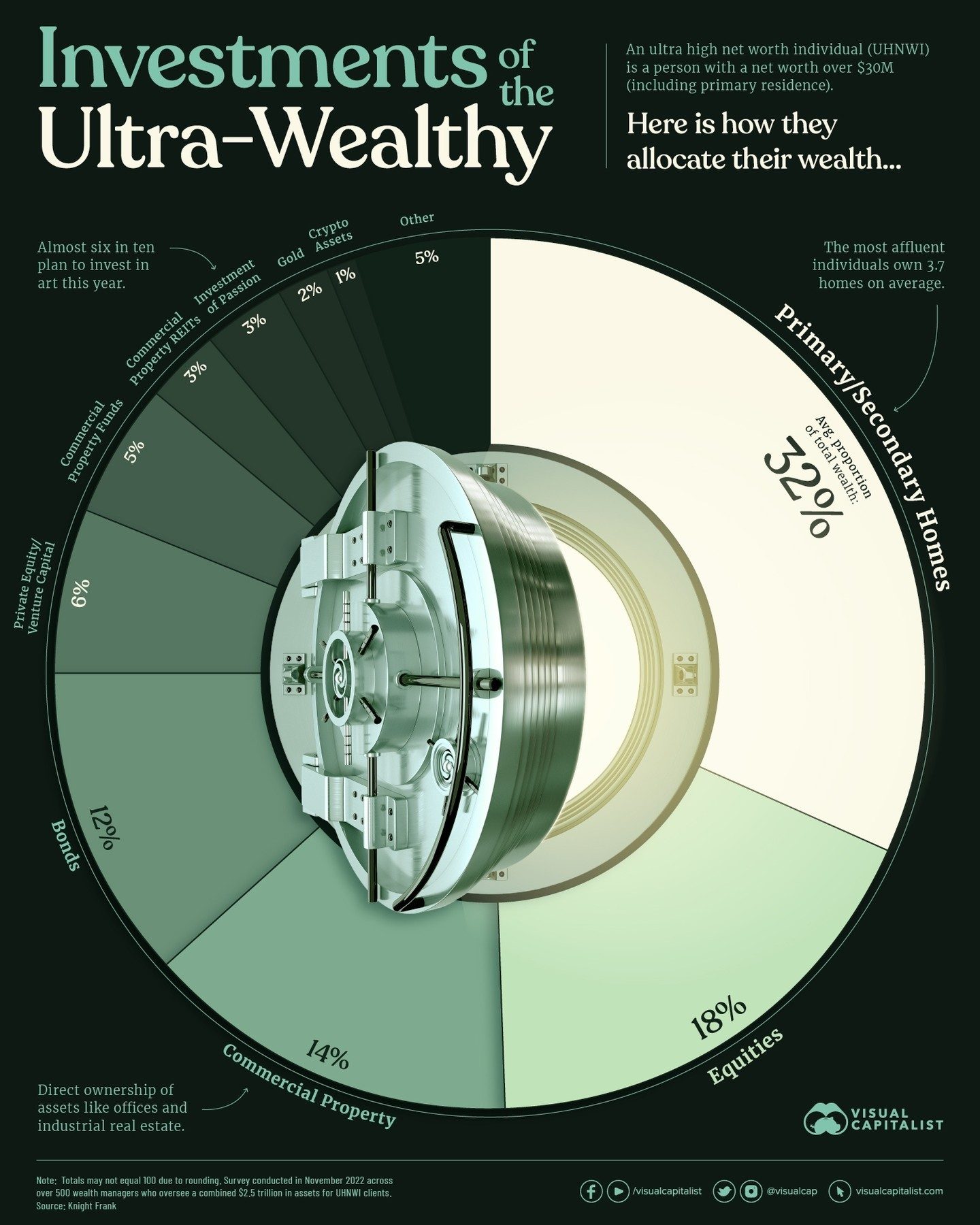
Real estate is a cornerstone of UHNWI investment portfolios. Almost six in ten UHNWIs own an average of 3.7 homes, with 32% of their wealth allocated to primary and secondary residences. This significant investment in real estate reflects the stability and potential for long-term appreciation that residential properties offer. Additionally, 14% of their wealth is invested in commercial real estate, including offices and industrial properties. Direct ownership of these assets provides a steady income stream and potential for capital gains.
Residential Real Estate
Residential real estate remains a key investment for UHNWIs due to its tangible nature and potential for rental income. Owning multiple properties can also offer diversification benefits, as real estate markets can vary significantly by location. Many UHNWIs see residential real estate as a hedge against inflation, particularly in times of economic uncertainty.
Commercial Real Estate
Commercial real estate, on the other hand, offers the potential for higher yields and diversified income streams. Investments in office spaces, industrial properties, and retail buildings can provide steady rental income and potential for appreciation. Direct ownership of these assets allows UHNWIs to have more control over their investments and benefit from long-term leases.
Financial Assets
UHNWIs also allocate a significant portion of their wealth to financial assets, including equities, bonds, and private equity.
Equities
Equities make up 18% of UHNWI portfolios. This allocation reflects the potential for high returns and long-term growth. While equities can be volatile, they offer the potential for significant capital gains, particularly in bull markets. UHNWIs often have access to exclusive investment opportunities and can leverage their networks to make informed investment decisions.
Bonds
Bonds represent 12% of UHNWI portfolios. This allocation provides a stable source of income and can help diversify portfolios. Bonds are generally less volatile than equities and can offer a reliable stream of income, particularly in retirement planning. UHNWIs often invest in a mix of government and corporate bonds to balance yield and risk.
Private Equity
Private equity, which constitutes 6% of UHNWI portfolios, offers the potential for high returns through investments in private companies. These investments are less liquid and can be riskier, but they also provide the opportunity to influence the strategic direction of the companies. Private equity can be a valuable addition to a diversified portfolio, as it often performs differently from public markets.
Alternative Investments
UHNWIs also allocate a portion of their wealth to alternative investments, including crypto, gold, and other assets.
Crypto
Cryptocurrency, though relatively new, has gained traction among UHNWIs. It represents 2% of their portfolios, reflecting the growing interest in digital assets. While volatile, cryptocurrencies offer the potential for high returns and can serve as a hedge against traditional financial systems. Many UHNWIs see cryptocurrencies as a high-risk, high-reward investment opportunity.
Gold
Gold, a traditional safe-haven asset, represents 2% of UHNWI portfolios. Gold can provide a hedge against inflation and market volatility. Its value tends to rise during times of economic uncertainty, making it a valuable addition to a diversified portfolio.
Other Assets
The remaining 5% of UHNWI portfolios is allocated to other assets, including art, collectibles, and luxury goods. These assets can appreciate significantly over time and offer diversification benefits. However, they are often less liquid and can be more challenging to value accurately.
Practical Tips
When considering investment strategies inspired by UHNWIs, it's important to diversify your portfolio across various asset classes. This approach can help mitigate risk and provide a balanced investment strategy. Here are some practical tips to implement these strategies:
-
Diversify Your Portfolio: Allocate your investments across various asset classes, including real estate, equities, bonds, and alternative investments. This can help reduce risk and maximize returns.
-
Invest in Real Estate: Consider investing in both residential and commercial properties to benefit from stable income streams and potential appreciation. Direct ownership can provide more control and long-term stability.
-
Leverage Financial Assets: Equities and bonds can offer significant returns and diversification benefits. Choose a mix of public and private investments to balance risk and reward.
-
Explore Alternative Investments: Consider adding alternative investments like cryptocurrencies and gold to your portfolio. These assets can provide unique diversification benefits and potential for high returns.
-
Stay Informed and Adaptable: Keep up with market trends and economic conditions to make informed investment decisions. Be prepared to adjust your portfolio as needed to take advantage of new opportunities and mitigate risks.
Important Takeaways
Understanding the investment strategies of UHNWIs can provide valuable insights into wealth preservation and growth. Key takeaways include:
- Real Estate Dominance: Residential and commercial real estate are significant components of UHNWI portfolios, offering stability and potential for long-term growth.
- Diversification Across Asset Classes: UHNWIs allocate their wealth across a range of financial assets, including equities, bonds, and private equity, to achieve a balanced and diversified portfolio.
- Alternative Investments: UHNWIs are increasingly investing in alternative assets like cryptocurrencies and gold, which can offer unique diversification benefits and potential for high returns.
Conclusion
The investment strategies of UHNWIs offer a glimpse into the world of high-net-worth investing, highlighting the importance of diversification, stability, and long-term growth. By understanding how UHNWIs allocate their wealth, individuals can gain valuable insights into managing and growing their own financial portfolios. Whether through real estate, financial assets, or alternative investments, the strategies of the world's wealthiest individuals provide a roadmap for building and preserving wealth in various economic conditions.
Watch the Reel
Questions readers ask
What percentage of ultra-wealthy investment portfolios is typically allocated to real estate?
The allocation to real estate in ultra-wealthy investment portfolios varies, but it is not uncommon for a significant portion of their assets to be invested in real estate. This can range from 20% to 50%. Residential and commercial properties both offer unique benefits, such as steady rental income and long-term appreciation.
How do ultra-wealthy individuals use their primary residences in their investment strategies?
For ultra-wealthy individuals, their primary residence is often considered a personal asset rather than an investment. However, they might still strategize around managing the costs and potential future sale of their homes. Secondary or vacation homes are more likely to be part of a strategic investment plan.
What types of commercial real estate do millionaires typically invest in?
Millionaires often invest in a variety of commercial real estate types, including office buildings, retail spaces, industrial properties, and multifamily residential complexes. These investments provide regular income through rent and potential long-term gains through property value appreciation.
How do the investments of ultra-wealthy individuals differ from those of average investors?
Unlike average investors, the ultra-wealthy often have access to exclusive investment opportunities, such as private equity funds, hedge funds, and unique real estate deals. They also tend to focus more on long-term, stable investments that offer steady income and capital preservation.
What role does diversification play in the investment portfolios of ultra-wealthy individuals?
Diversification is a key strategy for ultra-wealthy investors, as it helps to mitigate risk. They typically spread their investments across various asset classes, such as real estate, stocks, bonds, and alternative investments. This approach aims to balance the potential for high returns with the need for stability and security.
Why do wealthy individuals often invest in real estate over other asset types?
Real estate is favored by the wealthy for several reasons, including the potential for steady rental income, long-term appreciation, and the ability to leverage investments. Additionally, real estate can provide a hedge against inflation, making it an attractive option for preserving and growing wealth.
What are some of the advanced financial planning tools used by ultra-high-net-worth individuals?
Ultra-high-net-worth individuals utilize a variety of advanced financial planning tools, such as family offices, private trusts, and sophisticated tax planning strategies. These tools help them manage their wealth more efficiently, minimize taxes, and ensure the smooth transition of assets to future generations.
Recent articles
Fresh deep dives from the latest Reels we unpacked.




Comments
Be the first to comment.