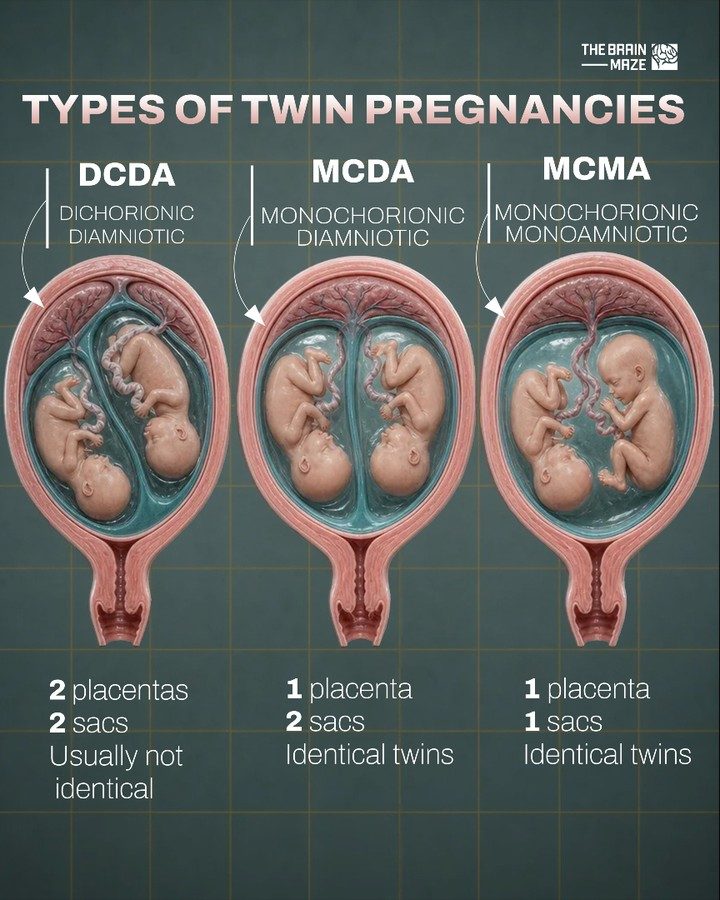
Twin Pregnancies
Twin pregnancies can develop in unique ways, determined by the number of placentas and amniotic sacs formed. Understanding the differences between these varieties can be crucial for managing the pregnancy and monitoring the health of both babies.
Why This Matters
Each type of twin pregnancy has distinct characteristics that affect prenatal care and the overall health of the twins. Knowing the specifics of Dichorionic Diamniotic (DCDA), Monochorionic Diamniotic (MCDA), and Monochorionic Monoamniotic (MCMA) pregnancies helps in preparing for the unique challenges and monitoring needs of each type. Different placenta and sac configurations can increase the risk of complications, making early detection and appropriate medical care essential.
Understanding Twin Pregnancy Types
Dichorionic Diamniotic (DCDA) Twins
DCDA twins, often referred to as fraternal or non-identical twins, each have their own placenta and amniotic sac. This setup allows for more independence between the twins, as each develops in its own enclosed space.
Characteristics:
- Two Placentas and Two Sacs: Each twin has a separate blood supply and amniotic environment, reducing the risk of complications related to shared spaces.
- Usually Non-Identical: DCDA twins can be of different genders and may not share the same genetic makeup.
- Monitoring Needs: While generally considered lower risk than other types, monitoring is still important to ensure the health of both babies.
Monochorionic Diamniotic (MCDA) Twins
MCDA twins, or identical twins, share one placenta but have two separate amniotic sacs. This type is more common among identical twins and requires careful monitoring.
Characteristics:
- One Placenta and Two Sacs: The twins share a placenta, increasing the need for vigilant monitoring to ensure both receive adequate nourishment.
- Identical Twins: These twins are always identical, sharing the same genetic makeup.
- Monitoring Needs: Shared placenta can lead to complications like Twin-to-Twin Transfusion Syndrome (TTTS), where one twin receives more blood flow than the other. Regular ultrasound checks are essential to detect and manage such issues.
Monochorionic Monoamniotic (MCMA) Twins
MCMA twins share both a single placenta and a single amniotic sac. This is the rarest and often the highest-risk type of twin pregnancy.
Characteristics:
- One Placenta and One Sac: Both twins share the same environment, making monitoring more challenging.
- Identical Twins: Like MCDA, MCMA twins are always identical.
- Monitoring Needs: The shared sac increases the risk of umbilical cord entanglement, which can be life-threatening. Frequent and detailed ultrasound examinations are necessary to assess the health and positioning of both twins.
Infographic Explanation
Infographics are valuable tools for visualizing the differences between these types of twin pregnancies. They often depict the number of placentas and amniotic sacs, along with brief descriptions of each type's characteristics. This visual representation helps in quickly understanding the key differences and monitoring needs for DCDA, MCDA, and MCMA twin pregnancies.
Practical Tips for Managing Twin Pregnancies
Regular Prenatal Check-Ups
Regular prenatal check-ups are crucial, particularly for MCDA and MCMA twins. Ultrasound examinations should be scheduled more frequently to monitor the growth and development of both babies. Early detection of any issues can significantly improve the outcome for both twins.
Understanding the Risks
Each type of twin pregnancy comes with its own set of risks. Being aware of these risks can help in early detection and management. For instance, MCDA twins are at a higher risk of TTTS, while MCMA twins face the risk of cord entanglement. Knowing these risks can prepare you and your healthcare provider for timely interventions.
Nutritional and Lifestyle Considerations
A balanced diet and a healthy lifestyle are essential for any pregnancy, but they are even more critical in twin pregnancies. Proper nutrition ensures that both babies receive adequate nourishment, especially in MCDA and MCMA pregnancies, where the shared placenta and amniotic sacs can make resource allocation more challenging.
Emotional and Psychological Support
Twin pregnancies can be emotionally and psychologically demanding. Seeking support from family, friends, and healthcare professionals can provide the necessary emotional backing. Support groups for parents of twins can also be a valuable resource for sharing experiences and gaining practical advice.
Important Takeaways
Understanding the different types of twin pregnancies and their unique characteristics is essential for managing the health and well-being of both babies. Regular monitoring, awareness of risks, proper nutrition, and emotional support are key to a successful twin pregnancy. Each type—DCDA, MCDA, and MCMA—has specific monitoring needs that require vigilant care and early intervention to address potential complications.
Conclusion
Twin pregnancies are a unique and rewarding experience, but they also come with specific challenges. By understanding the different types of twin pregnancies and their characteristics, you can be better prepared to navigate the journey. Regular prenatal care, awareness of risks, and a supportive environment can significantly enhance the chances of a healthy and successful pregnancy.
Watch the Reel
Questions readers ask
What are the main types of twin pregnancies based on placental and amniotic sac configurations?
The three main types of twin pregnancies are Dichorionic Diamniotic (DCDA), Monochorionic Diamniotic (MCDA), and Monochorionic Monoamniotic (MCMA). These types differ based on the number of placentas and amniotic sacs formed during pregnancy.
How many placentas and amniotic sacs do DCDA twins have?
DCDA twins, also known as dichorionic diamniotic twins, have two separate placentas and two separate amniotic sacs. This is the most common type of twin pregnancy, often resulting from two separate fertilized eggs.
What makes MCDA twin pregnancies unique, and what are the implications for monitoring?
MCDA twins, or monochorionic diamniotic twins, share a single placenta but have two separate amniotic sacs. These pregnancies require more frequent check-ups and monitoring due to an increased risk of complications, such as Twin-to-Twin Transfusion Syndrome.
Why are MCMA twin pregnancies considered high-risk?
MCMA twins, or monochorionic monoamniotic twins, share both a single placenta and a single amniotic sac. This type of pregnancy is rare and considered high-risk due to the potential for entanglement of the umbilical cords and other complications, necessitating close medical supervision.
What are the key differences between identical and fraternal twins in terms of placental and amniotic sac configurations?
Identical twins can be either MCDA or MCMA, sharing the same placenta but differing in the number of amniotic sacs, while fraternal twins are always DCDA, having separate placentas and amniotic sacs. This distinction is crucial for understanding the specific challenges and monitoring needs of each type of twin pregnancy.
How do the unique challenges of each twin pregnancy type affect prenatal care?
The specific challenges of each twin pregnancy type, such as the risk of Twin-to-Twin Transfusion Syndrome in MCDA twins or umbilical cord entanglement in MCMA twins, necessitate tailored prenatal care and monitoring. Regular ultrasounds and other diagnostic tests may be required to ensure the health and well-being of both babies.
What are some common monitoring needs for twin pregnancies, and how do they vary by type?
Regular ultrasounds to assess fetal growth, Doppler flow studies to evaluate blood flow, and monitoring for specific complications like Twin-to-Twin Transfusion Syndrome in MCDA twins are essential. DCDA twins generally require standard prenatal care, while MCDA and MCMA twins need more frequent and specialized monitoring due to their shared placenta and increased risks.
Related deep dives
Similar reads based on topic and creator.


Recent articles
Fresh deep dives from the latest Reels we unpacked.




Comments
Be the first to comment.