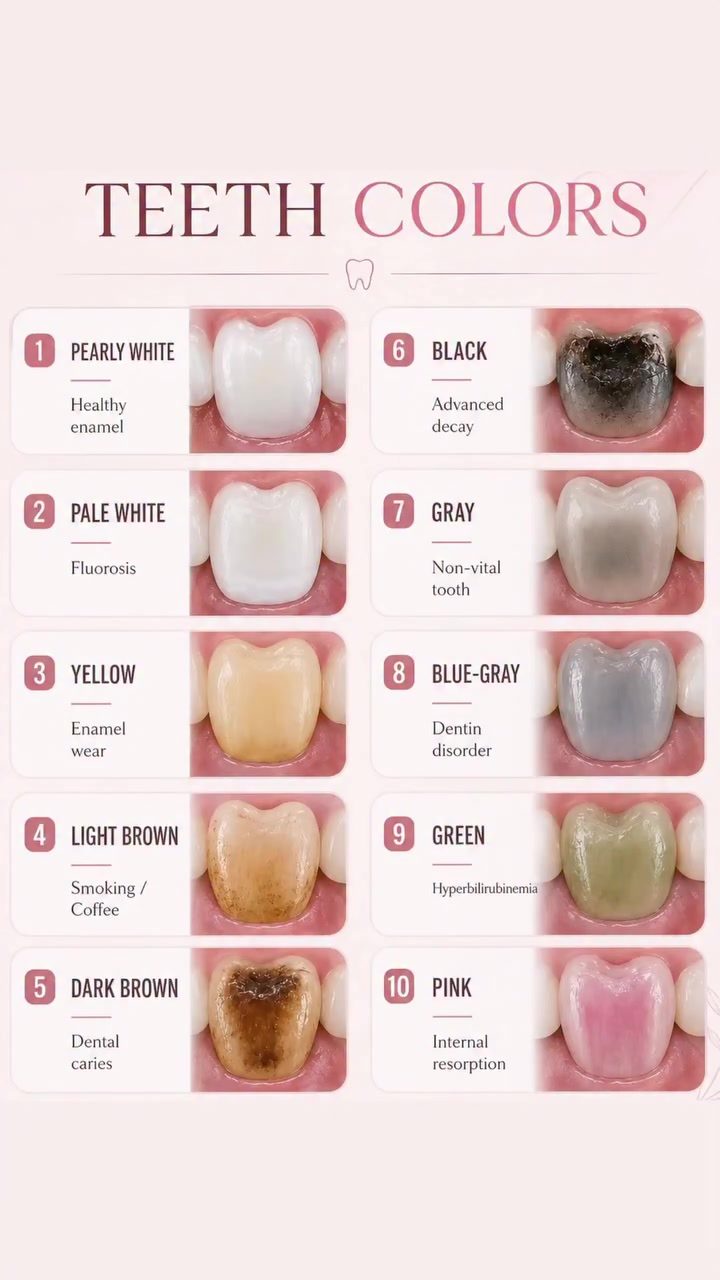
Tooth Colors and Their Meanings
Tooth color can be an indicator of oral health, and understanding the different shades and their implications can help you monitor your dental condition. While tooth color alone isn't a diagnostic tool, recognizing unusual changes can prompt timely dental visits.
Context / Why this matters
Changes in tooth color can be subtle or dramatic, and they often signal underlying issues. Regularly checking your teeth for color changes can help you catch problems early. However, it's crucial to note that tooth color can also vary naturally from person to person.
Main discussion
Healthy Tooth Colors
Pearly White
Pearly white teeth are often a sign of healthy enamel. Enamel is the outermost layer of the tooth and plays a critical role in protecting the tooth from decay. Maintaining good oral hygiene and regular dental check-ups can help keep your enamel strong and your teeth pearly white.
Pale White
Pale white teeth might indicate a condition called dental fluorosis. This condition is typically caused by excessive fluoride intake during tooth development, often before the age of 8. Fluorosis can result in white spots or streaks on the teeth, but it usually doesn't affect the tooth's function.
Unhealthy Tooth Colors
Yellow
Yellowing teeth can be due to enamel wear. As enamel wears away, the underlying dentin layer becomes more visible. Dentin is naturally yellowish, so when it shows through, the teeth appear yellow. This wear can be caused by aging, grinding, or acidic foods and beverages.
Light Brown
Light brown teeth are often the result of external staining from habits such as smoking or consuming coffee and tea. These substances can leave stains on the enamel, turning the teeth a light brown color. Regular teeth cleaning, along with avoiding or limiting these habits, can help manage stains.
Dark Brown
Dark brown teeth may indicate dental caries, or cavities. Cavities are caused by tooth decay and can progress to more serious dental issues if left untreated. Regular dental check-ups and good oral hygiene can help prevent cavities and maintain overall dental health.
Black
Black teeth can be a sign of advanced tooth decay. As cavities progress, the decay can penetrate deeper into the tooth, causing a change in color. In severe cases, the decay may reach the pulp, the innermost part of the tooth, leading to infection and tooth loss. Prompt dental attention is necessary to address black teeth.
Other Tooth Discolorations
Gray
Gray teeth can indicate a non-vital tooth. A non-vital tooth is one that no longer receives a blood supply and is essentially "dead." This can happen due to trauma, severe decay, or a failed root canal. Gray teeth often require professional dental intervention to address the underlying issue.
Blue-Gray
Blue-gray teeth can be a sign of a dentin disorder. The dentin layer of the tooth can become discolored due to various issues, such as genetic conditions or certain medications. Blue-gray discoloration typically warrants a dental examination to determine the cause and appropriate treatment.
Green
Green teeth can indicate a condition called hyperbilirubinemia, which is an elevated level of bilirubin in the blood. This condition can cause a yellowish or greenish tint to the teeth and skin. Hyperbilirubinemia can be a symptom of liver disease or other medical conditions, so it's important to consult a healthcare professional for proper evaluation.
Pink
Pink teeth can be a sign of internal resorption. Internal resorption is a condition where the body's immune system attacks the inner part of the tooth, leading to a breakdown of the tooth structure. This can cause a pinkish hue to the tooth as the blood vessels become visible. Prompt dental attention is essential to address internal resorption.
Practical tips
While watching for changes in tooth color is essential, it should not replace regular dental check-ups. Here are some practical tips to maintain good oral health:
- Brush and Floss Regularly: Maintain a consistent oral hygiene routine by brushing your teeth at least twice a day and flossing daily. This helps remove plaque and prevent tooth decay.
- Limit Staining Foods and Drinks: Reduce your intake of coffee, tea, and smoking to minimize teeth staining. If you do consume these, rinse your mouth with water afterward.
- Avoid Acidic Foods: Limit your intake of acidic foods and drinks, as they can erode enamel and lead to yellowing teeth.
- Regular Dental Visits: Schedule regular dental check-ups and cleanings to catch any issues early and maintain good oral health.
- Professional Teeth Cleaning: Consider professional teeth cleaning to remove stubborn stains and maintain a brighter smile.
Important takeaways
Tooth color can provide valuable insights into your oral health. While changes in tooth color shouldn't be used as a diagnostic tool, recognizing unusual discolorations can prompt timely dental visits. Regular brushing, flossing, and professional dental cleanings are essential for maintaining good oral health. If you notice sudden changes in tooth color, pain, or sensitivity, it's important to consult a dentist for a thorough examination.
Conclusion
Understanding the meanings behind different tooth colors can help you monitor your dental health more effectively. While tooth color alone isn't a diagnostic tool, it can serve as an early warning system for underlying issues. Regular dental check-ups and good oral hygiene practices are crucial for maintaining healthy teeth and preventing more serious dental problems.
Watch the Reel
Questions readers ask
What does it mean if my teeth are pearly white?
Pearly white teeth typically indicate strong and healthy enamel. This is the outer layer of the tooth, which protects the inner layers. Maintaining pearly white teeth often means good oral hygiene and minimal enamel wear.
Why are my teeth turning yellow or brown?
Yellow or brown teeth can be a sign of various issues, including enamel wear, stains from foods and drinks like coffee, or smoking. These changes may also indicate tooth decay or other dental problems. Regular check-ups with a dentist can help pinpoint the cause.
What causes my teeth to turn gray?
Gray teeth can result from several factors, such as trauma to the tooth, nerve damage, or aging. In some cases, it may indicate internal tooth discoloration due to decay or infection. It's important to consult a dentist if you notice a change to a gray hue.
Can changes in tooth color be a sign of dental issues?
Yes, changes in tooth color can indeed signal underlying dental problems. For instance, yellowing or graying of teeth can indicate enamel wear, decay, or other issues. While tooth color changes aren't a definitive diagnosis, they should prompt a visit to the dentist.
How can I maintain the natural color of my teeth?
Maintaining natural tooth color involves good oral hygiene, regular dental check-ups, and avoiding habits that can stain teeth, such as smoking. Additionally, limiting foods and drinks that can cause discoloration, like coffee or red wine, can help preserve your teeth's natural luster.
What are some common causes of tooth discoloration?
Common causes of tooth discoloration include extrinsic factors like food and drink stains, and intrinsic factors such as aging, trauma, or certain medications. Smoking and poor oral hygiene can also lead to discoloration, as can internal tooth issues like decay or infection.
Should I be concerned if my teeth change color suddenly?
Sudden changes in tooth color can be a cause for concern and should be evaluated by a dentist. They can vary from minor issues, like a reaction to a new toothpaste, to more serious problems, such as an infection or decay. It's always best to consult a dental professional for an accurate assessment.
Recent articles
Fresh deep dives from the latest Reels we unpacked.




Comments
Be the first to comment.