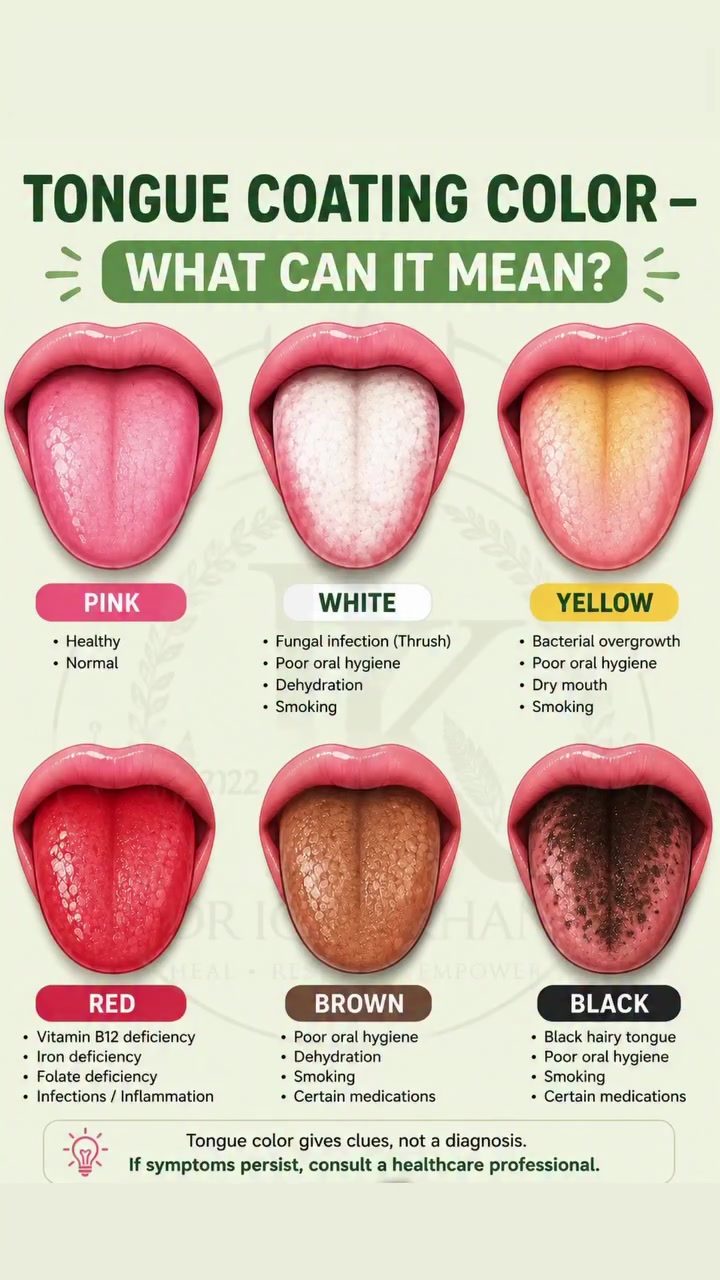
Tongue Coating Color: What It Can Mean
Your tongue's color and coating can offer valuable insights into your oral and overall health, serving as a potential indicator of various underlying conditions. Understanding these visual cues can help you identify when to seek professional help or make lifestyle adjustments.
Why This Matters
While tongue color is not a definitive diagnosis, it can provide clues about your health. By recognizing these signals, you can take proactive steps to improve your well-being. For instance, addressing poor oral hygiene or adjusting your diet to enhance hydration and nutrition can resolve many issues.
Main Discussion
The Healthy Tongue: Pink
A pink tongue is typically a sign of good health. This color indicates a well-hydrated, clean tongue with a balanced microbiome. It means you are likely maintaining good oral hygiene, drinking enough water, and getting the necessary nutrients. Most people with a pink tongue will have no notable health concerns.
Red Tongue and Potential Deficiencies
A red tongue can hint at several potential issues, including vitamin deficiencies. Specifically, it may indicate a lack of Vitamin B12, iron, or folate. These deficiencies can affect your overall health, leading to fatigue, weakness, and other symptoms. Redness may also suggest infections or inflammation, which could be a sign of oral issues or systemic inflammation.
White Tongue: Fungal Infections and Oral Hygiene
A white tongue often points to a fungal infection, commonly thrush, especially if you notice a thick, white coating. This condition is often caused by an overgrowth of the Candida fungus and can result from poor oral hygiene, medication side effects, or a weakened immune system. Dehydration and dry mouth can also contribute to a white tongue, as can bacterial overgrowth.
Brown Tongue: Smoking and Poor Hygiene
A brown coating on the tongue is usually linked to poor oral hygiene, dehydration, smoking, or certain medications. It can result from chronic smoking, which affects the tongue's color and texture. Regular brushing and flossing, along with staying hydrated, can often resolve this issue. If the discoloration persists, it may indicate more serious health issues, so consulting a healthcare professional is advisable.
Black Tongue: Hairy Tongue and Smoking
A black tongue, also known as black hairy tongue, is often a result of poor oral hygiene, dehydration, or smoking. Over time, the tongue's papillae can become elongated and stained, giving a black or dark appearance. Certain medications can also cause this discoloration. If you notice a black tongue, it is essential to maintain good oral hygiene and avoid habits like smoking. If the symptoms persist, seek medical advice.
Practical Tips
Maintain good oral hygiene by brushing your tongue regularly, flossing, and using mouthwash. Rinse with warm saltwater to reduce bacteria and improve hydration. Drink plenty of water and avoid smoking to ensure your tongue stays healthy. Consider limiting foods and beverages that can stain the tongue, such as tea, coffee, and dark sodas.
If you notice any persistent changes in your tongue's color or texture, consult a healthcare professional. They can provide a thorough examination and recommend appropriate treatments or lifestyle modifications.
Important Takeaways
Recognizing the signs your tongue provides can help you take control of your health. Keep an eye out for changes in color and consult a healthcare professional if any issues persist for more than two weeks. Addressing underlying causes, such as vitamin deficiencies, infections, or poor oral hygiene, can improve your overall well-being.
Conclusion
Your tongue serves as a window into your overall health, offering clues that can guide you toward better hygiene and well-being. By understanding the significance of different tongue colors, you can take proactive steps to maintain or improve your health. Always prioritize good oral hygiene, stay hydrated, and be mindful of any persistent changes in your tongue's appearance.
Watch the Reel
Questions readers ask
What does a pink tongue indicate?
A pink tongue is generally a sign of good health. It suggests that your tongue is well-hydrated and clean, indicating proper oral hygiene and overall well-being.
How can tongue color help detect dehydration?
A dehydrated tongue may appear red or have a whitish coating. If you notice these signs, it's essential to increase your fluid intake and monitor your hydration levels throughout the day. If you're also experiencing other symptoms like dark urine or infrequent urination, consult a healthcare professional.
What are the possible causes of a white tongue?
A white tongue can result from various factors, including poor oral hygiene, a yeast infection, or a condition called leukoplakia. It can also be a sign of dry mouth or smoking. To address this, maintain good oral hygiene, stay hydrated, and consider seeing a dentist or doctor if the issue persists.
Can tongue color changes be a sign of vitamin deficiencies?
Yes, certain tongue color changes can indicate vitamin deficiencies. For example, a bright red or magenta tongue might suggest a deficiency in folic acid, vitamin B12, or other B vitamins. If you notice this change, consider adjusting your diet to include more vitamin-rich foods and consult a healthcare professional for further evaluation.
How does smoking affect tongue color and oral health?
Smoking can cause the tongue to darken or appear brown, and it can also lead to a white coating or patches. These changes are often due to the accumulation of tar and other chemicals from tobacco. Quitting smoking and maintaining good oral hygiene can help reverse these effects and improve overall oral health.
When should I be concerned about my tongue color?
If you notice significant or persistent changes in your tongue color, such as a very dark red, purplish, or patchy appearance, it may indicate a more serious underlying condition. If these changes are accompanied by other symptoms like pain, swelling, or difficulty swallowing, it's important to seek medical attention promptly.
Can medications affect the color of the tongue?
Certainly, some medications can cause changes in tongue color. For example, certain antibiotics, antihistamines, or blood pressure medications can lead to a black, hairy tongue, while other medications may cause a white or yellow coating. If you suspect a medication is affecting your tongue, consult your doctor or dentist for guidance.
Recent articles
Fresh deep dives from the latest Reels we unpacked.




Comments
Be the first to comment.