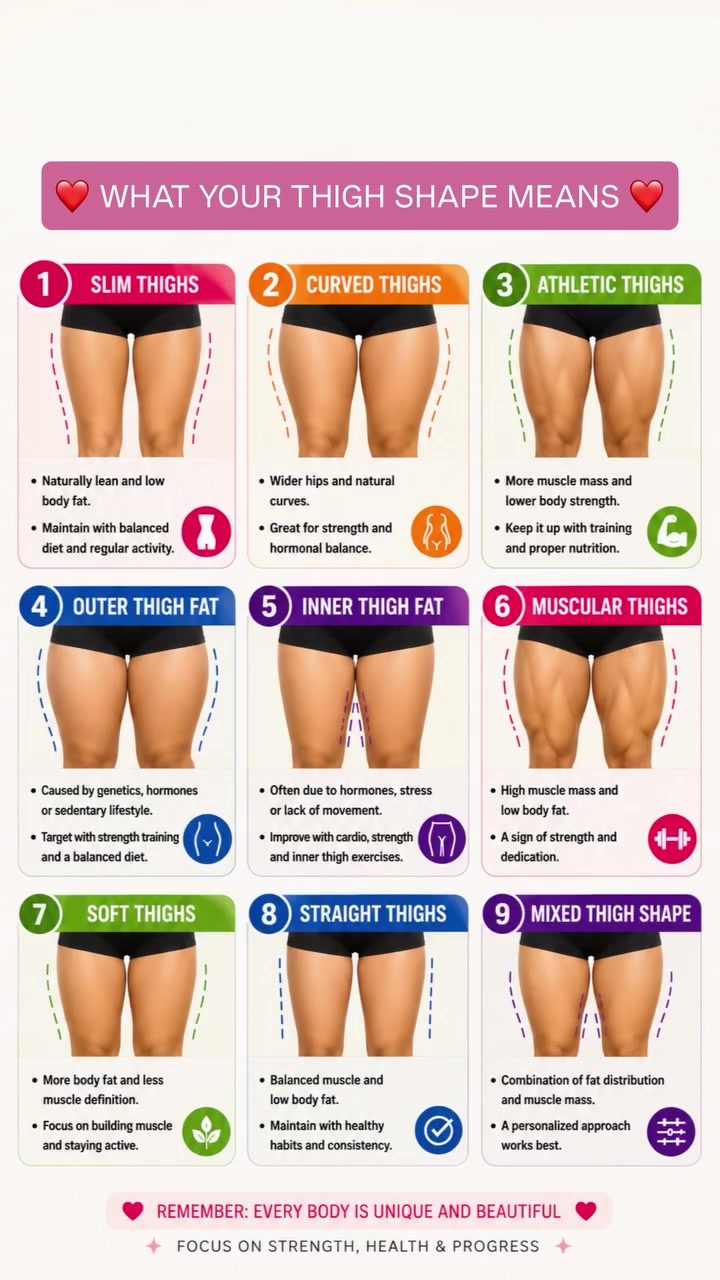
Thigh Shape Meanings
Understanding the different shapes and compositions of thighs can provide valuable insights into body composition and fitness levels. By examining thigh shapes, one can gain a better understanding of muscle mass, body fat distribution, and overall health. It's crucial to recognize that thigh shapes vary greatly due to factors like genetics, hormones, and lifestyle, and that no single shape is universally "better" than another.
Context / Why this matters
Thigh shapes can offer clues about a person's overall body composition and fitness. While it's important to remember that every body is unique and beautiful, knowing what your thigh shape means can help you set realistic goals and tailor your fitness routine to your specific needs. This information is particularly useful for those looking to improve their strength, health, and overall fitness.
The first step in understanding thigh shapes is recognizing the various types and their characteristics.
Main discussion
Slim Thighs
Slim thighs are characterized by their naturally lean appearance and low body fat. People with this thigh shape often have less muscle mass as well. This shape is typically maintained with a balanced diet and regular physical activity. While slim thighs might not be as muscular, they can still be strong and functional.
Curved Thighs
Curved thighs are typically wider at the hips and have more natural curves. This shape is often associated with a higher body fat percentage and can be influenced by genetics, hormones, or a sedentary lifestyle. People with curved thighs may benefit from strength training to build muscle and improve overall body composition.
Athletic Thighs
Athletic thighs are characterized by more muscle mass and lower body strength. This shape is often seen in individuals who engage in regular strength training and have a more muscular build. Athletic thighs are great for strength and hormonal balance, making them ideal for those looking to improve their overall fitness and performance.
Outer Thigh Fat
Outer thigh fat can accumulate due to genetics, hormones, or a sedentary lifestyle. This type of fat distribution is common and can be influenced by various factors, including diet and exercise. To address outer thigh fat, focus on a balanced diet and regular physical activity, particularly exercises that target the outer thighs.
Inner Thigh Fat
Inner thigh fat is often influenced by hormones, stress, and lack of movement. This type of fat distribution can be particularly challenging to address, as it often requires a combination of diet, exercise, and stress management. Targeted exercises and a healthy lifestyle can help reduce inner thigh fat over time.
Muscular Thighs
Muscular thighs are characterized by high muscle mass and low body fat. This shape is often the result of consistent strength training and a balanced diet. Muscular thighs are a sign of strength and proper nutrition, making them ideal for those looking to build muscle and improve overall fitness.
Soft Thighs
Soft thighs have more body fat and less muscle definition. This shape can be influenced by various factors, including diet, exercise, and overall lifestyle. To improve the appearance and function of soft thighs, focus on building muscle through strength training and maintaining a balanced diet.
Straight Thighs
Straight thighs are characterized by balanced muscle and low body fat. This shape is often maintained with a combination of strength training and cardiovascular exercise. Straight thighs are versatile and can be beneficial for a variety of fitness goals, from improving strength to enhancing endurance.
Mixed Thigh Shape
A mixed thigh shape is a combination of fat distribution and muscle mass. This shape can vary widely and is influenced by a variety of factors, including genetics, hormones, and lifestyle. To address a mixed thigh shape, consider a personalized approach that focuses on building muscle, reducing body fat, and improving overall fitness.
Practical tips
When it comes to improving your thigh shape, there are several practical tips to keep in mind:
- Focus on Strength Training: Incorporate exercises that target your thighs, such as squats, lunges, and deadlifts. Strength training helps build muscle and improve overall body composition.
- Stay Active: Engage in regular physical activity, including both strength training and cardiovascular exercise. Staying active helps burn calories and improve overall fitness.
- Eat Nutritiously: Maintain a balanced diet that supports your fitness goals. Focus on consuming adequate protein, healthy fats, and complex carbohydrates to fuel your workouts and promote recovery.
- Improve Health Markers: Regularly monitor your health markers, such as blood pressure, cholesterol levels, and body fat percentage. Improving these markers can help you achieve your fitness goals and maintain overall health.
- Feel Confident in Your Body: Remember that your worth, health, and beauty are not determined by your thigh shape. Focus on building strength, staying active, and feeling confident in your own body. Health is more about feeling good than looking a certain way.
- Avoid Spot Reduction: It's important to note that you cannot spot-reduce fat from one area of the body. Focus on improving your overall fitness and body composition through consistent strength training, a balanced diet, and regular physical activity.
- Be Patient and Consistent: Achieving your fitness goals takes time and consistency. Stay patient and committed to your routine, and you will see progress over time.
Important takeaways
- Unique Beauty: Every body is unique and beautiful, with variations in thigh shape influenced by genetics, hormones, bone structure, muscle mass, and body fat distribution.
- Focus on Overall Fitness: Building strength, staying active, and eating nutritious foods are more important than chasing a specific thigh shape.
- Consistent Effort: Small actions repeated consistently create lasting results. Focus on sustainable habits rather than quick fixes and unrealistic expectations.
- Personalized Approach: Achieve the best results with a personalized approach tailored to your specific body type, genetics, and fitness goals.
Conclusion
Understanding thigh shapes can provide valuable insights into body composition and fitness levels. By recognizing the different types of thigh shapes and their characteristics, you can set realistic goals and tailor your fitness routine to your specific needs. Remember that every body is unique and beautiful, and focus on building strength, staying active, and feeling confident in your own body. With consistent effort and a personalized approach, you can achieve your fitness goals and become the strongest, healthiest version of yourself.
Watch the Reel
Questions readers ask
What are the different thigh shapes and what do they indicate?
Thigh shapes can vary greatly and include slim, athletic, and curvaceous. Slim thighs may indicate lower body fat and muscle mass, while athletic thighs typically showcase more muscle definition. Curvaceous thighs often have more body fat distribution and may require specific exercises to target muscle mass.
How can understanding thigh shape help in setting fitness goals?
By knowing your thigh shape, you can set more tailored and realistic fitness goals. For instance, if you have slim thighs and want to build muscle, you might focus on strength training exercises. Conversely, if you have athletic thighs and want to improve muscle definition, you might incorporate more high-intensity interval training (HIIT).
What role does body fat distribution play in thigh shape?
Body fat distribution significantly influences thigh shape. Those with more body fat may have more rounded or curvaceous thighs, while those with less body fat may have slimmer or more defined thighs. Understanding your body fat distribution can help you choose the right exercises to achieve your desired thigh shape.
How does muscle mass affect the appearance of thighs?
Muscle mass greatly impacts the appearance of thighs. Higher muscle mass can result in more toned, athletic, or muscular thighs, while lower muscle mass may lead to slimmer or less defined thighs. Strength training can help increase muscle mass, thereby changing the appearance and health of your thighs.
Are there specific exercises to target different thigh shapes?
Yes, certain exercises can help target and change thigh shapes. For example, squats and lunges can help build muscle mass in the thighs, while cardio exercises can help reduce body fat. High-intensity interval training (HIIT) and plyometric exercises can improve muscle definition, making them beneficial for those seeking athletic thighs.
How can knowing my thigh shape improve my overall health?
Understanding your thigh shape can provide insights into your overall health by revealing information about your body composition and potential health risks. For example, excess body fat in the thighs, especially if it's visceral fat, can increase the risk of certain health conditions. Tailoring your fitness routine based on this knowledge can help improve your overall health.
What are athletic thighs, and how can I achieve them?
Athletic thighs are characterized by well-defined muscles and a lean appearance. To achieve this, focus on strength training exercises that target the thighs, such as squats, deadlifts, and lunges. Incorporate cardiovascular exercises and a balanced diet to reduce body fat and enhance muscle definition, which can help you achieve a more athletic thigh shape.
Recent articles
Fresh deep dives from the latest Reels we unpacked.




Comments
Be the first to comment.