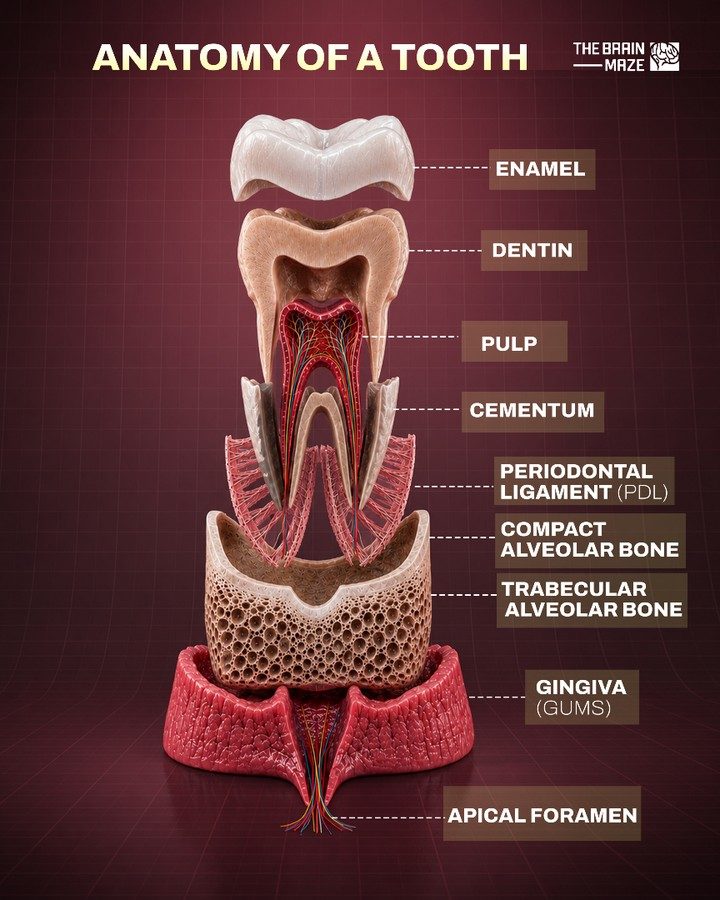
Tooth Anatomy
Teeth are complex structures composed of multiple layers, each with a specific function. Understanding tooth anatomy provides insights into how teeth function and how to maintain good oral health.
Context / Why This Matters
Teeth play a crucial role in digestion, speech, and appearance. A basic understanding of tooth structure helps in maintaining oral hygiene, identifying potential issues, and seeking appropriate dental care. Knowing the anatomy can also aid in appreciating the importance of regular dental check-ups and proper oral care routines.
Main Discussion
The Outer Layer: Enamel
The outermost layer of a tooth is the enamel, a hard, mineralized substance that provides protection and strength to the crown. Enamel is the hardest substance in the human body, even stronger than bones. Its primary function is to protect the underlying dentin from decay and damage. Despite its durability, enamel can still be eroded by acids from foods and drinks or worn down by grinding and clenching.
The Middle Layer: Dentin
Beneath the enamel is the dentin, a calcified tissue that forms the bulk of the tooth structure. Dentin is softer than enamel and contains microscopic tubules that connect to the pulp. These tubules transmit sensations, such as heat and cold, to the nerves in the pulp. The dentin's yellowish color is often visible through the enamel, especially in older teeth.
The Inner Core: Pulp
At the center of the tooth is the pulp, a soft tissue containing nerves, blood vessels, and connective tissue. The pulp is crucial for the tooth's vitality, providing nourishment and sensory input. The nerves in the pulp send signals to the brain, allowing us to feel sensations in the tooth. The pulp is connected to the root canal and extends to the apical foramen at the root tip.
The Root Structure
The tooth roots are anchored in the jawbone by several key components:
Cementum
Cementum is a calcified tissue that covers the root of the tooth. It provides a surface for the periodontal ligament to attach, helping to anchor the tooth in the jawbone. Cementum is similar to bone but has a different composition and function.
Periodontal Ligament (PDL)
The periodontal ligament is a group of fibers that connect the cementum to the alveolar bone. This ligament provides flexibility and shock absorption, allowing the teeth to withstand the forces of chewing and biting. It also contains sensory nerves that help detect pressure and movement.
Alveolar Bone
The alveolar bone comprises a compact outer layer and a spongy inner layer. The compact alveolar bone provides strength and support, while the trabecular alveolar bone contains blood vessels and nerves that nourish the tooth.
The Supporting Gingiva
The gingiva, or gums, are the soft tissues that surround the base of the teeth. They form a protective seal around the teeth and bone, helping to prevent bacteria from entering the deeper structures. Healthy gingiva is pink and firm, fitting snugly around the teeth.
The Apical Foramen
The apical foramen is an opening at the tip of the tooth root through which blood vessels and nerves enter the pulp. This opening is crucial for the tooth's vitality and is often targeted during root canal treatments to clean and seal the pulp chamber and root canals.
Practical Tips
Maintaining good oral health involves regular brushing and flossing, as well as regular dental check-ups. Understanding the anatomy of a tooth can help in identifying potential issues early and seeking appropriate care. For example, recognizing the signs of enamel erosion or gum recession can prompt timely intervention.
Daily Oral Care
- Brushing: Use a soft-bristled toothbrush and fluoride toothpaste to brush your teeth at least twice a day. Pay special attention to the gum line and the surfaces of the teeth.
- Flossing: Floss daily to remove plaque and food particles from between the teeth and under the gum line.
- Mouthwash: Use an antimicrobial mouthwash to help reduce bacteria and freshen breath.
Regular Dental Check-ups
Regular dental check-ups are essential for maintaining good oral health. Dentists can detect early signs of decay, gum disease, and other issues before they become serious. Professional cleanings can also remove plaque and tartar that regular brushing and flossing may miss.
Diet and Lifestyle
A balanced diet rich in vitamins and minerals supports overall oral health. Limit sugary and acidic foods and drinks, and avoid habits like smoking and excessive alcohol consumption, which can harm the teeth and gums.
Important Takeaways
Understanding the anatomy of a tooth is key to maintaining good oral health. Regular dental check-ups, a balanced diet, and proper oral care routines are essential for keeping teeth healthy and strong. Recognizing the signs of potential issues, such as enamel erosion or gum recession, can prompt timely intervention and prevent more serious problems.
Conclusion
Teeth are remarkable structures composed of several specialized layers, each with a unique role in maintaining strength, sensation, and support. By understanding the anatomy of a tooth, we can better appreciate the importance of regular dental care and proper oral hygiene. Maintaining good oral health is not just about having a bright smile; it is also about ensuring overall well-being and preventing serious health issues.
Watch the Reel
Questions readers ask
What are the main layers of a tooth and their functions?
A tooth is composed of four main layers: enamel, dentin, cementum, and pulp. The enamel, the outermost layer, provides protection and strength. The dentin layer beneath it supports the enamel and houses microscopic tubules. The cementum layer covers the root, while the pulp at the center contains nerves and blood vessels, providing sensation and nutrients.
What is the role of the periodontal ligament in tooth structure?
The periodontal ligament is a group of fibers and cells that connect the tooth to the alveolar bone, providing support and shock absorption. It also helps in tooth movement and maintaining the tooth in its socket, making it crucial for overall tooth health and function.
What is the function of the alveolar bone in tooth anatomy?
The alveolar bone is the bone tissue that holds the teeth in place. It forms the tooth sockets and works in conjunction with the periodontal ligament to secure the teeth and provide a foundation for the teeth to function properly. It is essential for the stability and support of the teeth.
What is the apical foramen and its significance?
The apical foramen is a small opening at the apex (tip) of the tooth's root that allows nerves and blood vessels to enter and exit the tooth. It is significant because it facilitates the flow of nutrients to the tooth and sensation from the tooth's pulp.
How does understanding tooth structure aid in maintaining oral health?
Understanding tooth structure helps in recognizing potential issues early. For instance, knowing that enamel is the protective layer can prompt you to take steps to prevent its erosion, such as limiting acidic foods and beverages. Additionally, it emphasizes the importance of regular dental check-ups and proper oral care routines.
Why is the gingiva an important part of tooth anatomy?
The gingiva, or gums, are crucial for oral health as they form a tight seal around the teeth, protecting the underlying bone and tooth structures. They also act as a barrier to prevent bacteria from entering the tooth and bone. Maintaining healthy gingiva is essential for preventing gum disease and tooth loss.
What happens if the dentin layer of a tooth is exposed?
If the dentin layer is exposed due to enamel erosion or decay, it can lead to tooth sensitivity. Dentin contains microscopic tubules that lead to the nerve endings, and exposure to hot, cold, or sweet substances can cause discomfort. This is why it is important to protect the enamel and maintain good oral hygiene to prevent dentin exposure.
Recent articles
Fresh deep dives from the latest Reels we unpacked.




Comments
Be the first to comment.