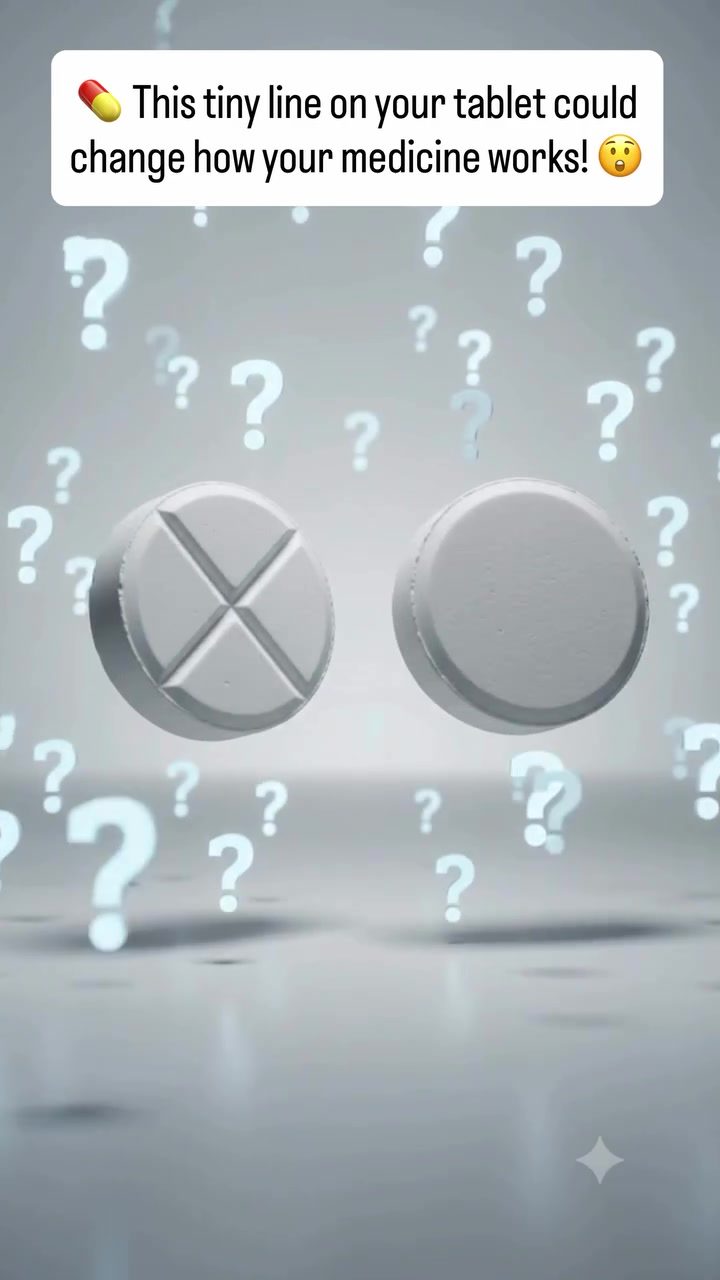
Tablet Scoring: What Does That Line Really Mean?
When you look at your medication, you might notice a small line running across some tablets. This line, known as a score line, is more than just a design detail. It serves a specific purpose and can significantly impact how your medicine works. Let’s dive into the details of tablet scoring and why it matters.
Why This Matters
Tablet scoring is crucial for proper medication administration. Score lines help divide tablets into smaller, prescribed doses, ensuring that you take the correct amount of medication. However, not all tablets have these lines, and not all tablets with score lines should be split. Understanding the purpose and implications of score lines can prevent potential health risks and ensure that your medication works as intended.
Main Discussion
What is a Score Line?
A score line is a small indentation or groove on the surface of a tablet. This line is designed to help divide the tablet into smaller, equal parts. The primary purpose of a score line is to facilitate precise dosing. For example, if a tablet is scored down the middle, it can be easily split into two equal halves, each containing half the dosage of the original tablet. This is particularly useful for medications that need to be adjusted to a lower dose.
Why Some Tablets Have Score Lines
Tablets with score lines are typically designed to be divided. This is especially common for medications that may need to be adjusted based on individual needs or to reduce the dosage gradually. As a result, the score line allows for more flexible dosing, ensuring that patients can take the correct amount of medicine.
Tablets Without Score Lines
It’s essential to note that not all tablets are designed to be split. Some tablets are specially coated or formulated to release medicine in a specific way. Breaking these tablets can alter their effectiveness and potentially cause harm. For instance, some extended-release tablets are designed to release medication over an extended period. Splitting these tablets can cause the entire dose to be released at once, leading to an overdose or reduced effectiveness.
Safety Concerns
Never assume that a tablet with a score line can be safely split. Always follow the instructions provided by your healthcare professional, pharmacist, or the medication label. Some scored tablets should not be split due to their specific formulation or coating. Breaking these tablets can change how they work and may lead to adverse effects.
In addition, improperly splitting a scored tablet can result in uneven doses. If the score line is not precise, splitting the tablet may result in pieces that are not equal, leading to inconsistent dosing. This can be particularly dangerous for medications that require precise dosing, such as blood thinners or anticoagulants.
Practical Tips
Consult Your Healthcare Provider
Always consult your healthcare provider or pharmacist before splitting any tablet, regardless of whether it has a score line. They can provide specific guidance based on the medication you are taking and your individual health needs.
Check the Medication Label
Medication labels often provide clear instructions on whether a tablet can be split. If the label indicates that the tablet should not be split, always follow this guidance to ensure the medication works effectively and safely.
Use a Pill Splitter
If your healthcare provider advises that a tablet can be split, use a pill splitter to ensure an accurate and even split. Avoid using a knife or other tools, as these can damage the tablet and affect its effectiveness.
Important Takeaways
- Tablets with score lines are designed to be divided into smaller doses, but not all scored tablets should be split.
- Always follow the instructions from your healthcare professional, pharmacist, or the medication label before splitting any tablet.
- Some tablets are specially coated or formulated to release medication in a specific way, and breaking them can alter their effectiveness.
- Improperly splitting a tablet can result in uneven doses, leading to inadequate or excessive medication.
Conclusion
Tablet scoring is an essential aspect of medication administration that can significantly impact how your medicine works. By understanding the purpose and implications of score lines, you can ensure that you take the correct dose and avoid potential health risks. Always consult your healthcare provider or pharmacist before splitting any tablet, and follow the instructions provided on the medication label. This approach will help you get the most out of your medication and maintain your health and well-being.
Watch the Reel
Questions readers ask
What are tablet score lines and what is their primary purpose?
Tablet score lines are thin lines that run across certain tablets. Their primary purpose is to divide tablets into smaller, equally measured doses, making it easier to follow a specific prescription that requires a lower dose than what the whole tablet provides. This helps ensure accurate and safe medication administration.
Can all tablets with score lines be split?
Not all tablets with score lines should be split. Some medications, like controlled-release or enteric-coated tablets, have score lines for identification purposes only. Splitting these types of tablets can alter the way the medication is absorbed by the body or the way it is released, potentially making the medication less effective or even harmful.
Why do some tablets have more than one score line?
Some tablets have more than one score line to allow for further dose adjustments. For example, a tablet might have two score lines to divide it into quarters. However, it is essential to check the prescription to confirm if the medication is safe to split and follow the score lines as instructed, to ensure proper dose division and medication effectiveness.
What are the potential risks of splitting tablets incorrectly?
Splitting tablets incorrectly can lead to inaccurate dosing, which may result in taking too much or too little of the medication. This can affect the medication’s effectiveness and potentially cause adverse health effects. Additionally, handling tablets improperly can lead to contamination or damage to the tablet, further compromising its effectiveness.
What is the proper technique for splitting tablets with score lines?
To split a tablet safely, place it on a flat surface and apply gentle pressure on either side of the score line using two fingers or a pill splitter. Avoid twisting or crushing the tablet. Always follow the specific guidelines provided by the pharmacist or the medication’s package insert regarding the safe and effective administration of your medication.
Are there any medications that should never be split, even if they have a score line?
Yes, some medications should never be split, even if they have a score line. These include certain controlled-release medications, enteric-coated medications, and some chewable or effervescent tablets. Always consult with a healthcare provider or pharmacist before splitting any medication to ensure it is safe and appropriate for your specific prescription.
How can I determine if my tablet should be split based on the score lines?
To determine if your tablet should be split, check the medication’s package insert or consult with a pharmacist. The packaging or patient information leaflet may provide specific instructions on whether the tablet can be split and how to do so safely. If there are no clear guidelines, it's best to consult a healthcare provider before splitting the tablet.
Recent articles
Fresh deep dives from the latest Reels we unpacked.




Comments
Be the first to comment.