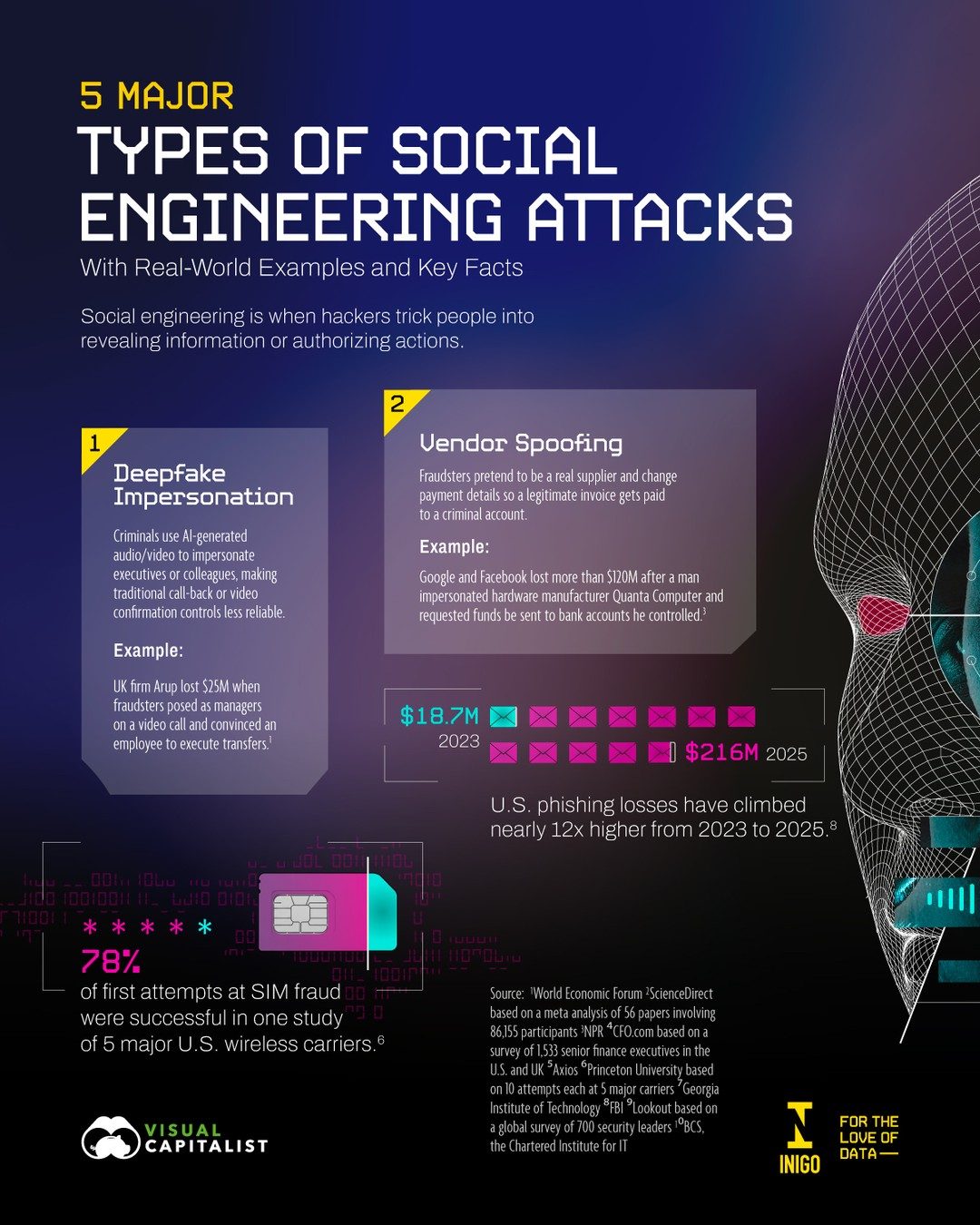
Social engineering attacks, from deepfakes to phishing, are growing increasingly deceptive and financially devastating. These sophisticated scams exploit human psychology to manipulate victims into divulging sensitive information or transferring funds. Understanding the tactics used by cybercriminals is crucial for recognizing and mitigating these threats.
Context / Why This Matters
Cybercriminals employ various social engineering tactics to deceive individuals and organizations. These attacks can lead to significant financial losses and compromised data. According to the infographic, deepfakes, phishing, vendor spoofing, SIM swaps, and executive impersonation are among the most prevalent and costly tactics. Recognizing these methods and their warning signs can help protect against falling victim to these sophisticated scams.
Main Discussion
Deepfake Impersonation
Deepfake technology uses AI to generate highly convincing audio and video content that mimics the likeness and voice of real individuals. Cybercriminals exploit this technology to impersonate executives or other authoritative figures, tricking employees into transferring funds or divulging sensitive information. Deepfakes are notoriously difficult to detect, with only 55% of people able to identify them accurately. This makes deepfake impersonation a powerful and dangerous tool in the hands of criminals.
Vendor Spoofing
Vendor spoofing involves fraudsters posing as legitimate suppliers or vendors to deceive businesses into changing payment details. These attackers often send seemingly genuine invoices with altered banking information. Once the payment is rerouted to the fraudster's account, retrieving the funds can be extremely challenging. This type of social engineering attack preys on the trust businesses place in their suppliers, making it a particularly insidious tactic.
Phishing
Phishing attacks are among the most common and costly forms of social engineering. These attacks trick targets into clicking on malicious links or downloading harmful attachments through deceptive emails, messages, or websites. U.S. phishing losses have surged nearly 12 times higher from 2023 to 2025, highlighting the increasing sophistication and prevalence of these scams. Phishing attacks can lead to data breaches, financial losses, and compromised personal information.
SIM Swap
SIM swap fraud involves attackers hijacking a victim's phone number by convincing the mobile carrier to transfer the number to a new SIM card under their control. Once the attacker has control of the phone number, they can intercept two-factor authentication codes and gain access to various accounts, including banking and email. SIM swap attacks are particularly dangerous because they can be executed without the victim's knowledge until it's too late. In one study, 8% of first attempts at SIM fraud were successful, underscoring the need for vigilance.
Executive Impersonation
Executive impersonation attacks target employees by fraudsters impersonating high-ranking executives. These attackers often pressure employees into making urgent, secret payments or divulging confidential information. The sense of urgency and secrecy creates a psychological trap, making employees more likely to comply without question. This tactic is highly effective, with nearly 58% of companies experiencing cases of executive impersonation.
Practical Tips
Recognizing and Preventing Deepfakes
Deepfakes can be challenging to detect, but there are some tips to help identify them. Look for inconsistencies in the audio and video, such as mismatched lip movements or unnatural facial expressions. Additionally, verify the authenticity of the content through multiple sources before taking any action based on the information.
Protecting Against Vendor Spoofing
To safeguard against vendor spoofing, implement a dual-verification process for payment changes. Ensure that any requests to change payment details are confirmed independently through multiple channels, such as phone calls or in-person meetings. This extra step can significantly reduce the risk of falling victim to this type of fraud.
Avoiding Phishing Scams
Phishing scams often rely on urgency and deception. Never click on suspicious links or download attachments from unknown sources. Always verify the legitimacy of emails and messages by contacting the sender directly through a known, secure channel. Additionally, use email filters and antivirus software to help identify and block potential phishing attempts.
Securing Against SIM Swap Fraud
To protect against SIM swap fraud, consider using a secondary verification method for account access. This could include a physical security key or biometric authentication. Additionally, regularly monitor your mobile account for any unexpected changes and set up alerts for suspicious activity.
Preventing Executive Impersonation
To mitigate the risk of executive impersonation, implement stringent verification processes for urgent requests. Establish clear protocols for handling high-value transactions and ensure that all employees are trained to recognize the signs of impersonation attempts. Regularly update employees on the latest tactics used by fraudsters and encourage a culture of skepticism and verification.
Important Takeaways
Social engineering attacks are evolving and becoming more sophisticated, making them a significant threat to individuals and organizations. Recognizing the various tactics used by cybercriminals and implementing practical preventive measures can help protect against these deceptive scams. By staying vigilant and informed, individuals and businesses can minimize the risk of falling victim to these costly and harmful attacks.
Conclusion
Social engineering attacks, such as deepfake impersonation, vendor spoofing, phishing, SIM swap, and executive impersonation, pose a growing threat in today's digital landscape. Understanding these tactics and taking proactive measures to recognize and prevent them is essential for safeguarding personal and organizational data. By staying informed and vigilant, individuals and businesses can protect themselves against these sophisticated and financially devastating scams.
Watch the Reel
Questions readers ask
What are the most common types of social engineering attacks?
The most common types of social engineering attacks include deepfakes, phishing, vendor spoofing, SIM swaps, and executive impersonation. These attacks often involve manipulating individuals into revealing sensitive information or authorizing unauthorized transactions.
How do deepfake scams work and how can I detect them?
Deepfake scams use artificial intelligence to create convincing but fake audio or video content, often impersonating someone you know. To detect deepfakes, look for inconsistencies in the content, such as unnatural movements, strange lighting, or audio-visual synchronization issues. Always verify the authenticity of suspicious content through official channels.
What are some effective strategies for phishing prevention?
To prevent phishing attacks, be cautious of unsolicited emails, messages, or calls requesting sensitive information. Verify the authenticity of the sender by checking the email address or calling the company directly. Additionally, enable two-factor authentication on your accounts and use strong, unique passwords.
What is executive impersonation and how can organizations protect against it?
Executive impersonation occurs when a cybercriminal impersonates a high-ranking official to trick employees into transferring funds or divulging confidential information. To protect against this, implement strict verification procedures for financial requests, and train employees to recognize the signs of impersonation fraud.
What is vishing and how can I avoid falling victim to it?
Vishing, or voice phishing, involves fraudulent phone calls where scammers impersonate legitimate entities to trick victims into divulging sensitive information. To avoid vishing attacks, be wary of unexpected calls asking for personal or financial details. Verify the caller's identity by hanging up and calling the official number of the organization they claim to represent.
Related deep dives
Similar reads based on topic and creator.


Recent articles
Fresh deep dives from the latest Reels we unpacked.




Comments
Be the first to comment.