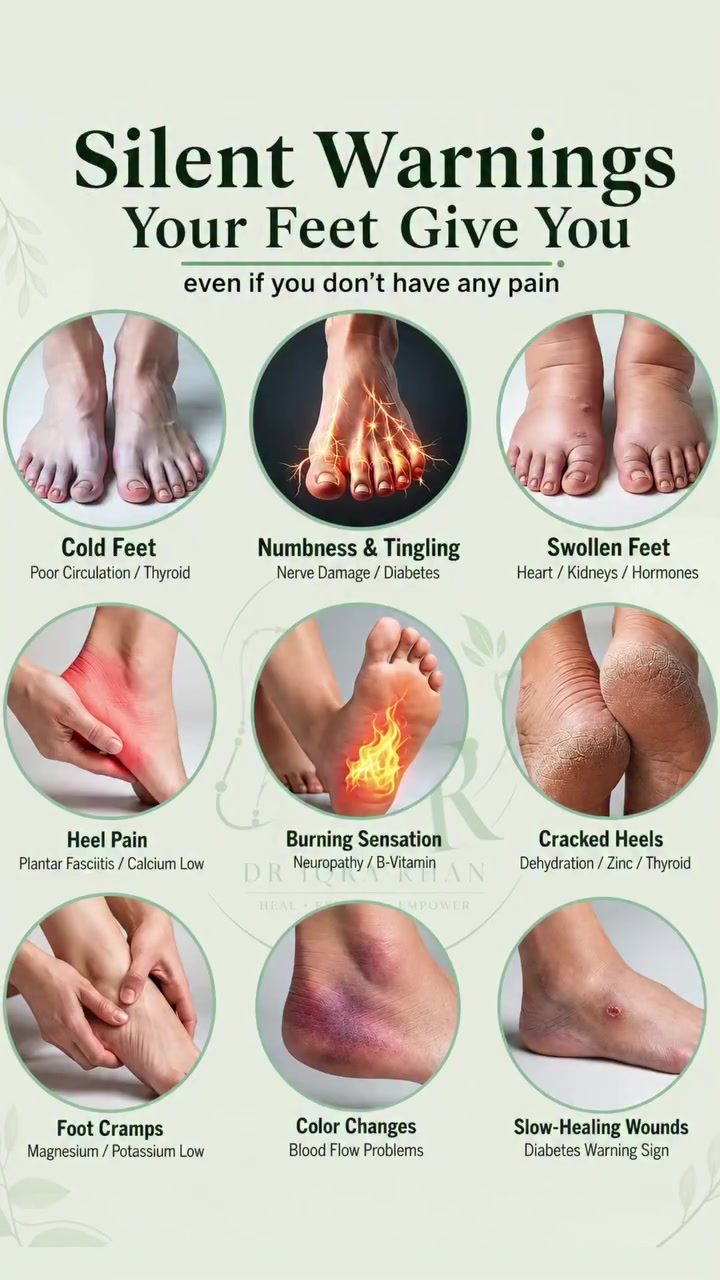
Foot Health Warnings
Your feet can reveal a lot about your overall health. Even if you don't experience any pain, certain changes in your feet can be early warning signs of underlying health conditions. Recognizing these silent signals can prompt you to seek timely medical care and address potential issues before they become more serious.
Why This Matters
Paying attention to your feet isn't just about comfort or aesthetics; it's about detecting health problems early. Many conditions can manifest in the feet before other symptoms appear, making your feet a valuable diagnostic tool.
Common Foot Issues and Their Implications
Cold Feet
Cold feet can be more than just a nuisance. They may indicate poor circulation, which can be a sign of peripheral artery disease (PAD). Additionally, cold feet can sometimes be linked to thyroid problems, such as hypothyroidism.
Numbness and Tingling
Numbness and tingling in the feet, often accompanied by pins and needles, can be a sign of nerve damage or diabetes. This sensation may also occur due to vitamin deficiencies or other neurological issues.
Swollen Feet
Swelling in the feet can be a result of various conditions, including heart, kidney, or hormonal disorders. It's essential to monitor any persistent swelling, as it could indicate fluid retention related to more serious health issues.
Heel Pain
Heel pain is commonly associated with plantar fasciitis, a condition where the tissue on the bottom of the foot becomes inflamed. Additionally, heel pain can also be a sign of calcium deficiency, affecting bone health.
Burning Sensation
A burning sensation in the feet is often a symptom of peripheral neuropathy, a condition that affects the peripheral nerves. This can be a result of diabetes, vitamin deficiencies, or other neurological disorders. It's important to address burning sensations promptly, as they can indicate nerve damage.
Cracked Heels
Cracked heels can be a sign of several issues, from simple dry skin to more complex conditions. They may result from dehydration, zinc deficiency, or thyroid problems. Keeping your skin hydrated and nourished can help prevent cracked heels.
Foot Cramps
Foot cramps are often a sign of dehydration or electrolyte imbalance, particularly a lack of magnesium or potassium. Staying hydrated and maintaining a balanced diet can help alleviate these cramps.
Color Changes
Changes in the skin color of your feet can signal reduced blood circulation. This may be a warning sign of circulation problems and should be evaluated by a medical professional if persistent.
Slow-Healing Wounds
If wounds on your feet take an unusually long time to heal, it could be a warning sign of diabetes or poor circulation. Slow-healing wounds can indicate that your body is not effectively delivering nutrients and oxygen to the affected area, potentially leading to infections or more severe complications.
Practical Tips
Regular Foot Checks
Make a habit of regularly checking your feet for any changes, even if you don't experience pain. Look for signs of swelling, color changes, or slow-healing wounds, and consult a healthcare professional if you notice anything unusual.
Hydration and Nutrition
Staying hydrated and maintaining a balanced diet can help prevent many foot issues. Ensure you consume enough water, magnesium, potassium, and essential vitamins to keep your feet healthy.
Proper Foot Care
Maintain good foot hygiene and keep your skin moisturized to prevent issues like cracked heels. Use moisturizers and exfoliants to keep your skin smooth and hydrated.
When to Seek Medical Help
Don't ignore persistent foot changes. If symptoms continue, worsen, or are accompanied by pain, fever, or open sores, consult a healthcare professional for proper evaluation. Early intervention can help prevent serious complications.
Important Takeaways
Understanding the signs your feet give you can be crucial for maintaining overall health. Paying attention to subtle changes and seeking timely medical care can help you address potential health issues before they become more severe.
Conclusion
Your feet are more than just a means of locomotion; they are a key indicator of your overall health. By being aware of the silent warnings your feet might give, you can take proactive steps to maintain your health and well-being. Keep an eye out for these common foot issues, and don't hesitate to consult a healthcare professional if you notice any persistent changes. Healthy feet are an integral part of overall health, and early recognition of these signs can make all the difference.
Watch the Reel
Questions readers ask
Why should I pay attention to changes in my feet?
Your feet can act as a barometer for your overall health, revealing potential issues. Changes like coldness, numbness, or swelling can be early indicators of serious conditions, prompting you to seek medical attention before problems escalate.
What are some common foot issues and their implications?
Cold feet can signal poor circulation, potentially indicating peripheral artery disease. Numbness or a burning sensation in your feet might be linked to diabetes or neuropathy. Swelling can suggest thyroid issues, heart problems, or circulatory problems.
Are cold feet always a sign of poor circulation?
While cold feet can often indicate poor circulation, they can also be a result of other factors such as cold temperatures, stress, or even certain medications. If cold feet are persistent or accompanied by other symptoms, it is important to consult a healthcare provider to rule out more serious conditions.
How can diabetes affect my feet?
Diabetes can cause various foot-related issues, including poor circulation, nerve damage, and increased risk of infections. Symptoms such as foot numbness, slow-healing wounds, or chronic dryness can be early indicators of diabetes-related complications, necessitating prompt medical attention.
What should I do if I experience numbness in my feet?
Numbness in the feet can be a symptom of nerve damage or poor circulation, which may be associated with conditions like diabetes or vitamin deficiencies. If you experience this, it is crucial to consult a healthcare professional for a thorough evaluation and to rule out any underlying health issues.
Can swollen feet be a sign of a serious health condition?
Swollen feet can indeed indicate serious health conditions, such as heart failure, kidney disease, or circulatory problems. If your feet are persistently swollen, it is essential to seek medical advice to identify and address any potential underlying causes. Unexplained swelling should never be ignored.
Recent articles
Fresh deep dives from the latest Reels we unpacked.




Comments
Be the first to comment.