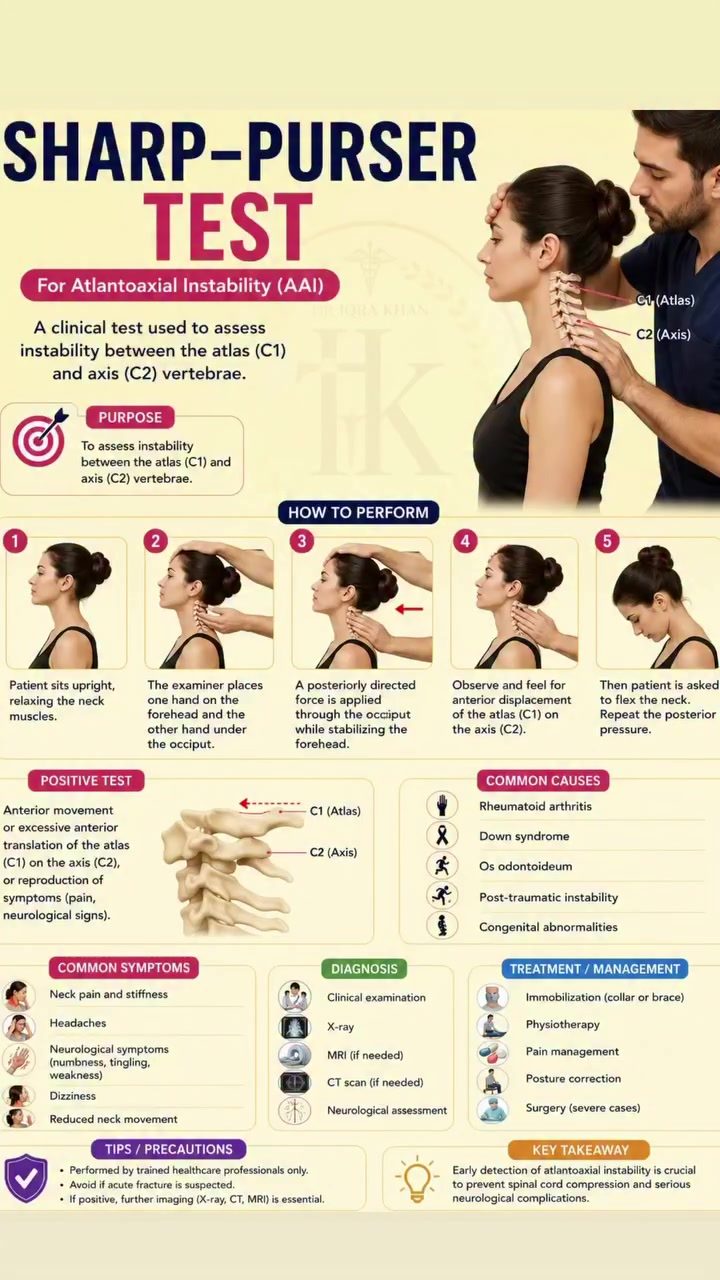
The Sharp-Purser Test
The Sharp-Purser Test is a specialized clinical assessment used by healthcare professionals to evaluate possible atlantoaxial instability, particularly when there is a suspicion of transverse ligament injury. This test is crucial for identifying instability between the atlas (C1) and axis (C2) vertebrae, which are crucial components of the cervical spine.
Why This Matters
Atlantoaxial instability (AAI) is a serious condition that can lead to spinal cord compression and neurological complications if left undetected. The Sharp-Purser Test provides a systematic way to assess this instability, ensuring timely intervention and appropriate management. This test is particularly important in cases where conditions like rheumatoid arthritis, Down syndrome, or congenital abnormalities are present, as these conditions can increase the risk of AAI.
Performing the Sharp-Purser Test
The Sharp-Purser Test involves a specific procedure to assess the stability of the atlas and axis vertebrae. Here’s a step-by-step guide on how to perform the test:
Preparation
- Patient Positioning: The patient should be seated or standing with their head in a neutral position. The examiner should stand behind the patient.
- Hand Placement: Place one hand on the patient's forehead and the other on the occiput (the back of the head).
Application of Force
Apply gentle but firm pressure to the forehead while stabilizing the occiput. This action attempts to replicate the instability between the atlas and axis vertebrae.
Observation
Observe the patient's response to the applied force. In cases of instability, the patient may experience pain, increased movement in the neck, or other signs of discomfort. Reduced neck movement is another key indicator of potential instability.
Common Causes of Atlantoaxial Instability
Several conditions can contribute to atlantoaxial instability. Recognizing these causes is essential for proper diagnosis and treatment.
Rheumatoid Arthritis
Rheumatoid arthritis can affect the joints in the cervical spine, leading to instability. The inflammation and degradation of joint tissue can weaken the ligaments and bones, making the spine more susceptible to injury.
Down Syndrome
Individuals with Down syndrome often have anatomical abnormalities in the cervical spine, which can increase the risk of AAI. Early detection and regular monitoring are crucial for managing this condition.
Congenital Abnormalities
Congenital abnormalities, such as os odontoideum, can also lead to AAI. This condition involves the incomplete development of the odontoid process, a bony prominence that helps stabilize the C1 and C2 vertebrae.
Post-Traumatic Instability
Trauma to the cervical spine, such as from a fall or motor vehicle accident, can cause instability. Post-traumatic instability can lead to severe complications if not properly managed.
Diagnosis and Management
Diagnosing atlantoaxial instability involves a combination of clinical examination, imaging, and neurological assessment. Here’s how the process typically unfolds:
Clinical Examination
The Sharp-Purser Test is just one part of the clinical examination. Healthcare professionals will also assess the patient’s neck range of motion, pain levels, and overall spinal health.
Imaging
Imaging techniques are essential for confirming the diagnosis. Common methods include:
- X-ray: Provides a basic view of the cervical spine and can help identify bone abnormalities or fractures.
- MRI: Offers a detailed look at soft tissues, including ligaments and the spinal cord. This is particularly useful for identifying spinal cord compression.
- CT Scan: Useful for detailed bone imaging and identifying fractures or other bony abnormalities.
Neurological Assessment
A thorough neurological assessment is also crucial. This includes evaluating reflexes, muscle strength, and sensation in the upper and lower extremities. Any signs of neurological impairment can indicate spinal cord compression and the need for urgent intervention.
Treatment and Management
Management of atlantoaxial instability depends on the severity of the condition and the patient’s overall health. Here are some common treatment options:
Immobilization
Immobilization using a collar or brace can help stabilize the cervical spine and prevent further injury. This is often the first step in managing AAI.
Physiotherapy
Physiotherapy plays a crucial role in rehabiliation. Techniques include:
- Posture Correction
- Manual Therapy
- Strengthening Exercises
Pain Management
Pain management strategies can help alleviate discomfort and improve the patient’s quality of life. This may include medications, such as nonsteroidal anti-inflammatory drugs (NSAIDs) or muscle relaxants, as well as non-pharmacological methods like heat or cold therapy.
Posture Correction
Posture correction is essential for maintaining spinal alignment and preventing further instability. This may involve ergonomic adjustments, such as using supportive pillows or adjusting the height of a desk or chair.
Tips for Healthcare Professionals
Performing the Sharp-Purser Test requires skill and precision. Here are some tips to ensure accurate and safe assessment:
Proper Technique
Always follow the correct technique when performing the test. Improper application of force can lead to injury or inaccurate results.
Patient Comfort
Ensure the patient is comfortable and informed about the procedure. Clearly explain what will happen and answer any questions they may have.
Safety Precautions
Avoid performing the test if an acute fracture is suspected. In such cases, further imaging is essential before proceeding with any manual assessment.
Important Takeaways
Understanding and properly performing the Sharp-Purser Test is vital for healthcare professionals involved in orthopedic assessments. Early detection of atlantoaxial instability can prevent serious complications, including spinal cord compression and neurological deficits. Always interpret the results in the context of the patient’s history, symptoms, and imaging findings.
Conclusion
The Sharp-Purser Test is a valuable tool for assessing atlantoaxial instability. By following the correct procedure, healthcare professionals can identify and manage this condition effectively, ensuring better outcomes for patients. Whether you're a physiotherapist, orthopedic specialist, or other healthcare provider, familiarity with this test can enhance your ability to provide comprehensive care.
Watch the Reel
Questions readers ask
What is the primary purpose of the Sharp-Purser Test?
The Sharp-Purser Test is designed to evaluate potential atlantoaxial instability, focusing on the instability between the atlas (C1) and axis (C2) vertebrae. It is particularly useful in identifying issues stemming from transverse ligament injury or other cervical spine conditions. The test helps in early detection and management of such conditions, which is vital for preventing complications.
Why is the Sharp-Purser Test important for patients with rheumatoid arthritis?
The Sharp-Purser Test is crucial for patients with rheumatoid arthritis because they have an increased risk of cervical spine instability, particularly between the C1 and C2 vertebrae. This instability can lead to serious neurological complications if not properly managed. Early detection through the Sharp-Purser Test allows for timely intervention and appropriate care.
How does the Sharp-Purser Test help in the assessment of Down syndrome patients?
Individuals with Down syndrome are at a higher risk of atlantoaxial instability, which can be a result of congenital abnormalities. The Sharp-Purser Test provides a reliable method to assess this instability, helping healthcare professionals intervene early to prevent potential neurological issues. This is especially important due to the higher risk of complications in this patient population.
What are the key components of the cervical spine assessed during the Sharp-Purser Test?
During the Sharp-Purser Test, the primary focus is on the atlas (C1) and axis (C2) vertebrae, which are critical components of the cervical spine. The test evaluates the stability between these two vertebrae, which can be compromised due to various conditions, including transverse ligament injury. This assessment is essential for identifying any potential instability that could lead to neurological complications.
What conditions can increase the risk of atlantoaxial instability, making the Sharp-Purser Test particularly relevant?
Conditions that increase the risk of atlantoaxial instability include rheumatoid arthritis, Down syndrome, and congenital abnormalities. These conditions can compromise the stability of the C1 and C2 vertebrae, leading to potential neurological issues. The Sharp-Purser Test is a valuable tool in assessing this instability, ensuring that patients receive the necessary care and management.
How does the Sharp-Purser Test contribute to the management of cervical spine conditions?
The Sharp-Purser Test provides a systematic approach to assessing cervical spine instability, particularly between the C1 and C2 vertebrae. By identifying instability early, the test helps healthcare professionals to intervene promptly, preventing potential complications such as neurological issues. This timely assessment and management are crucial for patients with various cervical spine conditions.
What are the potential risks associated with undetected atlantoaxial instability?
Undetected atlantoaxial instability can lead to significant risks, including spinal cord compression and neurological complications. These issues can arise from the instability between the C1 and C2 vertebrae, which can be caused by conditions such as transverse ligament injury. The Sharp-Purser Test is vital in identifying this instability, allowing for appropriate management and preventing such serious complications.
Recent articles
Fresh deep dives from the latest Reels we unpacked.




Comments
Be the first to comment.