Female Hair Thinning After Pregnancy
For many new moms, seeing more hair on the pillow or in the shower drain can be alarming. However, hair thinning after pregnancy is quite common, affecting a large percentage of women, and is generally temporary. Understanding the causes and effective strategies to manage it can help alleviate concerns and promote healthier hair.
Context / Why this matters
Hormonal fluctuations, nutritional deficiencies, and the physical and emotional stress of caring for a newborn can all contribute to hair thinning. Awareness of these factors can empower new mothers to take proactive steps towards maintaining their hair health.
Main discussion
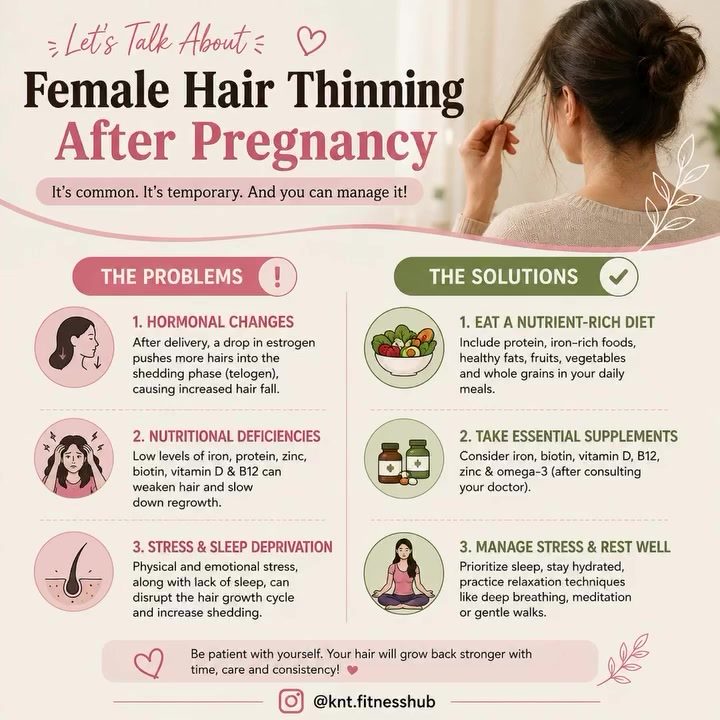
Hormonal Changes
One of the primary reasons for postpartum hair thinning is the dramatic change in hormones. During pregnancy, increased estrogen levels keep hair in the growing phase, resulting in thicker, healthier hair. However, within 2–4 months after delivery, estrogen levels drop sharply. This hormonal shift pushes more hairs into the shedding phase, leading to noticeable hair loss. While alarming, this is a natural process and usually resolves within 6–12 months.
Nutritional Deficiencies
Postpartum hair thinning can also be exacerbated by nutritional deficiencies. Pregnancy and breastfeeding demand a lot from the body, and sometimes, essential nutrients are depleted. Low levels of iron, protein, zinc, biotin, vitamin D, and B12 can weaken hair and slow down regrowth. Ensuring a balanced diet rich in these nutrients can support overall hair health.
Stress and Sleep Deprivation
The physical and emotional demands of caring for a newborn can take a toll on a mother's well-being. Stress and lack of sleep can disrupt the hair growth cycle, leading to increased shedding. Prioritizing self-care, such as getting adequate rest and practicing relaxation techniques, can help manage stress levels and promote better hair health.
Practical tips
Dive into a Nutrient-Rich Diet
Incorporating a variety of nutrients into daily meals can support hair health. Focus on foods rich in protein, iron, and healthy fats. Leafy greens, lean meats, fish, nuts, and seeds are excellent choices. Fruits, vegetables, and whole grains provide essential vitamins and minerals that promote hair growth.
Consider Essential Supplements
Consult a doctor about taking supplements to address specific nutritional deficiencies. Iron, biotin, vitamin D, zinc, and omega-3 supplements can be beneficial, but it's crucial to get professional guidance to avoid over-supplementation.
Manage Stress and Prioritize Rest
Self-care is paramount for new mothers. Aim to get as much rest as possible, even if it means taking naps in short intervals. Practice deep breathing exercises, meditation, or gentle walks to manage stress levels. Staying hydrated is also essential for overall health and hair growth.
Gentle Hair Care
Use a gentle shampoo and avoid tight hairstyles or heat treatments that can damage hair. Be patient with your hair care routine, as it may take time to see improvements. Remember that most women see the hair thinning cycle normalize within 6–12 months.
Important takeaways
- Postpartum hair thinning is common and usually temporary.
- Hormonal fluctuations, nutritional deficiencies, and stress/sleep deprivation are the main contributors.
- A nutrient-rich diet, essential supplements, and good self-care practices can help manage hair thinning.
- Always consult a doctor if shedding is severe, comes with fatigue, or persists beyond a year.
- Be patient and consistent with your hair care routine, as it may take time to see improvements.
Conclusion
Postpartum hair thinning is a natural and temporary phase for many new mothers. By understanding the underlying causes and implementing practical tips, women can support their hair health during this transition. Focus on a balanced diet, essential supplements, and self-care practices to manage stress and promote healthy hair growth. Remember that patience and consistency are key, and most women see their hair return to normal within 6–12 months. If concerns persist, it's always a good idea to consult a healthcare provider.
Watch the Reel
Questions readers ask
Is postpartum hair thinning a sign of a serious health issue?
Typically, postpartum hair thinning is not a sign of a serious health issue. It is a natural response to the hormonal changes, nutritional deficiencies, and stress that come with having a baby. However, if you notice excessive hair loss or have other concerning symptoms, it's always a good idea to consult a healthcare provider.
How long does postpartum hair thinning usually last?
Postpartum hair thinning is generally temporary. Most women will see their hair return to its normal fullness within 6 to 12 months after delivery. However, everyone is different, and it may take longer for some individuals.
What are some effective remedies for postpartum hair thinning?
Remedies for postpartum hair thinning include maintaining a balanced diet rich in protein, iron, and zinc, staying hydrated, and managing stress. Additionally, using gentle hair care products, avoiding heat styling, and consulting a healthcare provider about any necessary supplements can help support hair health.
Can stress contribute to postpartum hair thinning?
Yes, stress can contribute to postpartum hair thinning. The physical and emotional demands of caring for a newborn can lead to increased stress levels, which in turn can affect hair health. Practicing self-care and stress management techniques can be beneficial.
What role do nutritional deficiencies play in postpartum hair thinning?
Nutritional deficiencies, particularly in iron, zinc, and protein, can significantly contribute to postpartum hair thinning. Ensuring a balanced diet with plenty of vitamin-rich foods, such as leafy greens, lean proteins, and whole grains, can help mitigate hair loss.
Is it normal to experience hair shedding immediately after delivery?
Yes, it is normal to experience increased hair shedding immediately after delivery. This is often due to the body's response to hormonal changes, particularly the drop in estrogen levels. This type of hair loss is typically temporary and should improve over time.
Related deep dives
Similar reads based on topic and creator.



Recent articles
Fresh deep dives from the latest Reels we unpacked.




Comments
Be the first to comment.