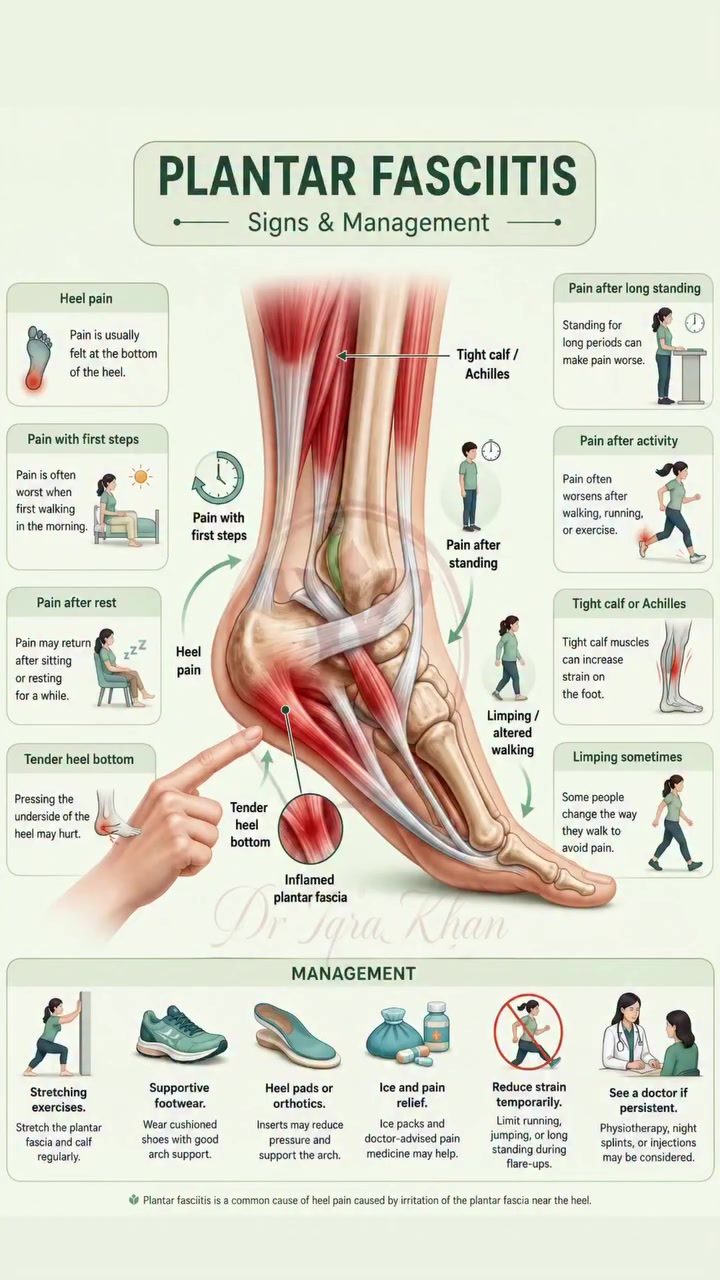
Plantar Fasciitis: Signs and Management
Plantar fasciitis is a common cause of heel pain, particularly noticeable with the first steps in the morning or after periods of rest. The condition stems from irritation of the plantar fascia, a thick band of tissue that supports the arch of the foot. This article will delve into the signs of plantar fasciitis and effective management strategies to alleviate discomfort and promote healing.
Context: Why This Matters
Heel pain can significantly impact daily activities, making it crucial to recognize the signs of plantar fasciitis and take appropriate action. Understanding the condition can help individuals seek timely treatment and prevent chronic issues. Effective management can reduce pain, improve mobility, and enhance quality of life.
Main Discussion
Understanding the Signs
Recognizing the signs of plantar fasciitis is the first step in managing the condition. Heel pain is the primary indicator, often felt at the bottom of the heel. This pain may be sharp and is typically most intense with the first steps in the morning. Other common signs include:
- Pain After Sitting or Resting: Pain may return after prolonged periods of sitting or resting, making it difficult to resume activities.
- Pain After Prolonged Standing or Walking: Long standing periods or extensive walking can worsen the pain.
- Tenderness Under the Heel: The underside of the heel may be tender to the touch, indicating inflammation of the plantar fascia.
- Tight Calf Muscles or Achilles Tendon: Tightness in the calf muscles or Achilles tendon can exacerbate the symptoms.
- Limping Due to Pain: Severe pain may cause individuals to limp, further straining the affected foot.
Management Strategies
Effective management of plantar fasciitis involves a combination of stretches, supportive footwear, and lifestyle adjustments. Here are some key strategies to consider:
Stretching Exercises
Regular stretching exercises can help alleviate pain and improve flexibility. Focus on stretches that target the plantar fascia and calf muscles. Some recommended exercises include:
- Calf Stretches: Stand facing a wall, place your hands on the wall, and extend one leg behind you, keeping the heel on the ground. Hold for 15-30 seconds and repeat with the other leg.
- Towel Stretches: Sit on the floor with your legs extended. Loop a towel around the ball of your foot and gently pull the towel toward you, keeping your leg straight. Hold for 15-30 seconds and repeat with the other foot.
- Plantar Fascia Stretches: Sit on a chair, cross one leg over the other, and pull the toes of the crossed leg up towards the shin. Hold for 15-30 seconds and repeat with the other foot.
Supportive Footwear
Wearing supportive footwear can provide relief and prevent further irritation. Look for shoes with good arch support and cushioned soles. Consider the following options:
- Cushioned Shoes: Shoes with ample cushioning can reduce the impact on the heel and provide comfort.
- Heel Pads or Orthotics: Heel pads or custom orthotics can offer additional support and redistribute pressure away from the heel.
Ice and Pain Relief
Applying ice and using pain relief methods can help manage acute pain and reduce inflammation. Here are some tips:
- Ice Packs: Apply an ice pack to the affected area for 15-20 minutes, 3-4 times a day. Wrap the ice pack in a towel to avoid direct contact with the skin.
- Pain Medicine: Over-the-counter pain relievers, such as ibuprofen or naproxen, can help alleviate pain and reduce inflammation. Always consult a healthcare professional before starting any new medication.
- Rest: Avoid high-impact activities that exacerbate the pain, such as running or jumping. Opt for low-impact exercises like swimming or cycling during flare-ups.
Seeking Professional Help
If symptoms persist despite self-management efforts, it's important to seek professional help. A physiotherapist or healthcare professional can provide a comprehensive assessment and recommend advanced treatment options, such as:
- Physiotherapy: A physiotherapist can design a tailored exercise program to strengthen the foot and reduce pain.
- Night Splints: Wearing a night splint can help stretch the plantar fascia and calf muscles overnight, providing relief in the morning.
- Injections: In severe cases, corticosteroid injections may be recommended to reduce inflammation and alleviate pain.
Practical Tips
Daily Routine Adjustments
Incorporating small changes into your daily routine can make a big difference in managing plantar fasciitis. Here are some practical tips:
- Morning Stretch: Make it a habit to stretch your calf muscles and plantar fascia when you wake up. This can help alleviate morning heel pain.
- Proper Footwear: Invest in good-quality shoes with proper arch support and cushioning. Replace worn-out shoes regularly to maintain support.
- Gradual Activity Increase: Gradually increase your activity level to avoid sudden strain on the foot. Warm up properly before engaging in physical activities.
When to Seek Medical Attention
While self-management strategies can be effective, there are certain signs that indicate the need for medical attention. Consult a healthcare professional if:
- Pain persists for more than a few weeks despite home treatment.
- Pain is severe and affects daily activities.
- There is significant swelling or redness in the affected area.
- You experience numbness or tingling in the foot.
Important Takeaways
- Early Intervention: Recognizing the signs of plantar fasciitis early can prevent the condition from worsening.
- Consistent Care: Regular stretching, supportive footwear, and ice application can significantly alleviate symptoms.
- Professional Guidance: Seeking help from a physiotherapist or healthcare professional can provide advanced treatment options and personalized care.
- Lifestyle Adjustments: Making small changes to your daily routine can make a significant difference in managing the condition.
Conclusion
Plantar fasciitis is a common cause of heel pain, but with the right management strategies, it can be effectively managed. By recognizing the signs, incorporating stretching exercises, wearing supportive footwear, and seeking professional help when needed, individuals can alleviate pain and improve their quality of life. Consistency in care and professional guidance play a crucial role in managing this condition successfully.
Watch the Reel
Questions readers ask
What are the early signs of plantar fasciitis?
Early signs of plantar fasciitis often include heel tenderness, particularly at the bottom of the heel or the arch of the foot. Additionally, you might experience pain with the first few steps in the morning or after prolonged periods of sitting, standing, or rest. This pain can ease up as you move around, only to return after rest.
How can I find relief from heel pain caused by plantar fasciitis?
To find relief, try icing the affected heel for 15-20 minutes, several times a day, and gently stretching your calf muscles. Use supportive footwear with good arch support, and avoid going barefoot. For immediate relief from morning heel pain, try placing a cold compress on your heel and then doing some gentle stretches.
What role does calf muscle tightness play in plantar fasciitis?
Tight calf muscles can increase the tension on the plantar fascia, leading to inflammation and heel pain. Regular calf stretches and exercises can help alleviate this tension, reducing the strain on the plantar fascia and promoting healing.
What are the best exercises to manage plantar fasciitis?
Exercises that focus on stretching the calf muscles and the plantar fascia can be beneficial. These include calf raises, towel stretches, and rolling a frozen water bottle under your foot. Start slowly and gradually increase the intensity to avoid further strain.
When should I consider physiotherapy for plantar fasciitis?
If heel pain persists for more than a few weeks despite home treatments, or if the pain is severe, it may be time to seek help from a physiotherapist. They can provide personalized exercises, manual therapy, and other treatments to help manage the condition and speed up recovery.
What kinds of footwear can help alleviate plantar fasciitis symptoms?
Supportive footwear with good arch support and a cushioned heel can help distribute pressure more evenly across the foot, reducing strain on the plantar fascia. For those who stand for long periods, shoes with extra cushioning and shock absorption can provide additional relief.
Recent articles
Fresh deep dives from the latest Reels we unpacked.




Comments
Be the first to comment.