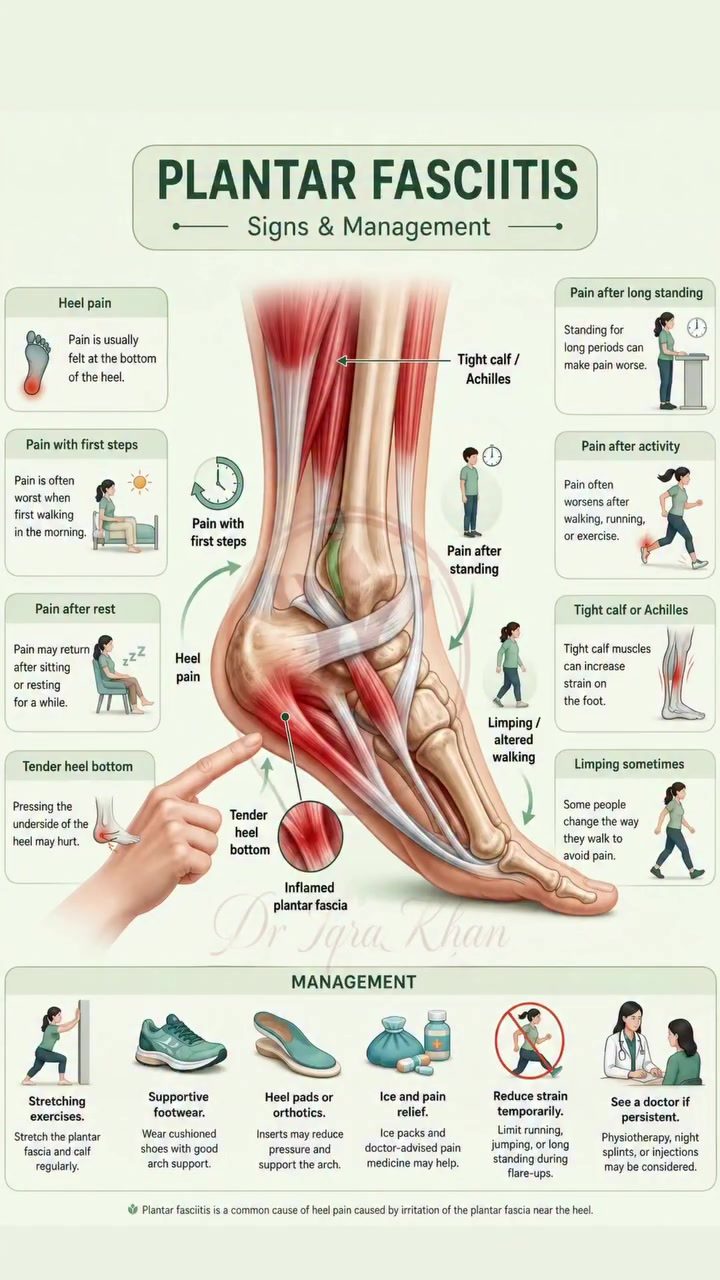
Plantar Fasciitis: Signs and Management
Plantar fasciitis is a condition characterized by inflammation of the plantar fascia, a thick band of tissue that supports the arch of the foot. Understood as one of the most common causes of heel, it can lead to significant discomfort, especially when taking the first steps in the morning.
Context and Why it Matters
Heel pain is a prevalent issue that can disrupt daily activities and affect overall mobility. It is crucial to recognize the signs of plantar fasciitis early to manage the condition effectively and prevent further complications. This condition often occurs due to irritation or overloading of the plantar fascia, a key component of the foot's structure. Understanding the signs and effective management strategies can help alleviate pain and improve quality of life.
Main Discussion
Signs of Plantar Fasciitis
Plantar fasciitis presents several telltale signs that can help in early identification. The most common symptom is pain under the heel, which is often most severe when taking the first steps in the morning. This pain can also return after sitting or resting for extended periods. The heel may feel tender to the touch, and pressing the underside can cause discomfort. Additionally, tightness in the calf muscles or Achilles tendon, as well as pain after walking or running, can be indicative of this condition. In some cases, individuals may even develop a limp due to the discomfort.
Understanding the Condition
The plantar fascia is a fibrous band that runs along the bottom of the foot, connecting the heel bone to the toes. When this tissue becomes inflamed, it can cause significant pain and discomfort. This inflammation is often the result of excessive strain or repetitive stress on the foot, which can occur from activities such as prolonged standing, running, or wearing unsupportive footwear. The condition is more common in individuals who are overweight, have high arches or flat feet, or those who participate in activities that place a lot of stress on the feet, such as running or jumping.
Management Strategies
Effective management of plantar fasciitis involves a combination of lifestyle changes, exercises, and medical interventions. Some key strategies include:
- Stretching Exercises: Regular stretching can help alleviate tension in the plantar fascia and surrounding muscles. Calf stretches, in particular, are beneficial for reducing tightness in the Achilles tendon, which can contribute to plantar fasciitis. To perform a calf stretch, stand facing a wall with one foot in front of the other. Keeping the back leg straight, lean forward and hold for 20-30 seconds. Repeat with the opposite leg.
- Supportive Footwear: Wearing shoes with good arch support can help distribute weight evenly across the foot, reducing strain on the plantar fascia. Look for shoes with a firm midsole and a cushioned heel. For added support, consider using orthotics or heel pads. These inserts can be placed inside the shoe to provide extra cushioning and support. They can be particularly helpful for those with high arches or flat feet, as they can help redistribute weight and reduce tension on the plantar fascia.
- Ice and Pain Relief: Applying ice to the affected area can help reduce inflammation and numb the pain. Wrap an ice pack in a towel and apply it to the heel for 15-20 minutes, several times a day. Over-the-counter pain relief medications, such as ibuprofen or naproxen, can also be effective in managing pain and reducing inflammation.
- Activity Modification: Avoid activities that place excessive stress on the feet, such as high-impact exercises or prolonged standing. Gradually return to normal activities as the pain subsides. This gradual approach can help prevent re-injury and promote long-term healing.
Practical Tips
While managing plantar fasciitis, it is essential to incorporate practical tips that can make a significant difference in your daily life:
- Wear Appropriate Footwear: Opt for shoes with good arch support and cushioning. Avoid high heels and flip-flops, as they can exacerbate the condition. Consider using supportive insoles or orthotics to provide additional support.
- Maintain a Healthy Weight: Excess weight can place additional strain on the feet, worsening plantar fasciitis. Maintaining a healthy weight can help reduce pressure on the plantar fascia and promote healing.
- Stay Active, but Gradually: Engage in low-impact activities, such as swimming or cycling, to maintain fitness levels without placing excessive stress on the feet. Gradually return to higher-impact activities as the pain subsides.
- Listen to Your Body: Pay attention to any signs of pain or discomfort. If the pain persists or worsens, consult a healthcare professional for further evaluation and treatment.
Important Takeaways
Plantar fasciitis is a manageable condition with the right approach. Recognizing the signs early and implementing effective management strategies can significantly improve your quality of life. By incorporating stretching exercises, supportive footwear, and lifestyle modifications, you can alleviate pain and promote long-term healing.
Conclusion
Heel pain caused by plantar fasciitis can be debilitating, but with the right knowledge and strategies, it is possible to manage the condition effectively. By understanding the signs and implementing practical management techniques, individuals can take control of their foot health and reduce the impact of this common condition on their daily activities. If you suspect you have plantar fasciitis, seek guidance from a healthcare professional for a personalized treatment plan.
Watch the Reel
Questions readers ask
What are the first signs of plantar fasciitis?
The first signs of plantar fasciitis often include heel tenderness and discomfort after periods of rest. Many people notice this pain most intensely when taking the first steps in the morning. The pain is usually located at the bottom of the foot, near the heel.
Why does plantar fasciitis cause the most pain in the morning?
Plantar fasciitis causes the most pain in the morning due to the prolonged rest and lack of movement during the night, which can lead to tightening of the plantar fascia. When you take your first steps, the sudden stretching of the fascia can cause significant discomfort.
What are some effective management strategies for plantar fasciitis?
Effective management strategies for plantar fasciitis include regular stretching exercises, wearing supportive shoes, and using heel cups or orthotics. Additionally, applying ice to the affected area and avoiding high-impact activities can help alleviate pain and promote healing.
Can plantar fasciitis cause pain during walking?
Yes, plantar fasciitis can cause pain during walking, especially after long periods of rest. The pain may lessen as you continue walking and the plantar fascia loosens up. However, prolonged walking or high-impact activities can exacerbate the pain and lead to further discomfort.
How can supportive shoes help with plantar fasciitis?
Supportive shoes can help with plantar fasciitis by providing the necessary arch support and cushioning, which reduces the strain on the plantar fascia. Shoes with good heel support and a firm sole can help distribute your body weight more evenly, thereby alleviating pain and promoting healing.
What exercises can help relieve plantar fasciitis?
Stretching exercises that target the plantar fascia and calf muscles can help relieve plantar fasciitis. Calf stretches, towel stretches, and rolling a frozen water bottle under the foot can be particularly beneficial. These exercises can help improve flexibility, reduce tension, and alleviate pain.
What are the common causes of heel pain associated with plantar fasciitis?
The common causes of heel pain associated with plantar fasciitis include overuse, excessive pressure on the feet, and prolonged standing or walking on hard surfaces. Additionally, being overweight, having high arches or flat feet, and wearing improper footwear can also contribute to the development of plantar fasciitis.
Recent articles
Fresh deep dives from the latest Reels we unpacked.




Comments
Be the first to comment.