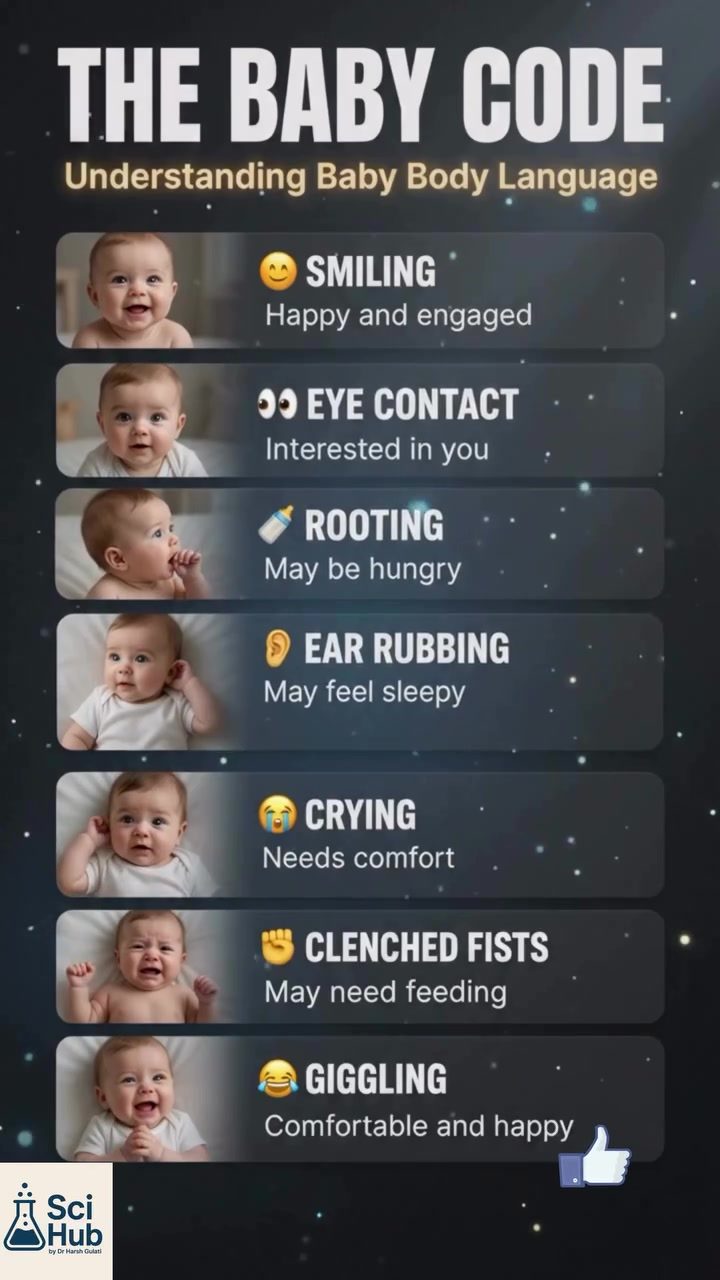
Baby Body Language
Understanding your baby’s body language is crucial for parenting. Before babies learn to speak, they communicate through facial expressions, movements, and cries. Recognizing these cues can help parents understand what their baby may be trying to express. Here's a guide to some common baby signals and their meanings.
Why This Matters
Babies use a variety of non-verbal cues to communicate their needs and feelings. By learning to interpret these signals, parents can respond more effectively to their baby’s needs, fostering a stronger bond and ensuring the baby's well-being. This understanding is particularly important in the early stages of life when babies are unable to verbally express themselves.
Understanding Baby Body Language
Smiling
Smiling is one of the most recognizable and comforting signals from a baby. It usually indicates that the baby is happy, comfortable, or engaged in social interaction. A smile can be a sign that your baby is content and enjoying the moment.
Eye Contact
Eye contact is a powerful indicator of a baby’s interest and engagement. When a baby makes eye contact, it means they are becoming more aware of faces and are building social connections. This is a crucial development milestone, showing that the baby is ready to interact with the environment and the people around them.
Rooting
Rooting is a reflex that involves turning the head and opening the mouth. This behavior is a common sign that your baby may be hungry. It's an instinctual response that helps babies find the nipple for feeding. If your baby is rooting, it’s a good time to offer a feeding.
Ear Rubbing
Rubbing the ears can indicate that the baby is feeling tired or may need to self-soothe. However, it can also occur for other reasons, so it's important to look for additional cues to confirm if the baby is sleepy. Parents should observe other behaviors like yawning or rubbing the eyes to determine if the baby is ready for sleep.
Crying
Crying is a universal way for babies to communicate their needs. Babies cry for various reasons, including hunger, discomfort, tiredness, pain, or the need for comfort. When a baby cries, it’s essential to stay calm and assess the situation to determine the cause and provide the appropriate response.
Clenched Fists
Clenched fists are often seen in newborns and can sometimes be associated with hunger or normal muscle tone. It’s a common reflex in newborns, so while it might indicate hunger, it’s not always a reliable signal on its own. Look for other cues like rooting or crying to confirm if the baby is hungry.
Arching the Back
Arching the back can happen for several reasons, including discomfort, frustration, reflux, or while stretching. If this behavior is frequent or accompanied by other concerning symptoms, it’s essential to consult a pediatrician. This could indicate an issue that needs medical attention.
Giggling
Giggling is a clear sign that your baby is feeling happy, relaxed, and engaged. When a baby giggles, it means they are in a positive and comfortable state. Engage with your baby through play and interaction to encourage more of these joyful moments.
Practical Tips for Interpreting Baby Body Language
Observe Multiple Cues
No single gesture or expression can tell you exactly what your baby needs. The best way to understand your baby is by looking at multiple cues together, including feeding time, sleep patterns, crying, facial expressions, and body movements. This holistic approach helps in accurately interpreting your baby’s needs.
Respond Promptly
Babies thrive on responsiveness. When you see a cue, respond promptly to meet your baby’s needs. This helps build trust and a strong bond between you and your baby.
Trust Your Instincts
While understanding baby body language is essential, it’s also crucial to trust your instincts as a parent. If something feels off, don’t hesitate to seek medical advice, especially if your baby has persistent crying, poor feeding, fever, breathing difficulty, or any unusual behavior.
Important Takeaways
Understanding baby body language is a learning process that involves observation, patience, and trust in your instincts. By paying attention to the signals your baby gives, you can respond more effectively to their needs, fostering a stronger bond and ensuring their well-being. This skill is not just about interpreting individual cues but also about understanding the context in which these cues occur.
Conclusion
Interpreting baby body language is a vital skill for new parents. By recognizing and responding to the various cues your baby provides, you can build a deeper understanding of their needs and emotions. This knowledge not only helps in meeting your baby’s immediate needs but also strengthens the bond between you and your child. Always remember that every baby is unique, and while general guidelines can be helpful, trusting your instincts is equally important.
Watch the Reel
Questions readers ask
What are some common newborn body language cues?
Newborns use various body language cues to communicate. These include facial expressions like smiling or frowning, movements such as waving arms or kicking legs, and specific reflexes like the rooting reflex. Understanding these cues can help parents respond appropriately to their baby's needs.
Why is it important to understand newborn body language?
Understanding newborn body language is crucial for effective parenting. By interpreting these cues, parents can respond to their baby's needs more promptly, thus fostering a stronger bond and ensuring the baby's overall well-being. This is especially important in the early stages of life when babies cannot verbally express themselves.
What does it mean when a newborn smiles?
A newborn's smile can have different meanings. Initially, it might be a reflex or a sign of gas passing. However, by around 6-8 weeks, a genuine smile that involves the eyes is a positive social cue and an expression of happiness or contentment. Responding to these smiles can help build a strong emotional connection.
How can I tell if my newborn is comfortable or uncomfortable?
Newborns show comfort through relaxed body language, such as loose limbs, steady breathing, and a calm facial expression. Signs of discomfort include clenched fists, arching the back, or tense body movements. Paying attention to these cues can help you address your baby's needs more effectively.
What is the rooting reflex and why is it important?
The rooting reflex is an instinctive behavior where a newborn turns their head and opens their mouth when their cheek is stroked. This reflex helps babies find the nipple for feeding. Understanding this reflex can aid in successful breastfeeding and ensure the baby's nutritional needs are met.
What does it mean when a newborn makes eye contact?
When a newborn makes eye contact, it is a significant developmental milestone. It indicates that the baby is alert and engaged with their surroundings. Responding to this eye contact with a smile or gentle cooing can help strengthen the emotional bond between you and your baby.
How can I respond to my newborn's crying to understand their needs better?
Newborns cry for various reasons, including hunger, discomfort, or the need for a diaper change. To understand your baby's cries, pay attention to the pitch, intensity, and context. For example, a high-pitched, urgent cry might indicate hunger, while a lower-pitched, persistent cry might signal discomfort. Responding promptly and appropriately can help soothe your baby and build trust.
Related deep dives
Similar reads based on topic and creator.

Recent articles
Fresh deep dives from the latest Reels we unpacked.




Comments
Be the first to comment.