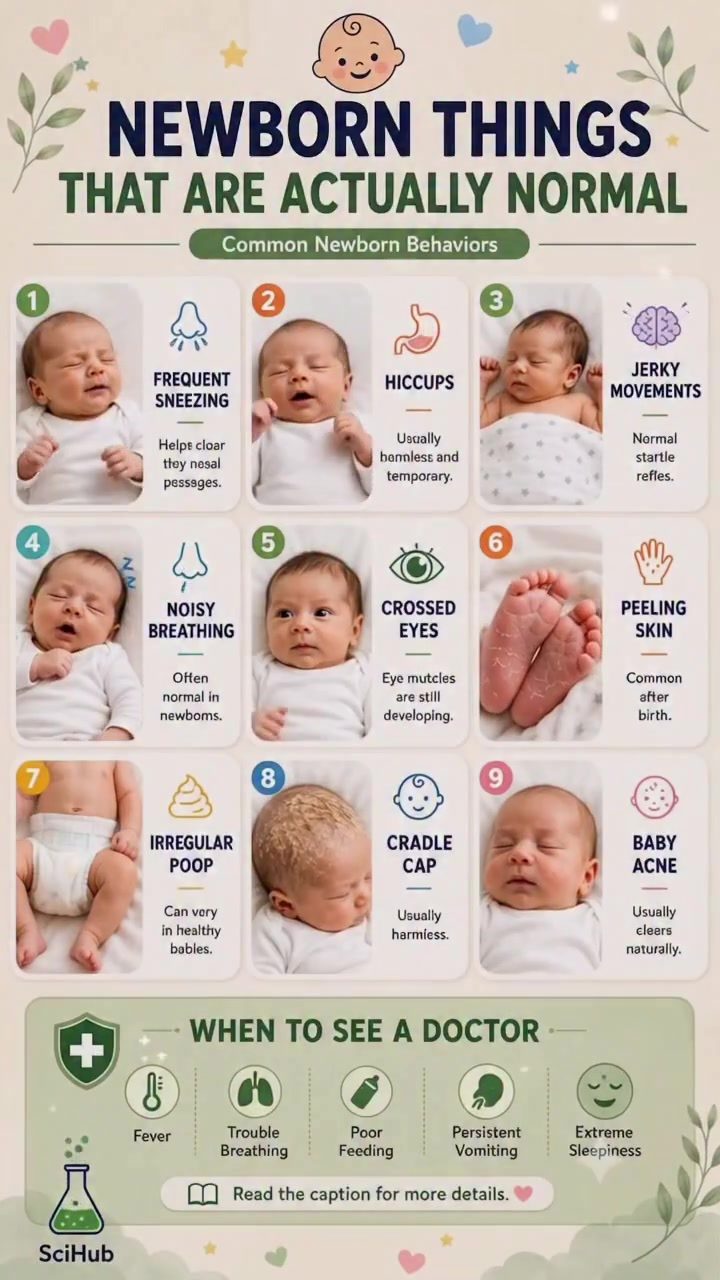
Newborn Behaviors
Newborns exhibit a range of behaviors that can sometimes be alarming to new parents. Many of these behaviors are actually normal and part of a baby's developmental process. Understanding these common behaviors can provide reassurance and help parents know when to seek medical attention.
Why This Matters
Newborns go through a multitude of changes as they adapt to life outside the womb. Recognizing which behaviors are normal and which require medical attention can alleviate anxiety and ensure the baby's well-being. Babies communicate through various behaviors, and parents need to understand these cues to provide the best care possible.
Main Discussion
Frequent Sneezing
Frequent sneezing is a common behavior in newborns. This helps clear their tiny nasal passages, which are still adjusting to the environment outside the womb. It is not always a sign of illness, but rather a mechanism to remove any irritants or mucus.
Hiccups
Newborns often experience hiccups, which are usually harmless and temporary. Hiccups occur because a newborn's diaphragm is still developing. Most of the time, hiccups resolve on their own and do not require any intervention.
Jerky Movements
Jerky movements, often referred to as the startle or Moro reflex, are normal in newborns. As the baby's nervous system continues to mature, these movements are a part of their natural development. They usually subside as the baby grows and gains better control over their movements.
Noisy Breathing
Newborns often have noisy breathing, which can sound alarming. Soft snuffles and other noises are common because the airways in newborns are very small. This usually resolves as the baby grows and their airways develop.
Crossed Eyes
Crossed eyes in newborns are often due to the fact that their eye muscles are still developing. Occasionally, the eyes may appear to be misaligned, but this is usually a temporary condition that resolves within the first few months.
Peeling Skin
Peeling skin is another common occurrence in newborns. Many babies shed their outer layer of skin after birth. This is a natural process as the baby adjusts to their new environment. Gentle moisturizing, if recommended by a healthcare provider, can help soothe the skin.
Irregular Poop
Irregular poop is normal in healthy babies. Stool color, consistency, and frequency can vary, especially between breastfed and formula-fed babies. Breastfed babies may have more frequent and softer stools, while formula-fed babies may have firmer and less frequent stools.
Cradle Cap
Cradle cap is a harmless scalp condition that usually improves with gentle care over time. It is characterized by scaly patches on the baby's scalp and can be treated with gentle shampooing and moisturizing.
Baby Acne
Baby acne, which consists of temporary pimples, is caused by hormonal changes after birth. It usually clears up without any treatment and does not require medical intervention. Keeping the baby's skin clean can help alleviate the symptoms.
When to Seek Medical Attention
Most of the behaviors mentioned are normal and do not require medical attention. However, parents should be aware of the following signs that may indicate a more serious issue:
- Fever: Especially in babies younger than three months, a fever may indicate an infection.
- Difficulty Breathing: Persistent breathing difficulties, such as fast breathing or labored breathing, should be evaluated by a medical professional.
- Poor Feeding: Refusing feeds or showing poor feeding patterns can indicate an underlying issue.
- Persistent Vomiting: Unlike occasional spit-up, persistent vomiting can be a sign of a problem.
- Extreme Sleepiness: If a baby is unusually sleepy and difficult to wake, it may be a cause for concern.
- Blue Lips or Skin: This can indicate a lack of oxygen and requires immediate medical attention.
- Seizures or Signs of Severe Illness: Any signs of severe illness, such as seizures, should be addressed immediately.
Practical Tips
Trust Your Instincts
Every baby develops differently, and parents should trust their instincts. If something doesn't seem right or you're worried, consult your pediatrician. Early intervention can prevent potential issues from escalating.
Regular Check-Ups
Regular check-ups with a healthcare provider can help monitor your baby's development and address any concerns early on. These visits provide an opportunity to ask questions and get professional advice tailored to your baby's needs.
Keep a Journal
Keeping a journal of your baby's behaviors and any concerns can help you track patterns and have a clear record to discuss with your healthcare provider. This can be especially helpful during check-ups or if you need to seek emergency care.
Stay Informed
Staying informed about common newborn behaviors can help alleviate anxiety and provide reassurance. Knowledge is a powerful tool in ensuring your baby's well-being. Utilize reliable sources like SciHub and other reputable health information platforms.
Important Takeaways
- Frequent sneezing, hiccups, jerky movements, noisy breathing, crossed eyes, irregular poop, cradle cap, and baby acne are common and usually harmless behaviors in newborns.
- Trust your instincts as a parent and consult a healthcare provider if something doesn't seem right.
- Regular check-ups and a detailed journal of your baby's behaviors can help monitor their development and address any concerns.
Conclusion
Understanding common newborn behaviors can provide reassurance to new parents and ensure they are well-equipped to care for their babies. By recognizing which behaviors are normal and when to seek medical attention, parents can navigate the challenges of newborn care with confidence.
Watch the Reel
Questions readers ask
Why do newborns sneeze so frequently?
Newborns sneeze frequently to clear their nasal passages of mucus, which helps them breathe more easily. This behavior is completely normal and helps babies adapt to breathing outside the womb and it is not a sign of a cold.
Are hiccups common in newborns and should parents be concerned?
Yes, hiccups are very common in newborns and are typically nothing to worry about. They occur when the diaphragm contracts involuntarily, and babies often experience them due to immature digestive systems. Hiccups usually resolve on their own with no intervention needed.
What causes the jerky movements in newborns and should I be worried?
Newborns often exhibit jerky or twitching movements, especially during REM sleep. These are normal and typically indicate that the baby's nervous system is still maturing. If the movements are accompanied by other concerning symptoms, like fever, it’s a good idea to consult a healthcare provider.
Why do newborns have noisy breathing and should it be a cause for concern?
Newborns have smaller airways, which can cause breathing to sound noisy. This is usually normal, especially when newborns have a cold or are congested. However, if the noisy breathing is accompanied by difficulty feeding, rapid breathing, or a bluish tint to the skin, seek medical attention.
Is it normal for newborns to have crossed eyes?
Yes, it is normal for newborns to have crossed eyes or appear cross-eyed at times. This is due to the immaturity of their eye muscles and usually resolves as the baby grows. If the crossing persists beyond a few months or is accompanied by other eye issues, consult a pediatrician.
What are some common newborn reflexes and why do they occur?
Newborns exhibit several reflexes, such as the Moro reflex (startle reflex) and the rooting reflex. These reflexes are instinctual and help babies survive and adapt to their new environment. Most of these reflexes will disappear at around 3-4 months as the baby grows and develops more control over their body.
What are some common newborn behaviors that indicate a need for medical attention?
While many newborn behaviors are normal, parents should seek medical attention if the baby exhibits signs of illness, such as difficulty breathing, fever, lethargy, poor feeding, or unusual irritability. Trusting your instincts and consulting a healthcare provider when in doubt is always the best course of action.
Related deep dives
Similar reads based on topic and creator.

Recent articles
Fresh deep dives from the latest Reels we unpacked.




Comments
Be the first to comment.