Mortgage Delinquency Trends
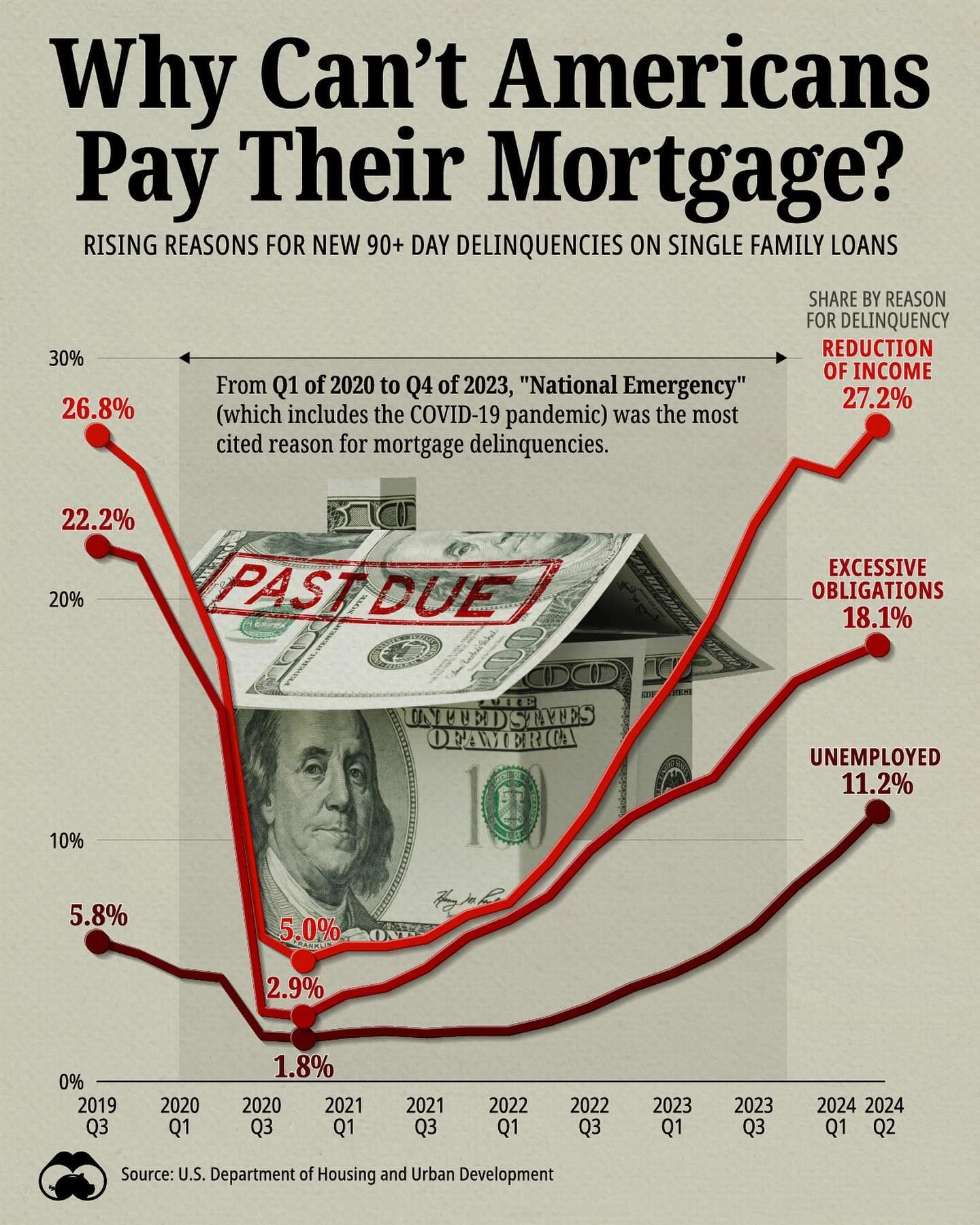
Mortgage delinquencies are a critical aspect of the housing market, reflecting the financial health and stability of homeowners. Recent data from the U.S. Department of Housing and Urban Development highlights that 27.2% of Americans cite reduced income as the primary reason for mortgage delinquency. Interestingly, despite this, mortgage delinquencies are at near-record lows, with only 1.7% of single-family home mortgages in delinquency in Q1 2024.
Context / Why this matters
Understanding the trends and reasons behind mortgage delinquencies is crucial for policymakers, financial institutions, and homeowners. It provides insights into the economic pressures facing households and helps in developing strategies to mitigate financial stress. The data from 2019 to 2024 shows significant fluctuations and trends related to mortgage delinquencies, reflecting broader economic conditions and specific financial challenges faced by homeowners.
Main discussion
Mortgage delinquency trends offer a window into the economic well-being of homeowners. Several key factors have influenced these trends over the past few years. These factors, including reduced income, excessive obligations, and unemployment, have played significant roles in shaping mortgage delinquency rates.
The Impact of Reduced Income
Reduced income has consistently been the leading cause of mortgage delinquencies. From 2019 to 2024, the percentage of delinquencies attributed to reduced income has varied but remained substantial. This trend underscores the critical role of income stability in ensuring timely mortgage payments. Economic downturns, job losses, and reduced working hours have all contributed to this trend, making it essential for homeowners to have financial buffers and access to supportive policies.
Excessive Obligations
Excessive obligations refer to situations where homeowners' financial commitments exceed their income, leading to missed mortgage payments. This factor has also been a significant contributor to mortgage delinquencies, particularly during periods of economic uncertainty. Financial advisors often recommend budgeting and financial planning to manage obligations effectively and avoid delinquencies.
Unemployment
Unemployment is another critical factor in mortgage delinquencies. The period from Q1 2020 to Q4 2023, marked by the "National Emergency" including the COVID-19 pandemic, saw a significant rise in unemployment-related delinquencies. Policies aimed at supporting unemployed individuals, such as unemployment benefits and mortgage forbearance programs, have been instrumental in mitigating the impact of unemployment on mortgage delinquencies.
Practical tips
For homeowners facing mortgage delinquency risks, several practical steps can help mitigate financial stress and ensure timely payments.
Budgeting and Financial Planning
Effective budgeting and financial planning are essential for managing mortgage payments and other financial obligations. Homeowners should track their income and expenses, prioritize essential payments, and build an emergency fund to cover unexpected costs.
Seeking Financial Assistance
Homeowners struggling with mortgage payments should explore available financial assistance programs. These programs, often provided by government agencies and non-profit organizations, can offer temporary relief and help manage delinquencies.
Communicating with Lenders
Open communication with lenders is crucial when facing financial difficulties. Lenders may offer options such as loan modifications, forbearance, or repayment plans to help homeowners manage their mortgage payments during challenging times.
Important takeaways
Mortgage delinquencies are influenced by a variety of factors, including reduced income, excessive obligations, and unemployment. Understanding these trends and implementing practical strategies can help homeowners manage their financial obligations and maintain mortgage payments. Policies and programs aimed at supporting homeowners during economic downturns are essential in mitigating the impact of these factors on mortgage delinquencies.
Conclusion
Mortgage delinquencies reflect the broader economic conditions and financial challenges faced by homeowners. By understanding the key factors contributing to delinquencies and implementing practical strategies, homeowners can better manage their financial obligations and ensure timely mortgage payments. Policymakers and financial institutions also play a crucial role in supporting homeowners through assistance programs and supportive policies. Addressing mortgage delinquencies effectively requires a comprehensive approach that considers the diverse factors influencing homeowners' financial well-being.
Watch the Reel
Questions readers ask
Why is monitoring mortgage delinquency trends important?
Monitoring mortgage delinquency trends is important as it provides insights into the overall financial health and stability of homeowners. This information is vital for policymakers and financial institutions to understand economic pressures and develop effective strategies to support homeowners. Trends over time, such as the data from 2019 to 2024, can highlight shifts in homeowner financial circumstances, and help identify emerging issues.
What are the primary reasons given by Americans for mortgage delinquency?
According to data from the U.S. Department of Housing and Urban Development, 27.2% of Americans cite reduced income as the primary reason for mortgage delinquency. Additionally, excessive obligations, such as high levels of debt or unexpected financial burdens, also contribute significantly to mortgage delinquencies.
Why are mortgage delinquencies at near-record lows despite economic pressures?
The near-record lows in mortgage delinquencies, with only 1.7% of single-family home mortgages in delinquency in Q1 2024, can be attributed to several factors. These include government assistance programs, low-interest rates, and financial support initiatives that have helped homeowners manage their mortgage obligations despite reduced income and other financial pressures.
What does the mortgage delinquency rate for single-family homes indicate?
The mortgage delinquency rate for single-family homes, which is 1.7% in Q1 2024, indicates a relatively stable housing market. This rate reflects a low percentage of homeowners struggling to meet their mortgage payments, which is a positive sign of overall financial health among homeowners. Tracking this rate over time can provide a clearer picture of trends and potential shifts in the housing market.
How can trends in mortgage delinquency be visualized?
Trends in mortgage delinquency can be visualized through various graphs and charts. A graph displaying mortgage delinquency trends over time, such as from 2019 to 2024, can effectively illustrate changes in delinquency rates. This visualization helps stakeholders, including policymakers and financial institutions, to comprehend the data more clearly and identify patterns or anomalies.
What role do government programs play in mitigating mortgage delinquency?
Government programs have played a significant role in mitigating mortgage delinquency by supporting homeowners in various ways. For example, the U.S. Department of Housing and Urban Development implements assistance programs aimed at preventing mortgage delinquencies, such as providing financial support and offering mortgage forebearance options. These initiatives help stabilize the housing market and reduce the overall number of homeowners in delinquency.
Related deep dives
Similar reads based on topic and creator.


Recent articles
Fresh deep dives from the latest Reels we unpacked.




Comments
Be the first to comment.