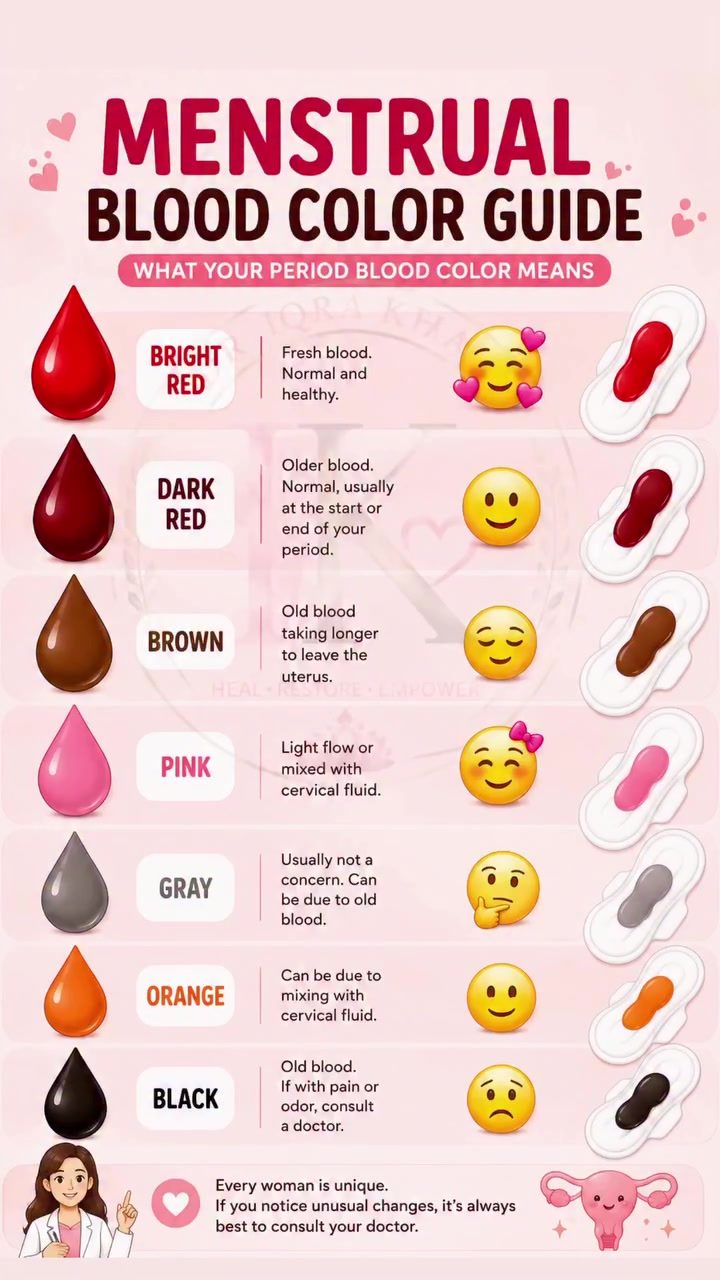
Menstrual Blood Color Guide
Understanding the different colors of menstrual blood can provide valuable insights into your overall health and reproductive system. Menstrual cycles vary from person to person, and the color of menstrual blood can change throughout the cycle. This guide will help you understand what the different colors might indicate and when to seek medical attention.
Context
Menstrual health is a critical aspect of overall well-being. Knowing what is normal can help you recognize when something might be wrong. Menstrual blood color can vary widely, and different colors can indicate different stages of the cycle or potential issues that need attention.
Main Discussion
Bright Red Blood
Bright red blood is typically fresh and indicates that the blood is flowing quickly. This color is often seen during the heaviest days of your period. Bright red blood is usually a sign of a normal menstrual flow, but it can also indicate that the blood is flowing more quickly than usual, which can happen if the blood is passing through your vagina quickly.
Dark Red Blood
Dark red blood is older and often appears at the beginning or end of your period. This color indicates that the blood has taken longer to exit the body, which can be normal. However, if you notice dark red blood throughout your period, it might be worth discussing with your healthcare provider, as it could indicate a slower flow or potential issues.
Brown Blood
Brown blood is old blood mixed with fluid. It often appears at the beginning or end of your period and can be completely normal. However, if you see brown blood at other times, it might be a sign of old blood being released from the uterus. This can sometimes indicate hormonal imbalances or other issues that may need medical attention.
Pink Blood
Pink blood is a light flow mixed with cervical fluid. This color is often seen during the early or late stages of your period and can be a sign of a lighter flow. Pinkish blood can also indicate the presence of other fluids in the body, which can be normal but should still be monitored.
Gray Blood
Gray blood can be due to old blood or the presence of other fluids. This color is less common and can sometimes indicate an infection or other issues. If you notice gray blood, it's a good idea to consult with a healthcare provider to rule out any potential problems.
Orange Blood
Orange blood can be due to the mixing of menstrual blood with cervical fluid. This color is also less common and can sometimes indicate an infection, especially if accompanied by an unusual odor. If you notice orange blood, it's important to monitor any additional symptoms and consult a doctor if necessary.
Black Blood
Black blood is old blood that has taken a long time to leave the body. This color is rare and can sometimes indicate that the blood has been in the uterus for an extended period. If you see black blood, it's important to consult a healthcare provider, as it could indicate potential issues that need attention.
Practical Tips
Tracking Your Cycle
Keeping track of your menstrual cycle can help you understand what is normal for you. Use a period tracker app or a simple calendar to note the start and end dates of your period, as well as any changes in blood color or flow. This can be helpful if you need to discuss your cycle with a healthcare provider.
When to Seek Medical Attention
While many changes in menstrual blood color are normal, there are some signs that warrant medical attention. If you experience persistent unusual colors, foul odor, severe pain, fever, or very heavy bleeding, seek medical advice promptly. These symptoms could indicate an infection, hormonal imbalance, or other issues that need treatment.
Know the Difference
Different stages of your period often bring different blood colors, but it's important to know what is normal for you. Keep a log of your periods and document anything out of the ordinary. This information can be invaluable to your healthcare provider.
Regular Check-Ups
Regular gynecological check-ups are essential for maintaining menstrual health. These appointments can help detect any issues early and provide guidance on managing your menstrual cycle effectively. Don't hesitate to discuss any concerns or changes with your healthcare provider.
Important Takeaways
Menstrual blood color can vary widely and often indicates different stages of the menstrual cycle or potential issues. While many changes are normal, it's important to be aware of any unusual symptoms and seek medical attention if necessary. Keeping track of your cycle and understanding what is normal for you can help you recognize when something might be wrong.
Don't hesitate to consult with a healthcare provider if you have questions or concerns about your menstrual health. Regular check-ups and open communication can ensure that you stay on top of any potential issues and maintain overall well-being.
Conclusion
Menstrual health is a critical aspect of overall well-being, and understanding the different colors of menstrual blood can provide valuable insights. By knowing what is normal for you and being aware of any unusual symptoms, you can take proactive steps to maintain your health. Regular check-ups and open communication with your healthcare provider can ensure that you stay on top of any potential issues and maintain a healthy menstrual cycle.
Watch the Reel
Questions readers ask
Why does menstrual blood color change throughout the cycle?
Menstrual blood color can change due to the age of the blood and the flow rate. At the beginning of the cycle, blood is typically bright red due to its freshness and faster flow. As the cycle progresses, the blood may become darker or brown as it takes longer to exit the body, allowing it to oxidize.
What does bright red menstrual blood indicate?
Bright red menstrual blood usually signals that the blood is fresh and flowing quickly. This is most common at the start of your period. However, if you experience bright red blood at the end of your period or during unusual times, it is a good idea to speak with a healthcare provider.
Is it normal to have brown menstrual blood?
Yes, it is normal to see brown menstrual blood, especially towards the end of your period. This occurs because the blood takes longer to leave the body, causing it to oxidize and darken. However, if brown blood is accompanied by strong odors, pain or abnormal bleeding, consult a healthcare provider.
What might pink menstrual blood indicate?
Pink menstrual blood is typically a sign of light flow and can occur at the beginning or end of your period. It can also be influenced by hormones, such as birth control, and may indicate hormonal changes. If you are experiencing pink menstrual blood and are concerned, you can consult a healthcare professional.
When should I be concerned about unusual menstrual blood colors?
If you notice unusual colors like gray, black, or very bright red blood, or if the color is accompanied by pain, foul odor, or abnormal bleeding patterns, it's important to consult a healthcare provider. These can be signs of potential issues that require medical attention.
Can dietary changes affect menstrual blood color?
Dietary changes can influence various aspects of menstruation, including blood color. For instance, certain foods or supplements may alter the blood's appearance. However, drastic or unusual color changes should still be monitored and discussed with a healthcare provider if they persist or cause concern.
Recent articles
Fresh deep dives from the latest Reels we unpacked.




Comments
Be the first to comment.